The Ikaroa Story
Follow Ikaroa from the beginning.
The Router Bit That Stopped Everything
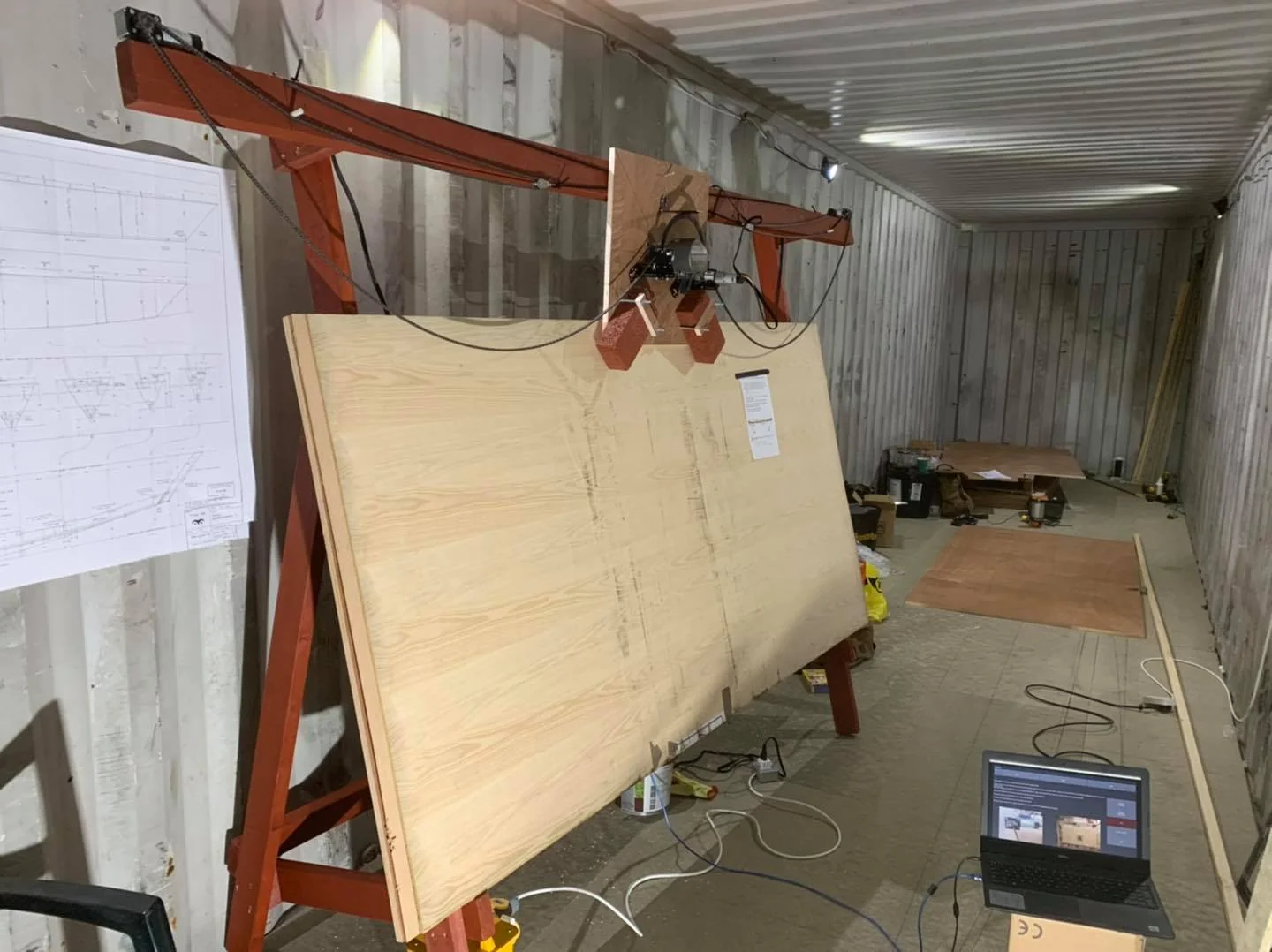
Our secret weapon was already set up, but a loose collet reduction brought it to a halt. I ordered more router bits and hopefully more effective reductions.
It’s a Tiki 38, Number 182
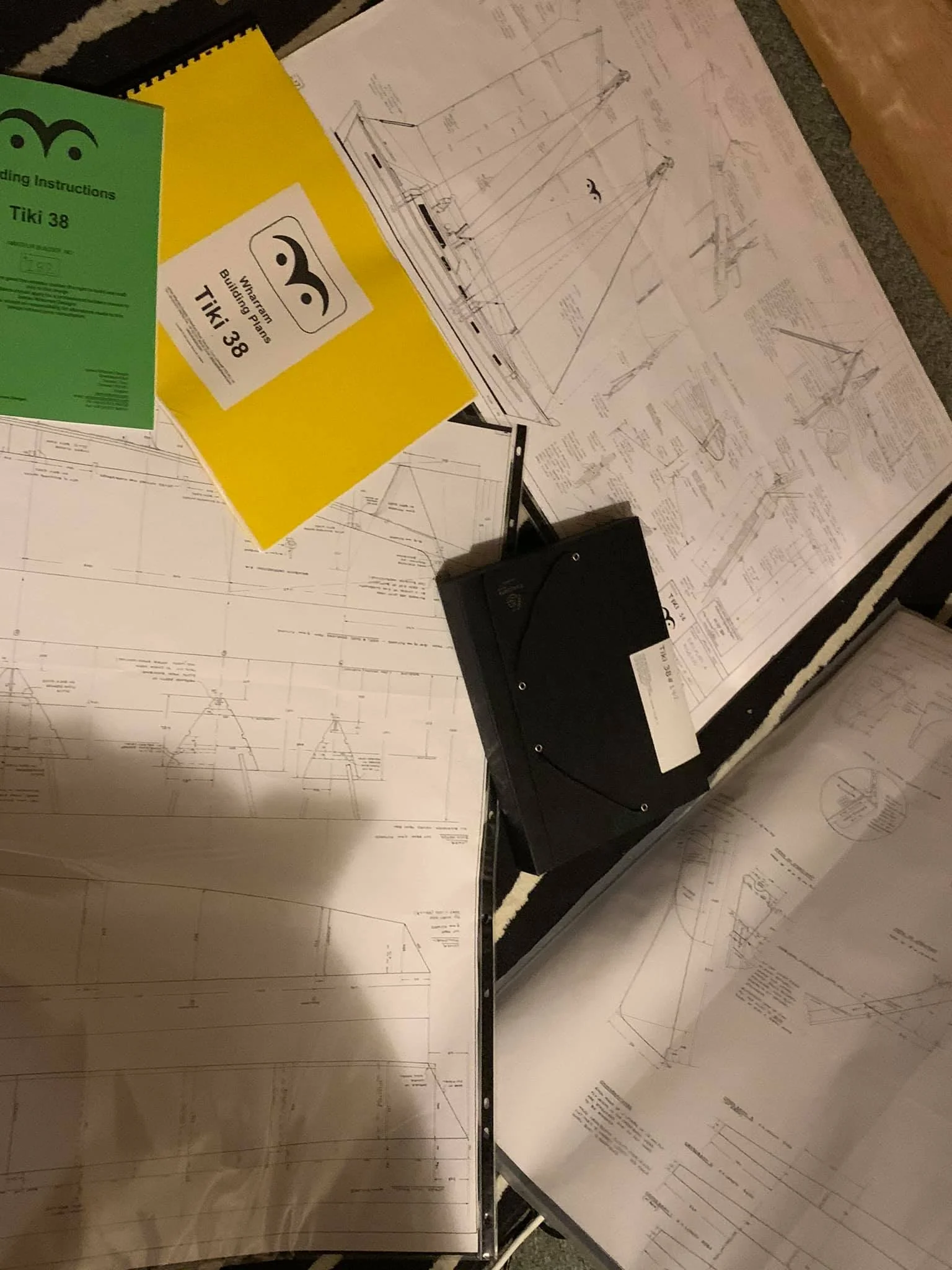
The competition answer is finally out: I’m building a Tiki 38. More precisely, number 182.
Testing the Maslow CNC on Full-Scale Parts
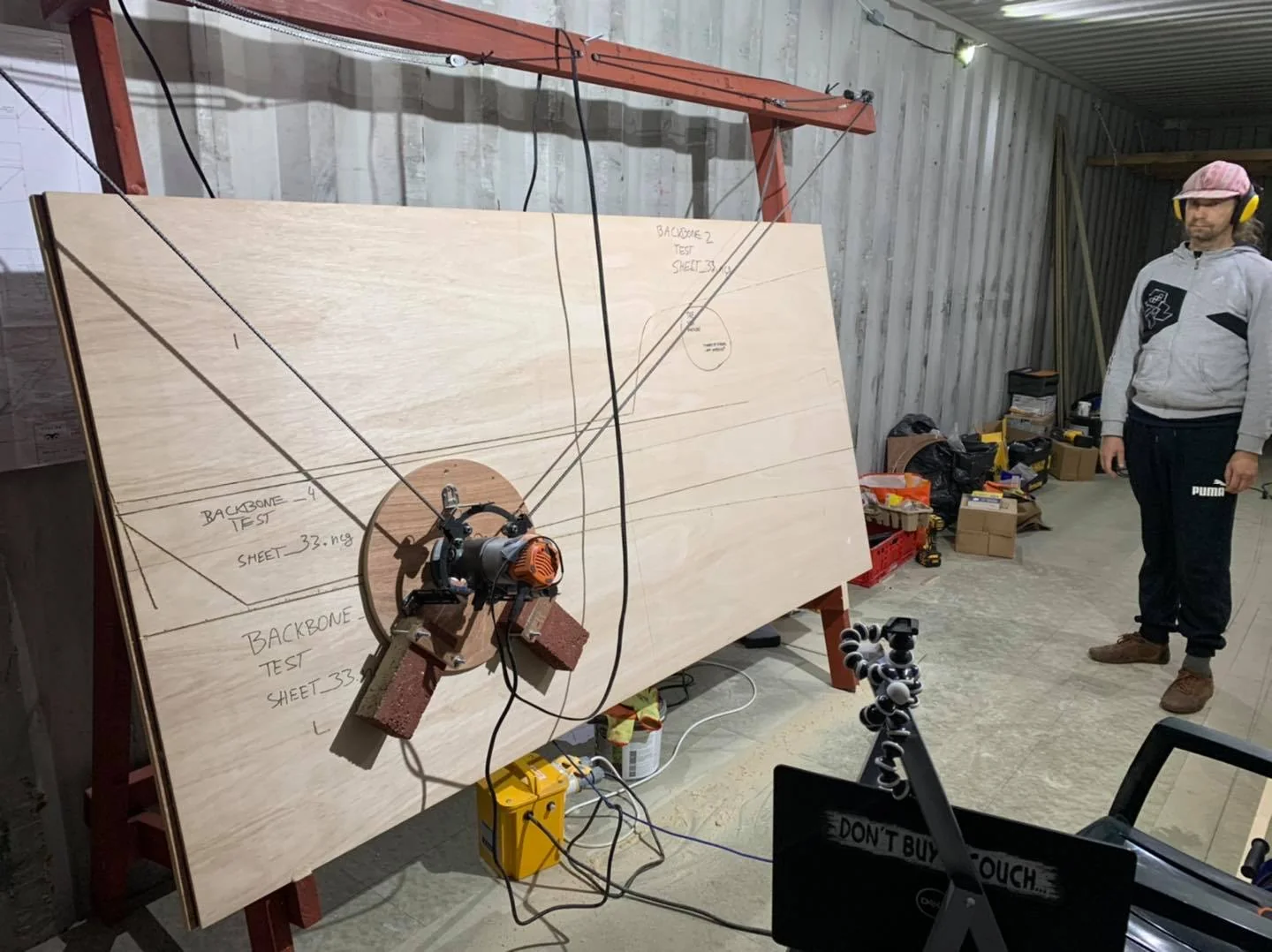
I finally saw the first pieces of our new 7.5-metre boat at full scale. The Maslow CNC cut a test batch from cheap 9mm plywood, and my translation of the Wharram Designs plans into machine files actually worked.
Cutting Ikaroa’s Backbone from Elite Plywood
I’m getting the backbone parts cut from precious 18 mm Robbins Elite plywood, then moving on to doublers, notches and lower bulkheads. Serious boatbuilding has officially begun.
Making Room for the Lower Hulls
We had to dismantle the old tent after discovering it was nowhere near tall enough for the hulls. The new, wider tent should give us room to work—and perhaps even keep it above 15°C.
Epoxy Coating Bulkheads and Laminating the Backbone
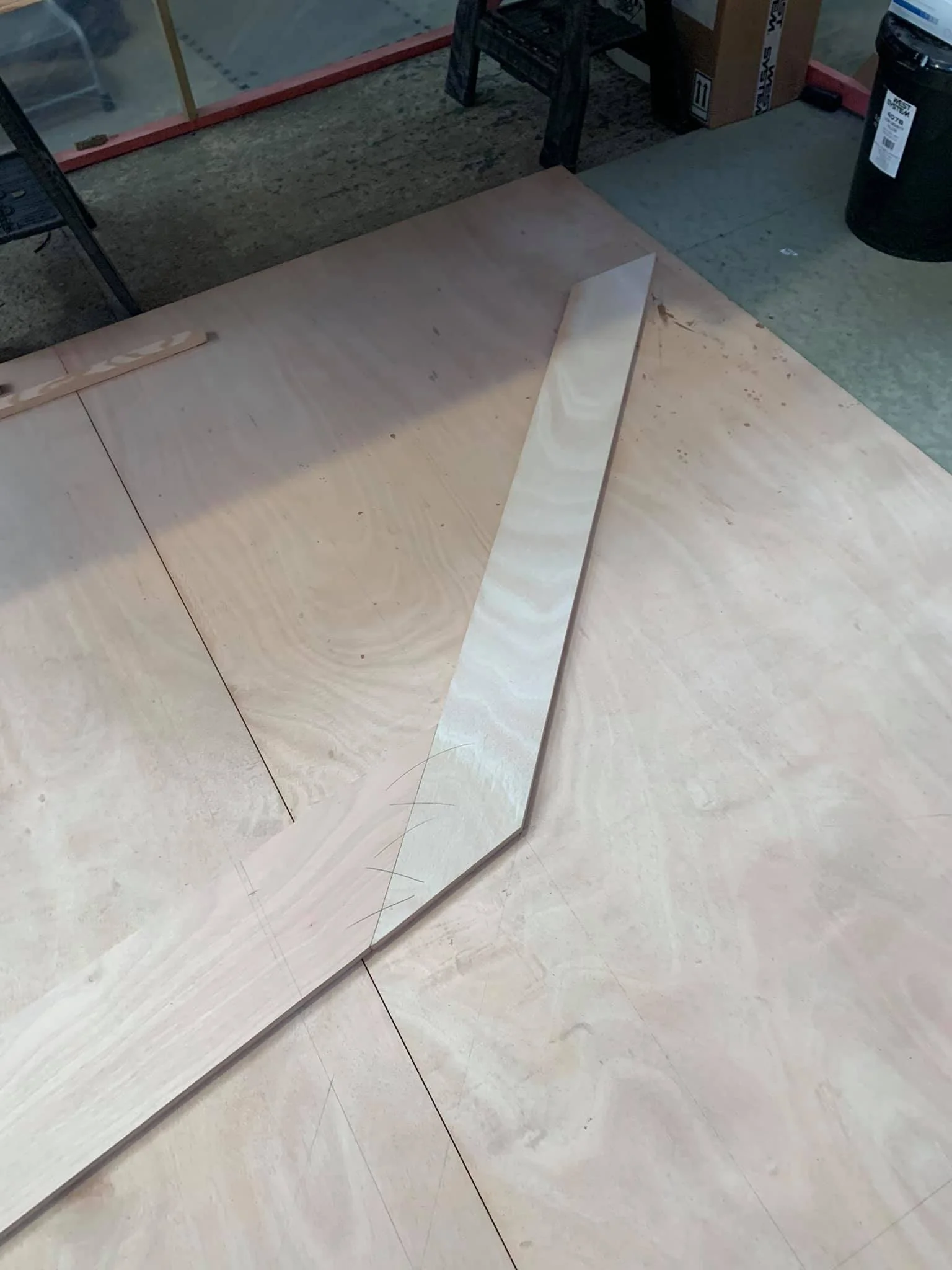
The monster tent is keeping us warm enough to resume work in the South Coast winter. We’ve started epoxy-coating the bulkheads and laminating the backbone elements together, so out come the nuclear reactor suits.
Re-checking Bulkheads on the Backbone
Today I re-checked the bulkhead placements on the half-finished backbone in our tent.
Correcting a Plywood Butt Strap
I used a Japanese handsaw to correct one of my blunders: an epoxy-bonded plywood butt strap that was 9mm too wide and left no room for the bottom of a bulkhead.
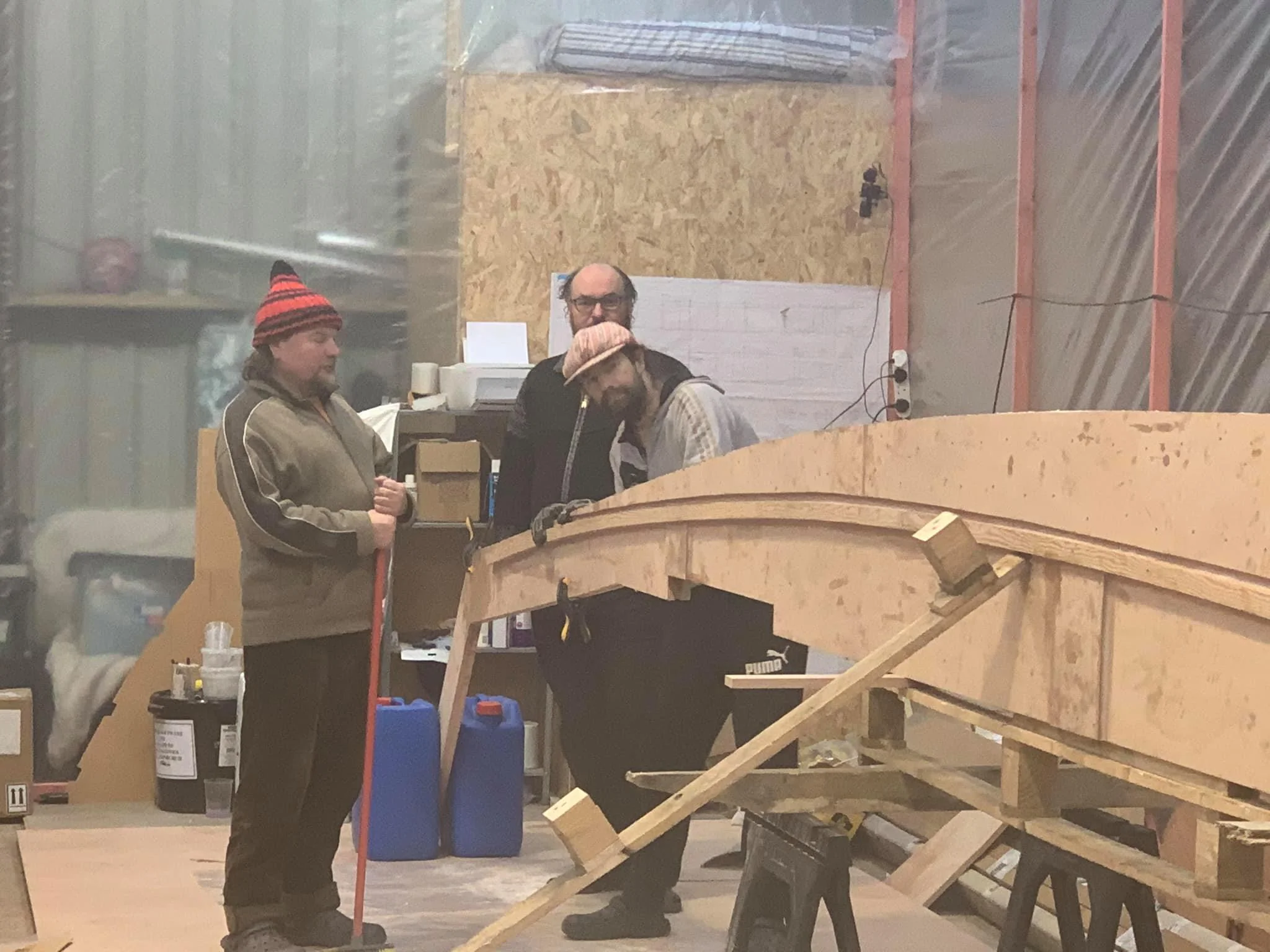
Both Lower Hulls Standing Together
I have both lower hulls standing together for their final sanding, making sure the keels and skegs are absolutely identical. They already look sizeable, though the upper hulls and cabin trunks will take the boat to 11.6 metres.
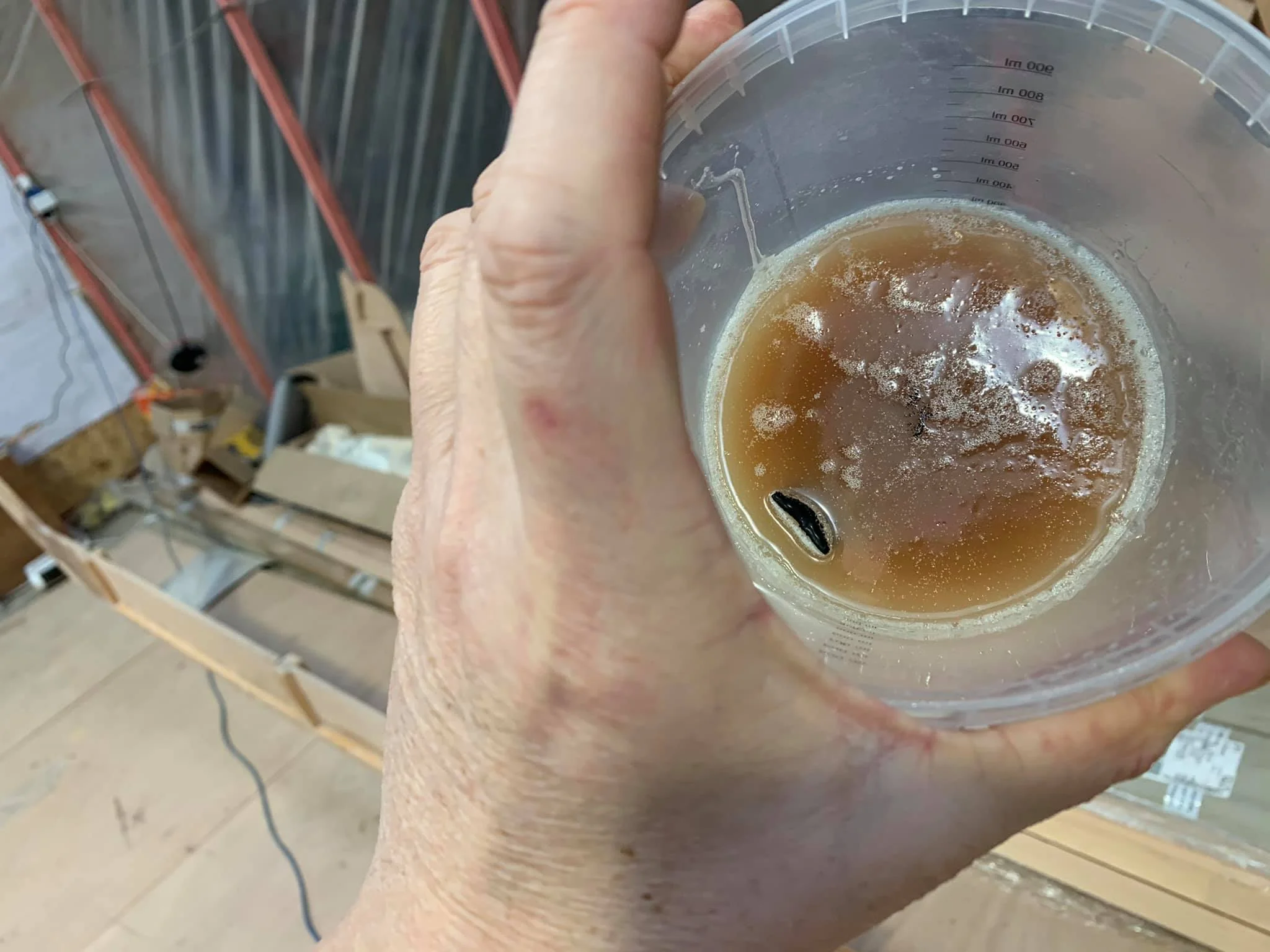
Too Much Epoxy, Too Much Heat
I mixed too much epoxy at once and watched the exothermic reaction turn it into a smoking block, melting the plastic spatula. For bigger jobs, I’ve learned that less at a time is definitely better.
Supporting Kuba’s Next Project
I’m supporting Kuba as he heads home to finish his own project after six months helping us build our self-sufficient catamaran. If you support him, you may even get a workshop on designing and automating an off-grid home.
I Start Assembling Ikaroa’s Lower Hulls
I finally start assembling the lower hulls now that all the parts are ready—and it’s beginning to look like a boat. I also say goodbye to Kuba, welcome Aśka to the crew, and take a slightly slower week for Pesach.
Bulkheads Set Up, Finally
I’ve finally finished setting up the bulkheads after a few adjustments to the backbone. One more careful check, then I can start epoxying them in—and relax a little.
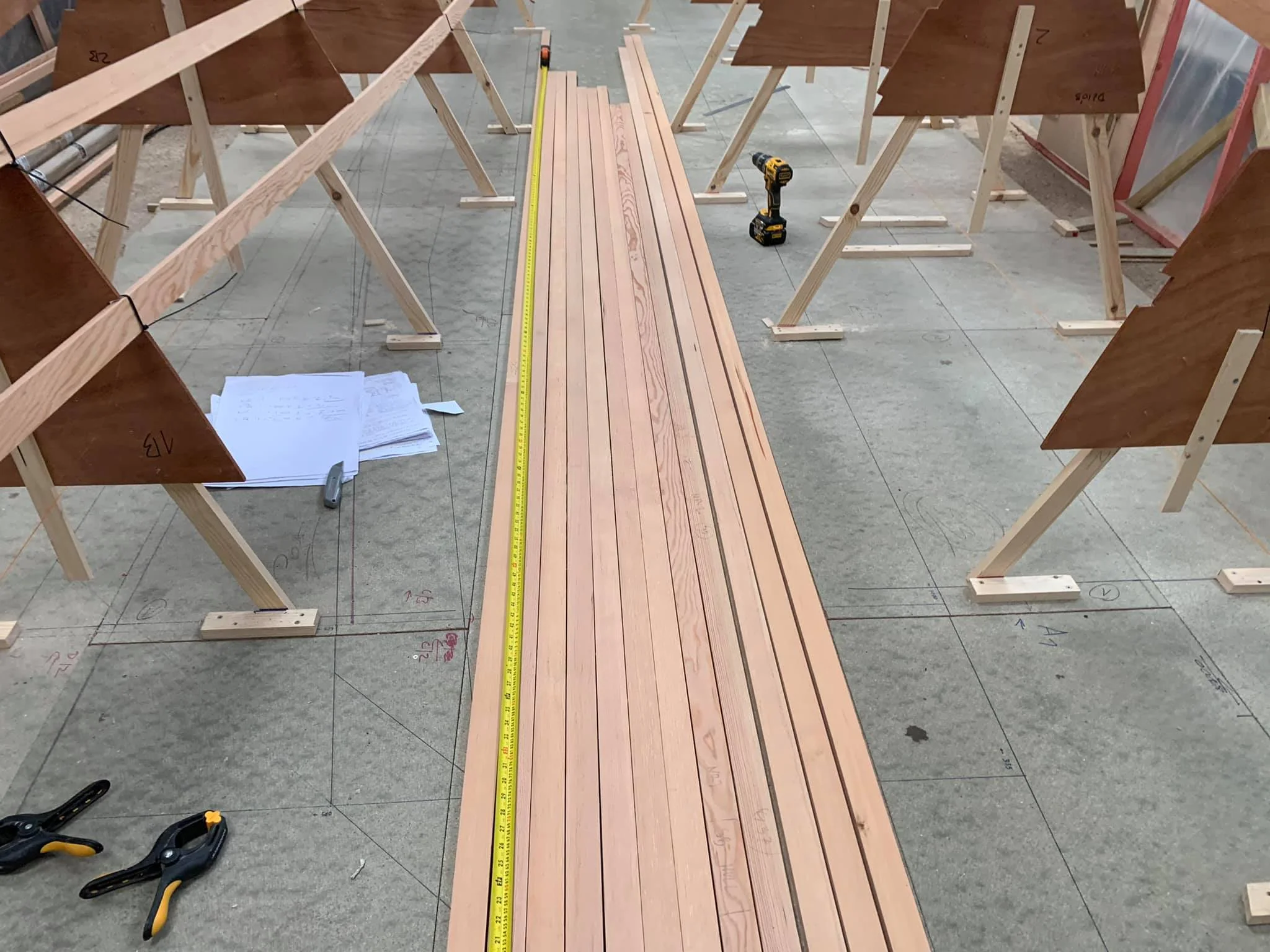
Long Battens for Ikaroa’s Stringers
I explain why I chose better boatbuilding timber for Ikaroa, including long made-to-order battens that mean I only need to scarf one stringer.
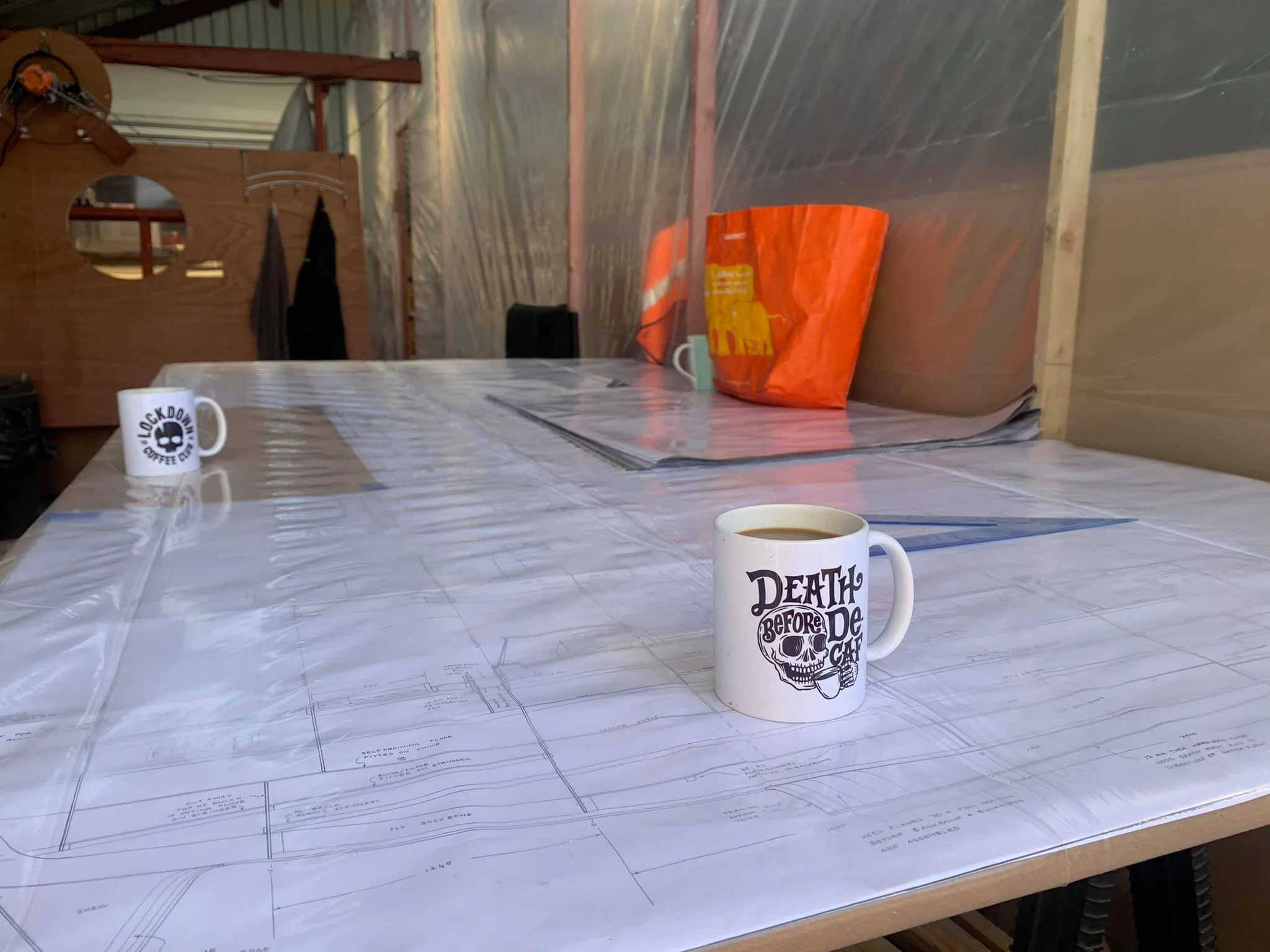
Reorganising the Boatyard for More Plans
I finally need more than one sheet of plans at a time now that I’m working in 3D. Clearly, the boatyard had to be reorganised.
After Months of Work, the Hulls Sit Straight
It feels so good when months of work confirm that I’ve done at least some things right—and the hulls aren’t listing to one side.
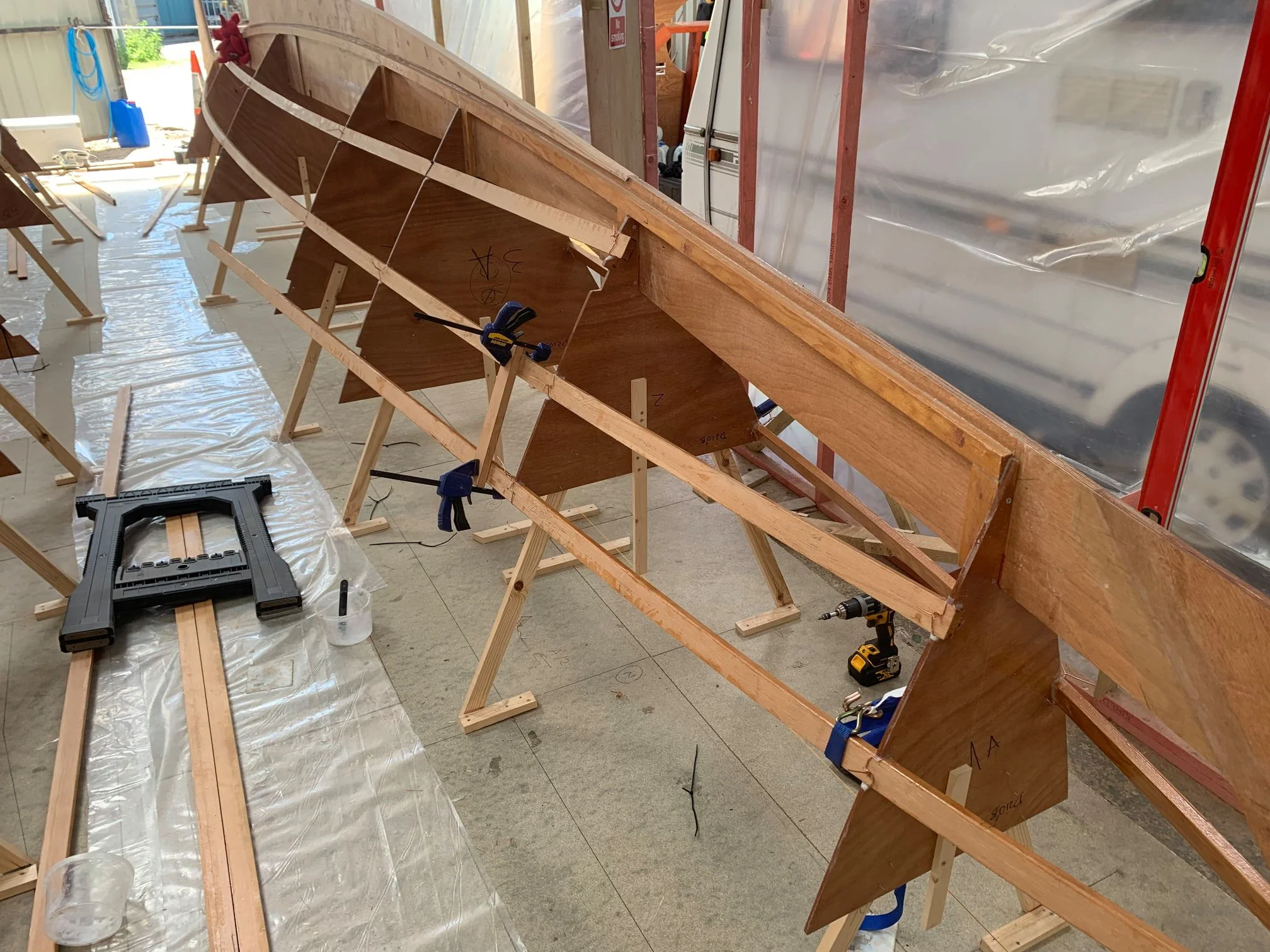
Torturing Stringers To Relieve Stress
We’ve already tortured two stringers, with six more waiting their turn. No stringers were seriously harmed in making these photos.
How Many Clamps Does Boatbuilding Need?
I thought I knew how many clamps we needed for Ikaroa. I was wrong—and this was only a small selection.
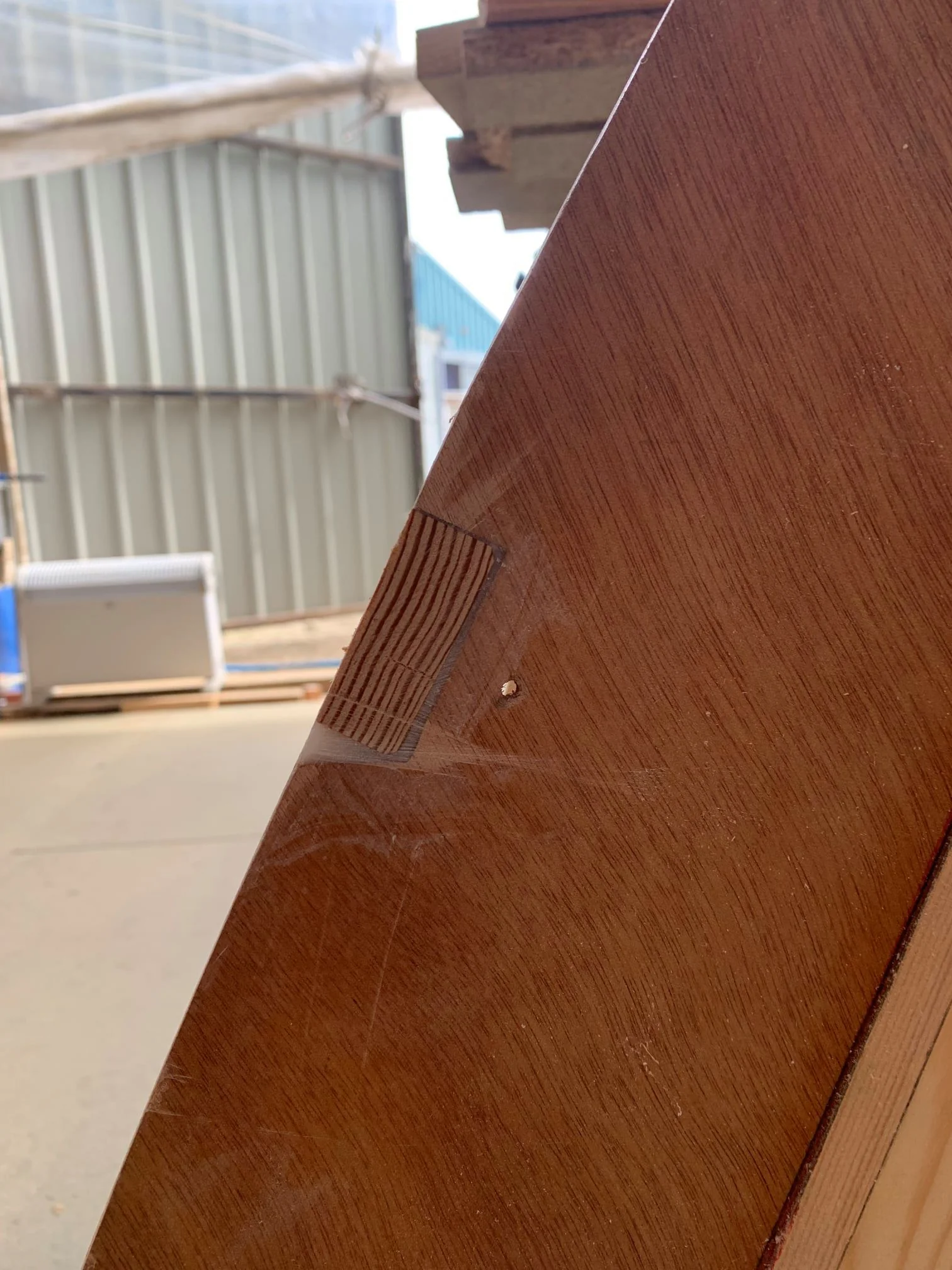
There Is No End to Sanding
I’m tidying the stringers, sanding the backbone side battens and filling all those little holes before the hull sides go on. Laminating may offer a brief respite, but more sanding is already waiting afterwards.
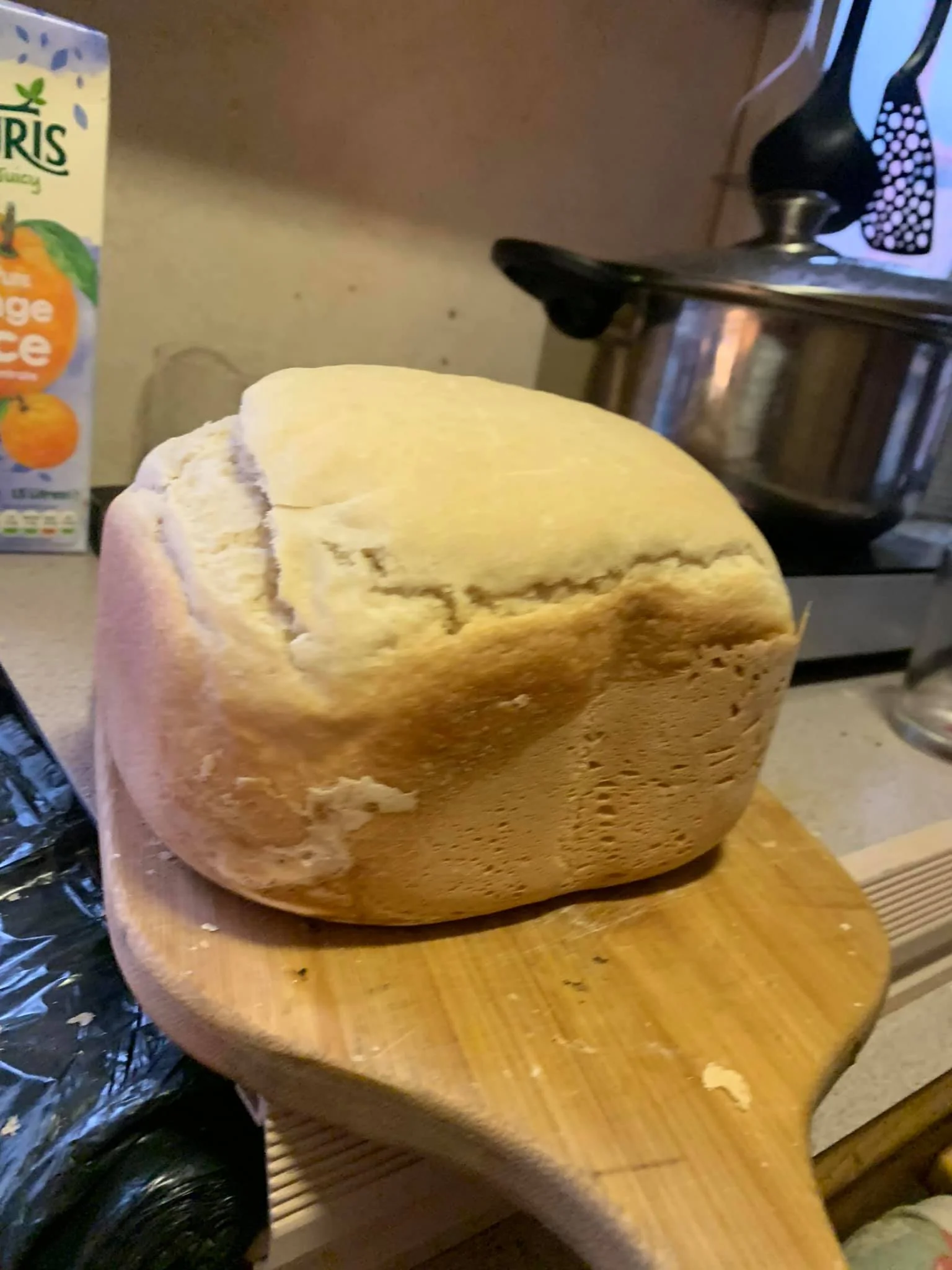
A Bread Maker for Our Gluten-Free Galley
We’re testing a bread maker for our gluten-free galley, with timed baking and modest power use making fresh bread possible at the boatyard. I just need to remember to switch it on.
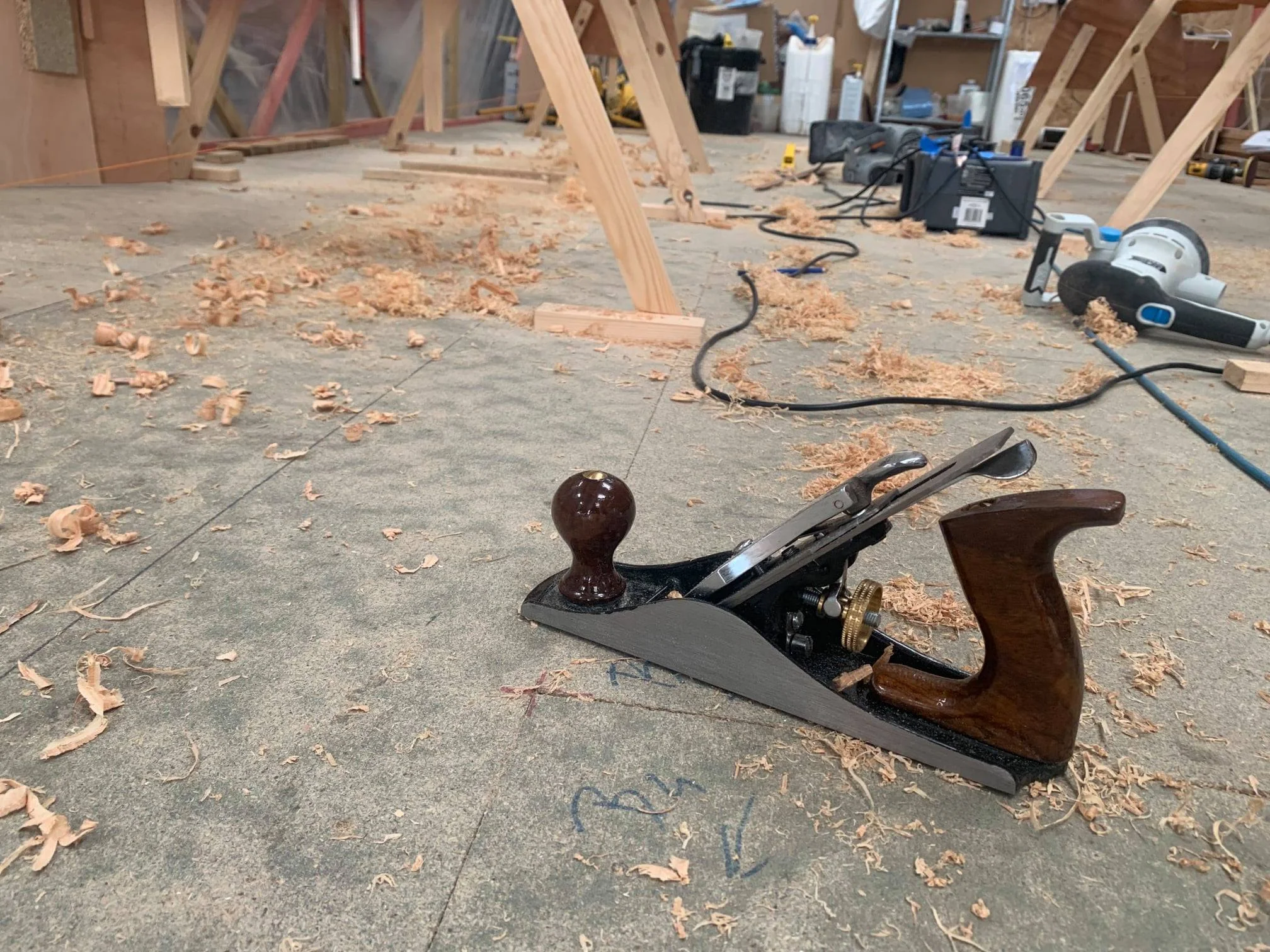
Why I Turn Expensive Timber into Sawdust
I sometimes wonder whether boatbuilding looks like a completely pointless exercise: putting time and money into expensive timber, only to turn it into wood shavings.
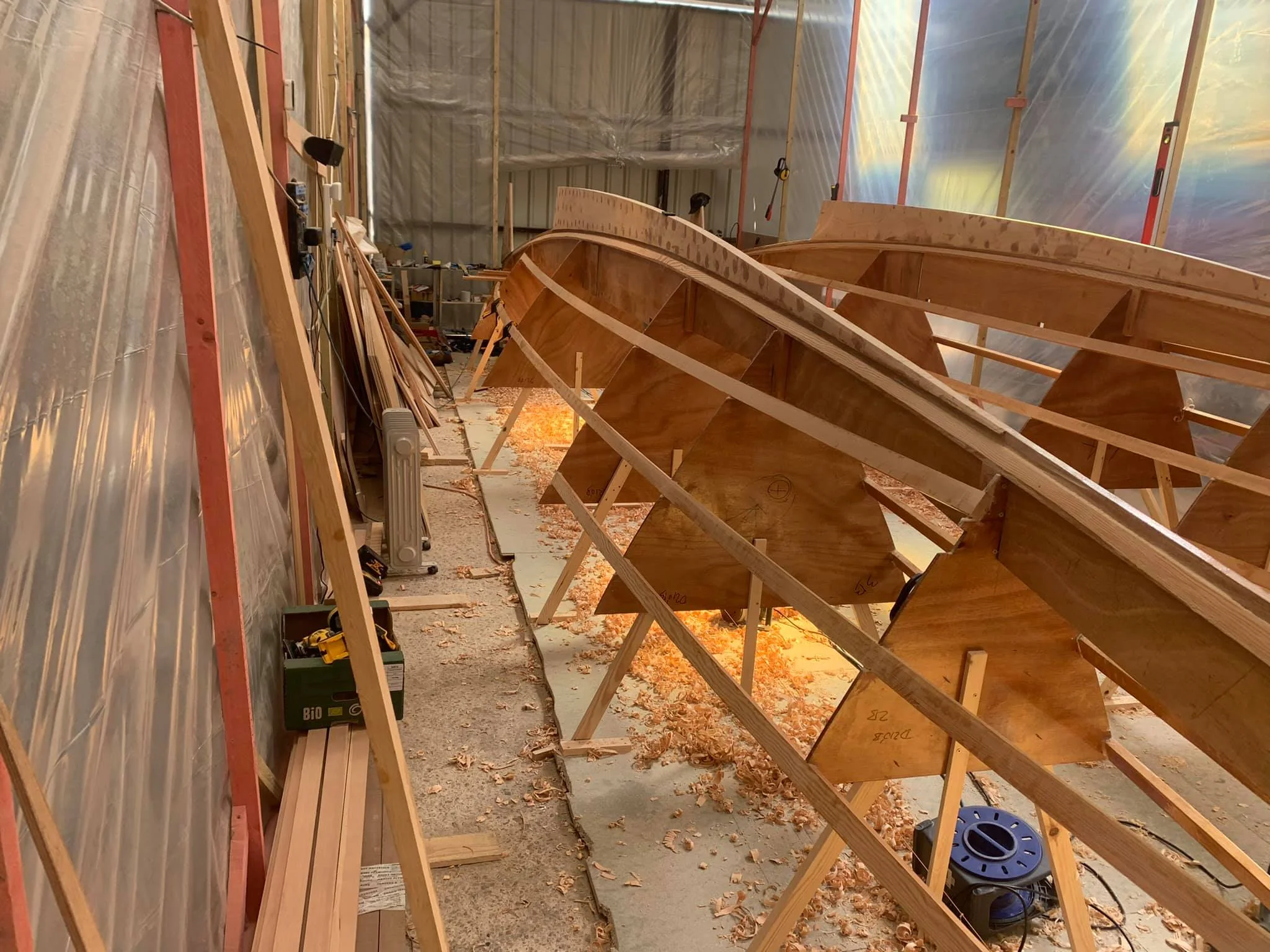
Counting the Hours on Ikaroa
I’m finding Hanneke Boon’s ballpark estimate of 2,000 hours to build a Tiki 38 surprisingly accurate. Add another 4,000-plus hours for cleaning the workshop afterwards.
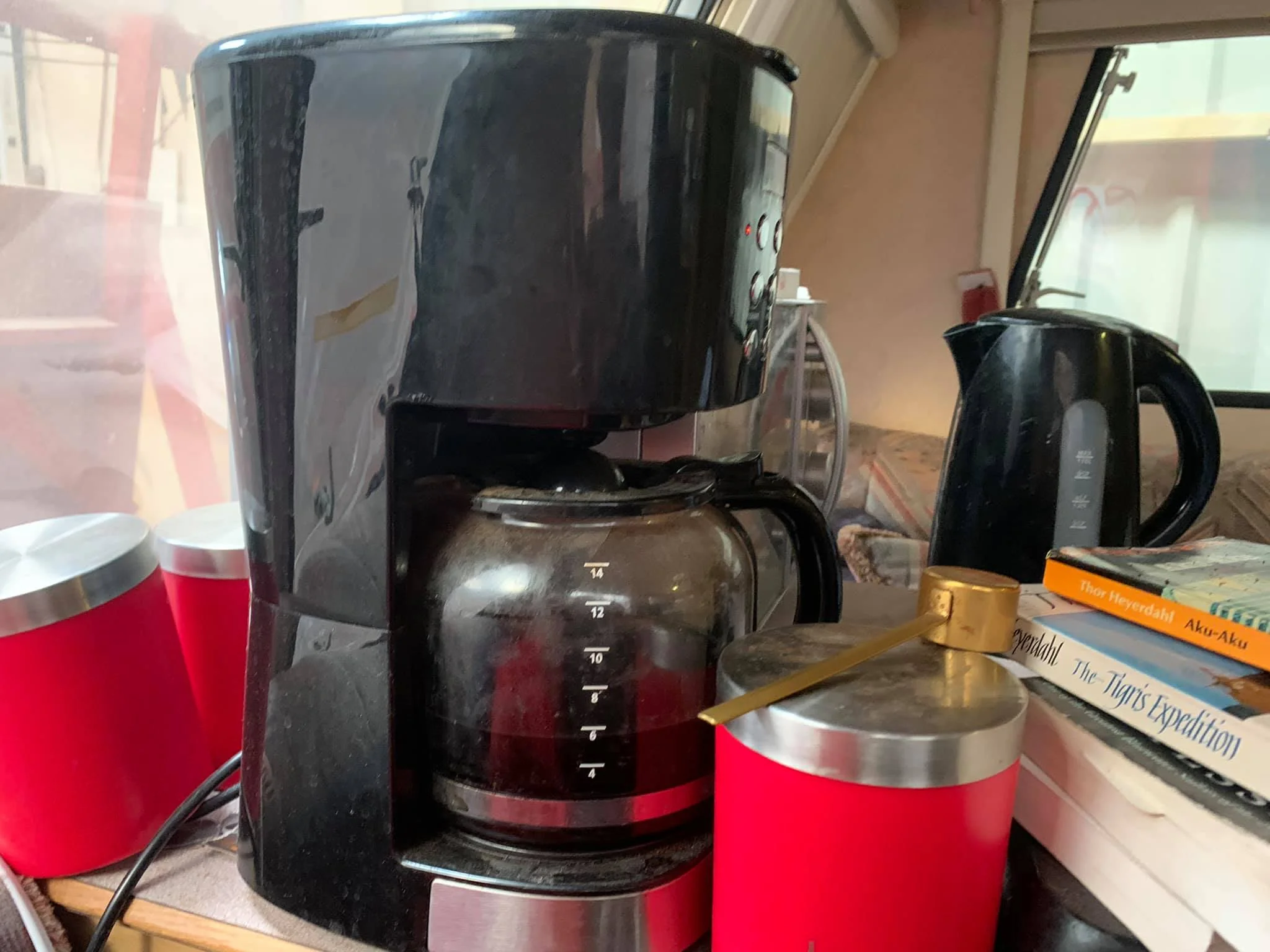
Powered by Dreams and Caffeine
We reckon coffee accounts for 0.5% of the whole boatbuilding budget. Hence the slogan: “Powered by dreams. And caffeine!”
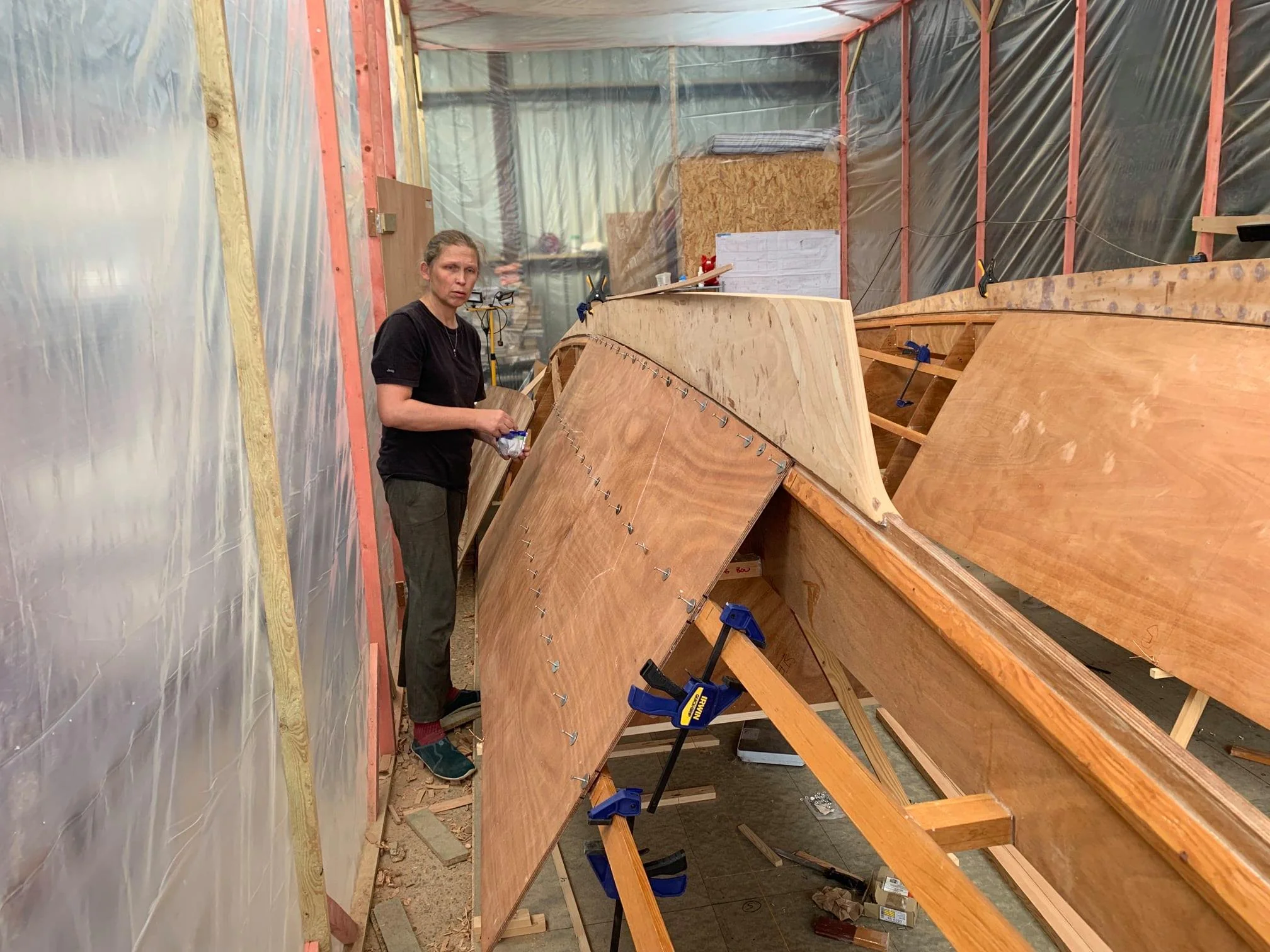
Fitting Plywood to the Superstructure
I’m sealing the shape of Ikaroa’s lower hulls, and fitting these large plywood panels has been the most stressful part of the build so far. The last central panel is finally fixed, so I’m taking a week away before returning to finish the hull sides and laminate them.
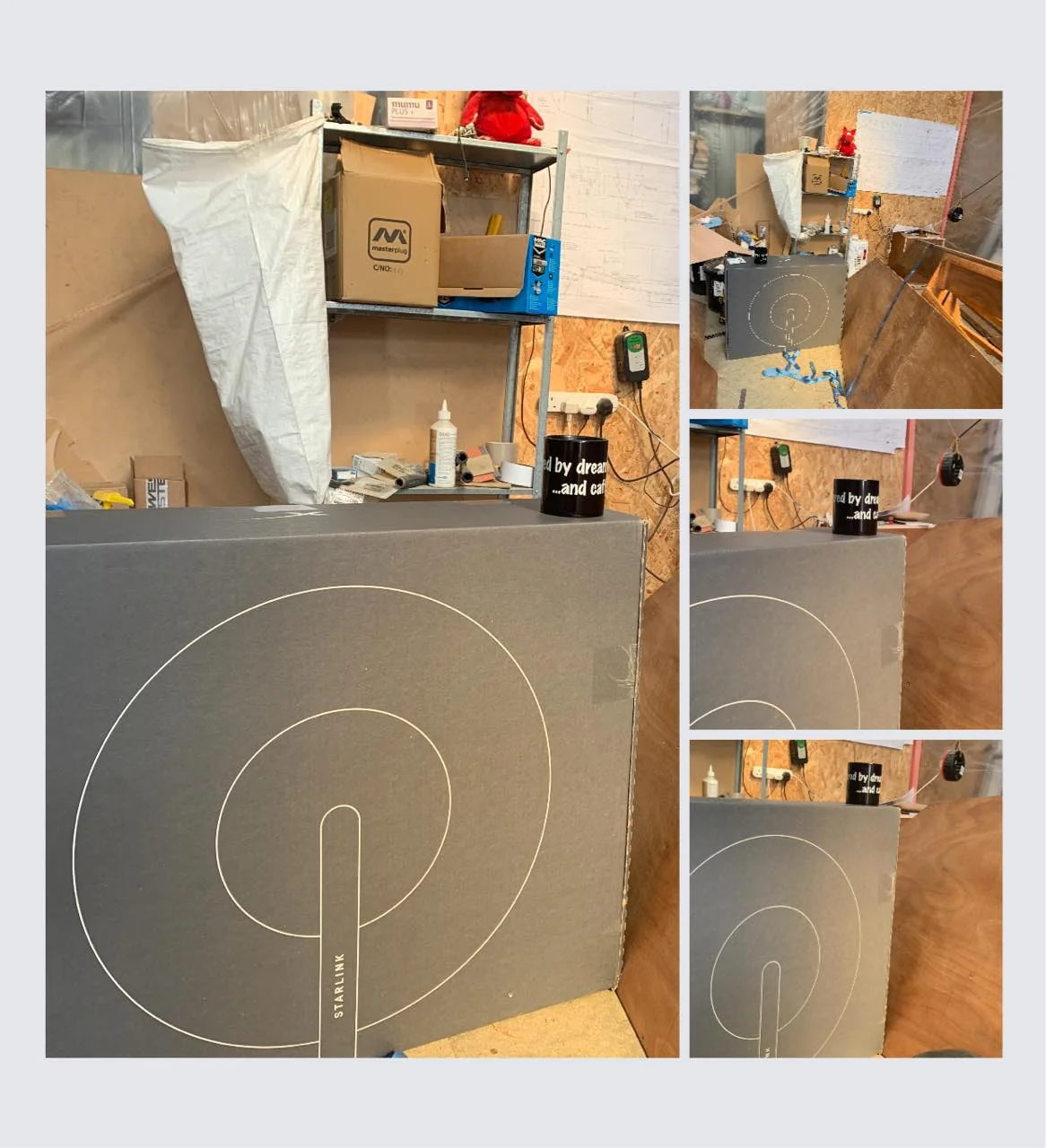
Starlink Arrives in the Workshop
Something very interesting—and extremely important—arrived in our workshop earlier than expected: Starlink.
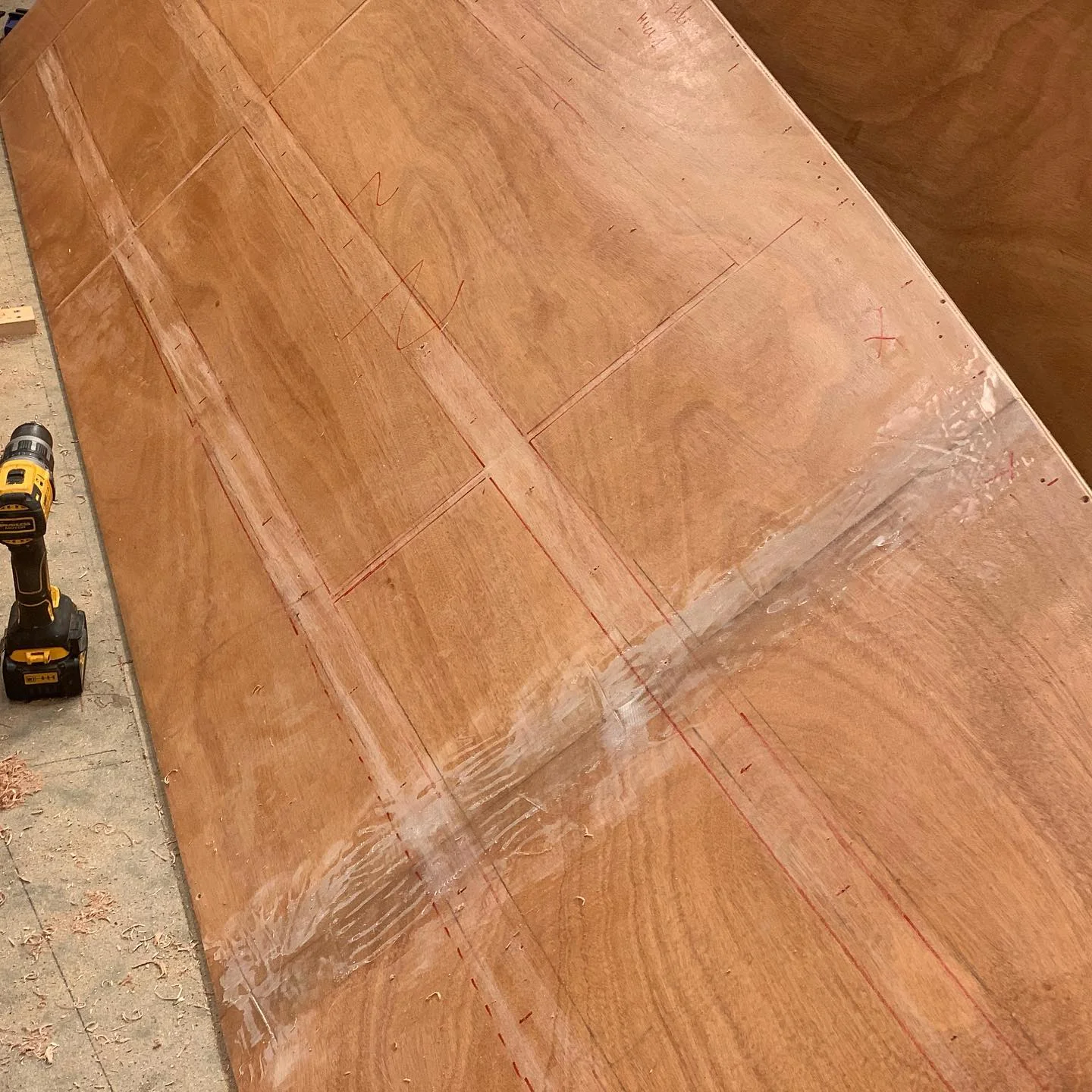
Fitting the Bow Parts to Ikaroa
I finally got the bow parts fitted, with Zaz, ABBA and Cohen providing the soundtrack. A great start to the week.
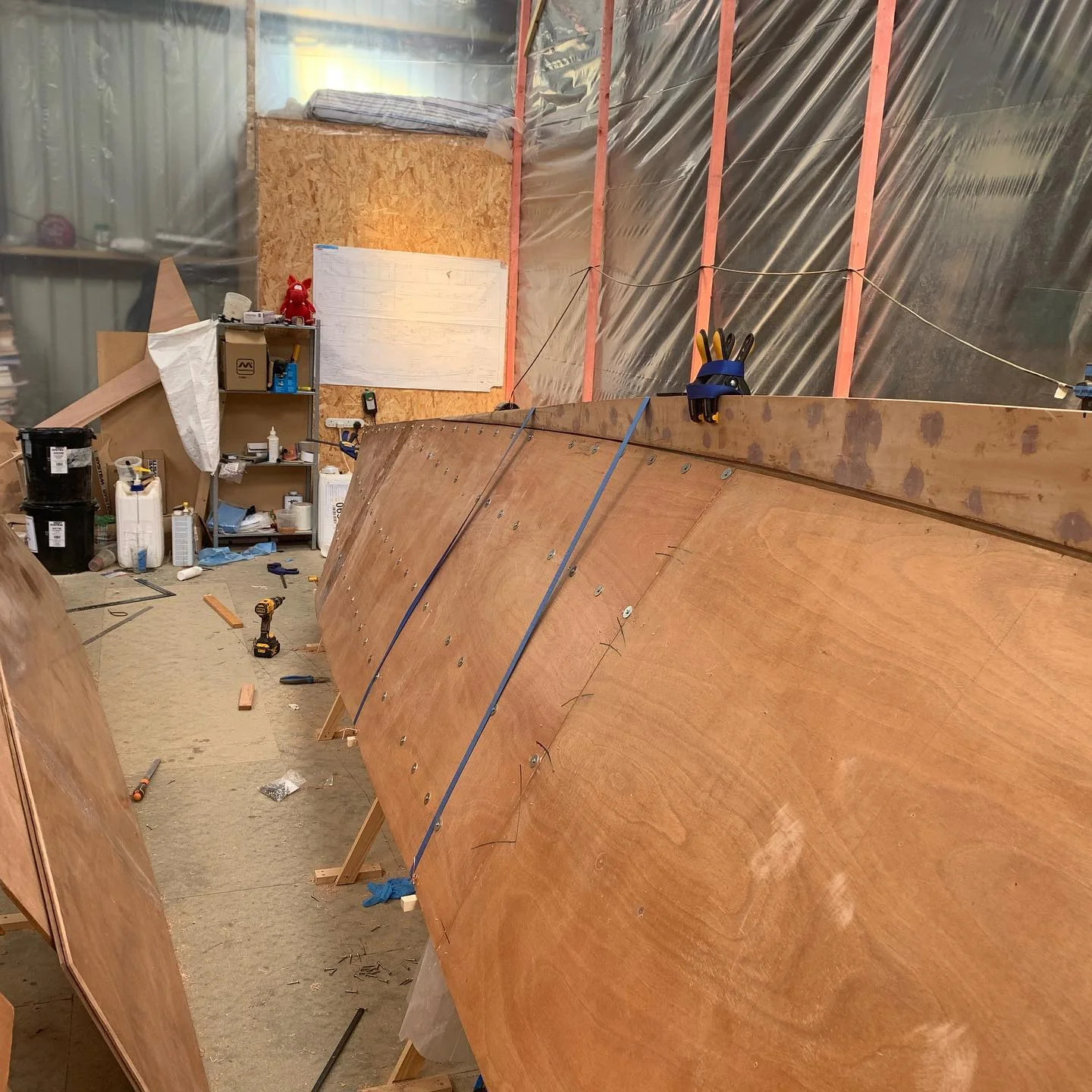
Another Hull Side Panel On
I got epoxy in my hair, wood shavings everywhere, and the next hull side panel on. The playlist still needs work—Zaz finished before I did.
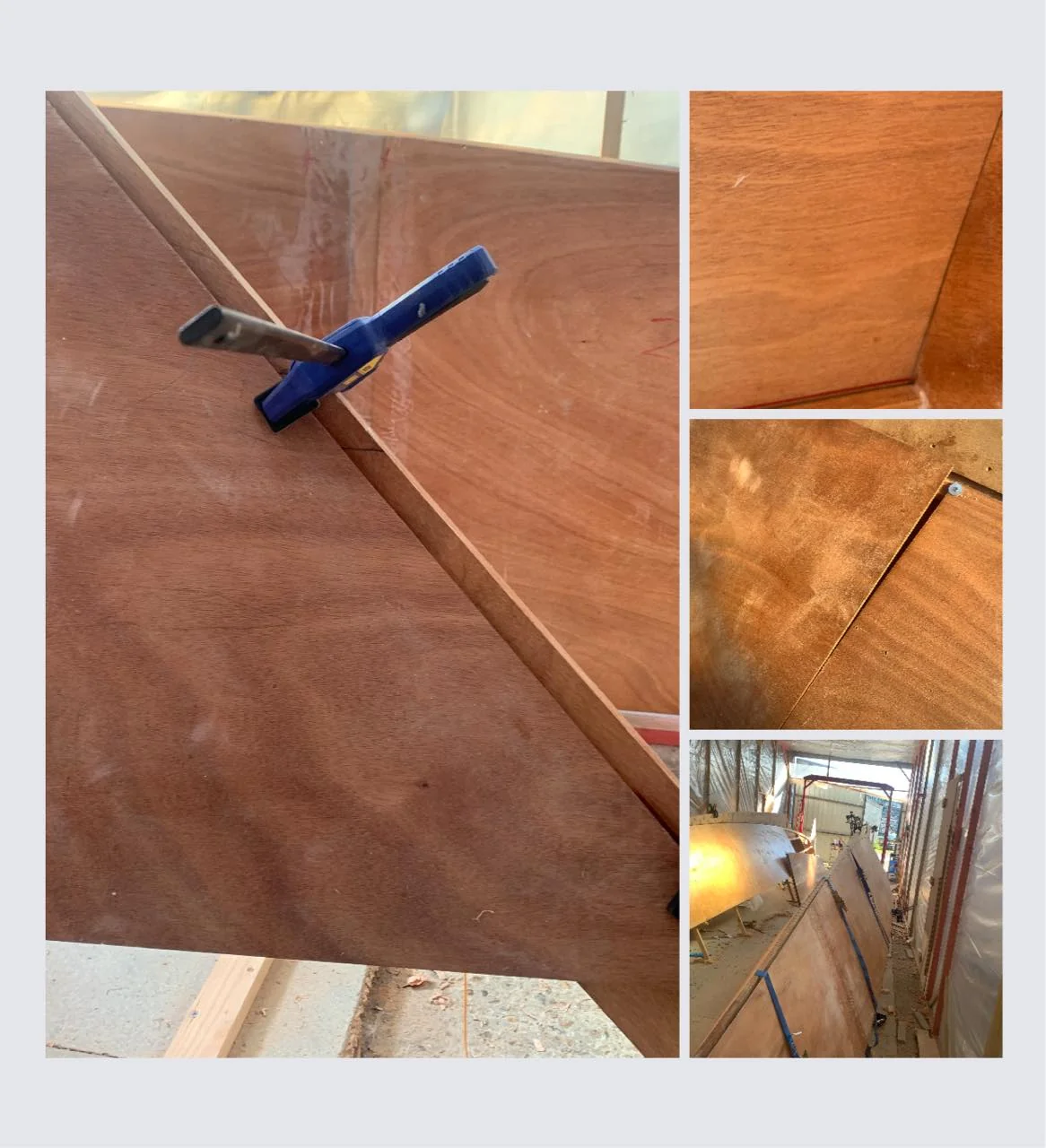
The Remaining Hull Panels Finally Fit
I moved into our winter shelter and worked through the remaining hull panels. After all the stress and mistakes, it feels great to see the major joins fitting snugly and precisely.
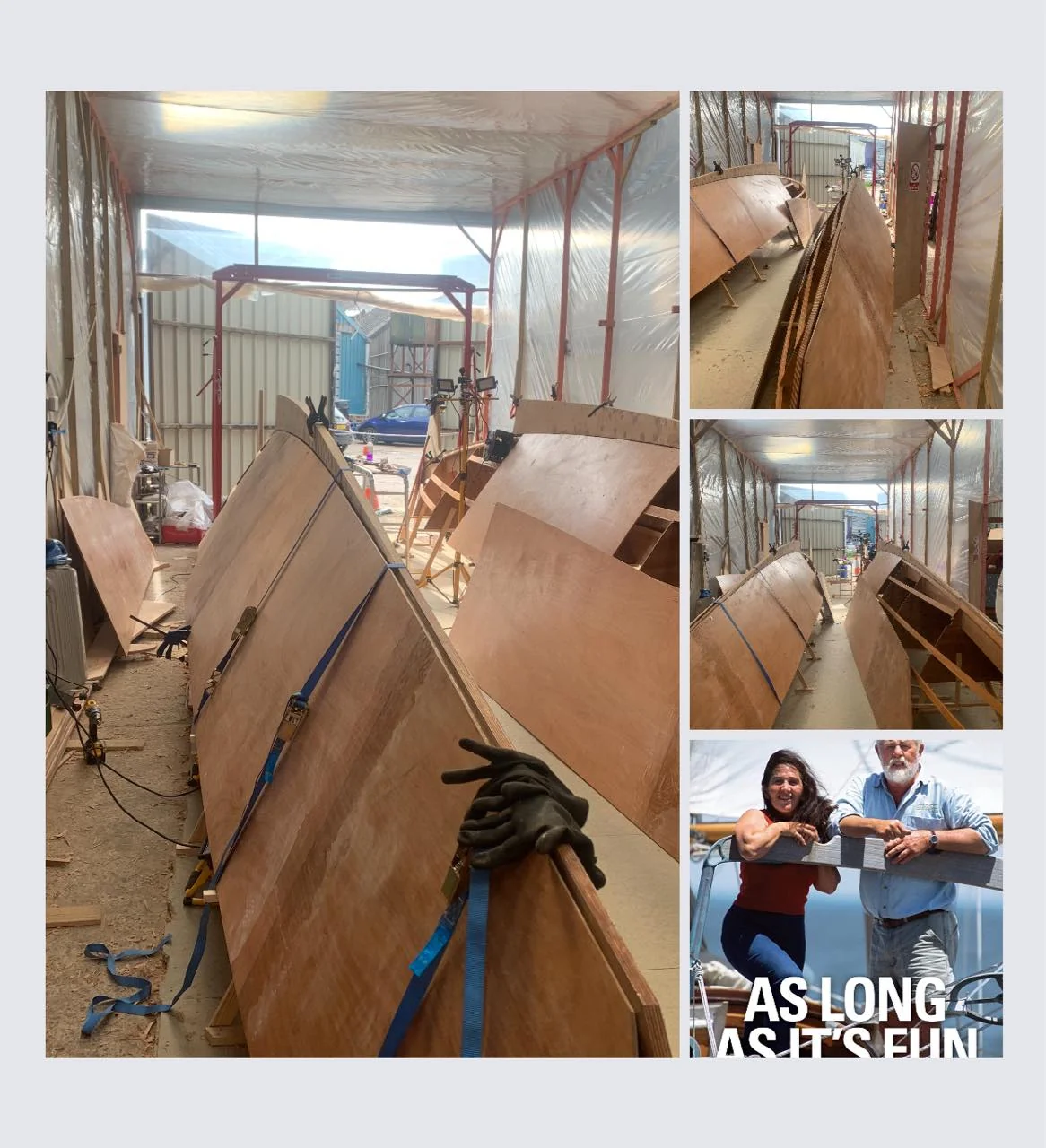
Choosing the Hard Way to Build Ikaroa
I’m listening to Herb McCormick’s book again and taking Larry Pardey’s wisdom to heart: building a boat is difficult, but I chose this way. So I’m trying not to moan and simply get on with the work.
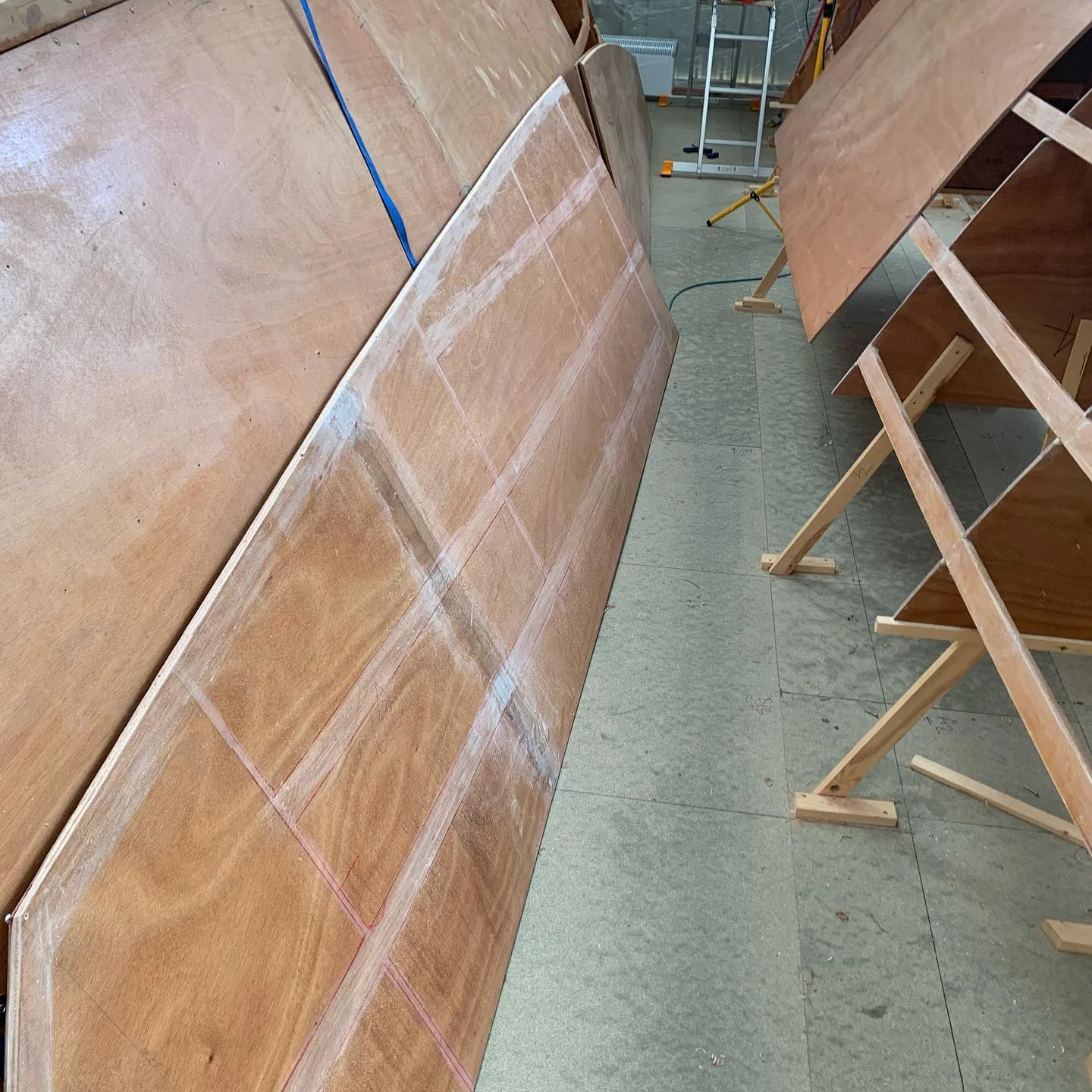
Dry-Fitting Ikaroa’s Hull Side
I spent another day dry-fitting, sanding, cleaning and drilling a plywood hull panel before it could finally be glued in place. And people wonder why boatbuilding takes so long.
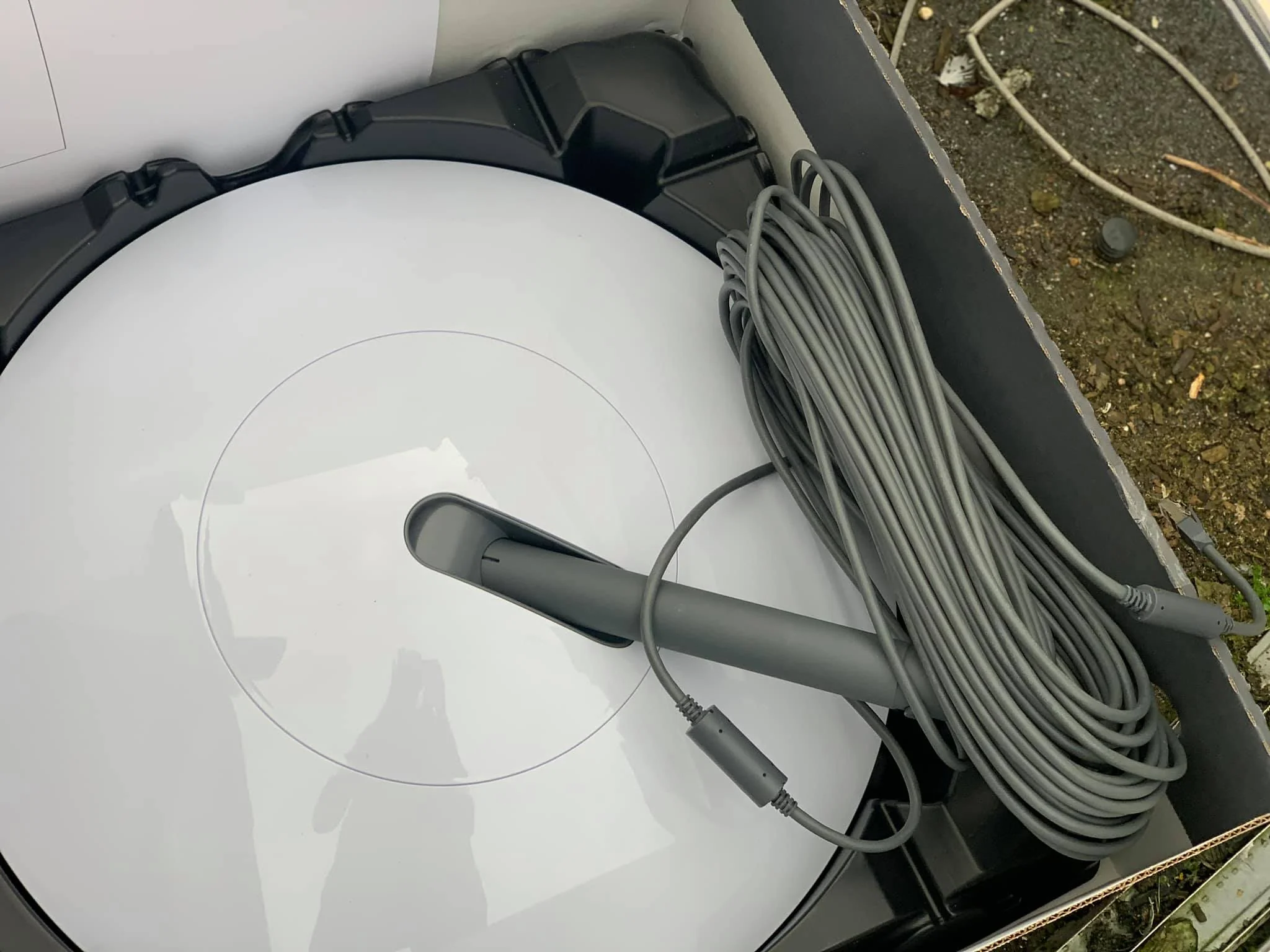
Testing Starlink Before It Lands on Ikaroa
I’m testing internet from Mars before it later lands on our boat.
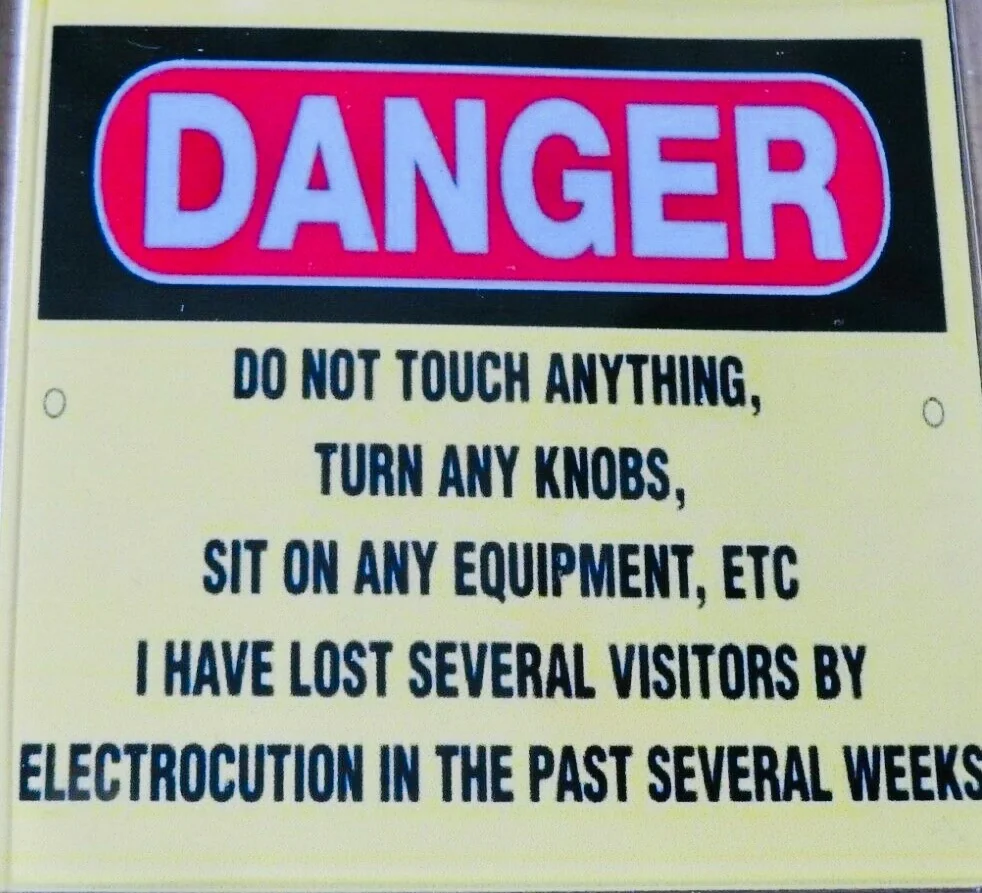
A Paint Scheme for Ikaroa
I think we’ve found a paint scheme spot on for our boat. I’m just not sure whether visitors will take it the wrong way or get scared.
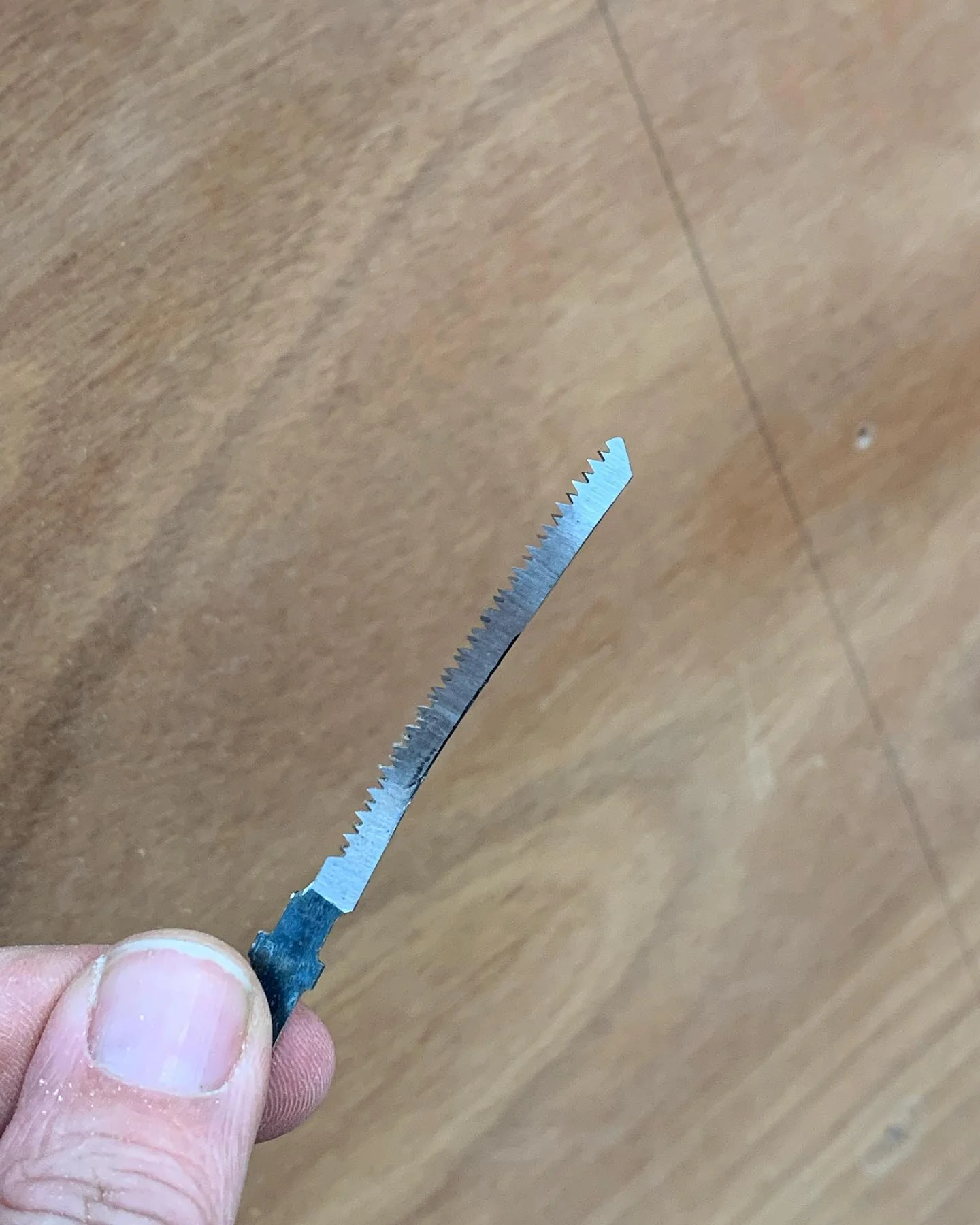
Lesson Number Zero With a Jigsaw
I learned lesson number zero in using a jigsaw: check what’s underneath before cutting, especially when it’s a cement floor. The blade produced an interesting effect.
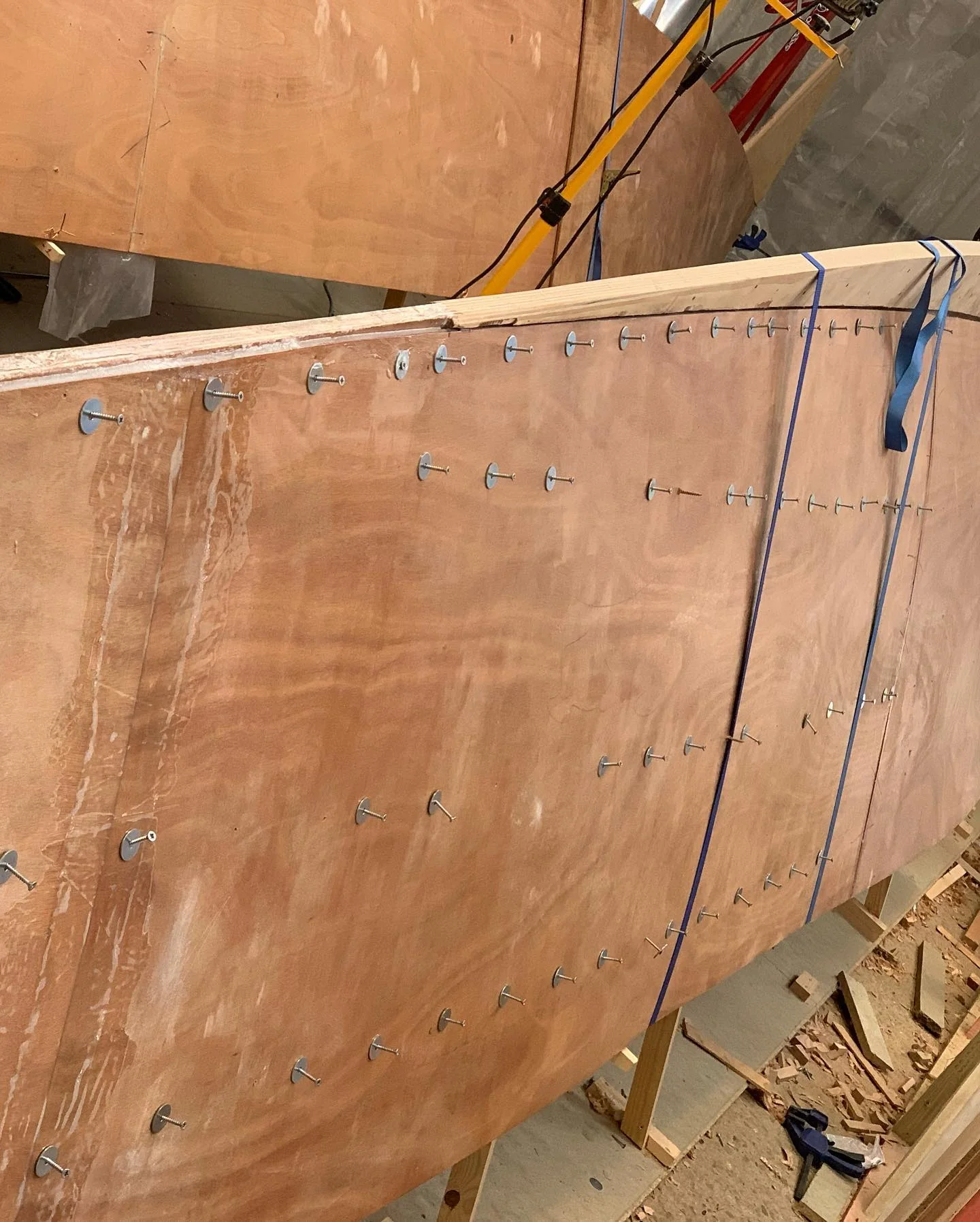
My Bows Are Set in Epoxy
I managed to finish another bit, and my bows are now set in something almost as permanent as stone. Time to move on to the last four bits at the sterns.
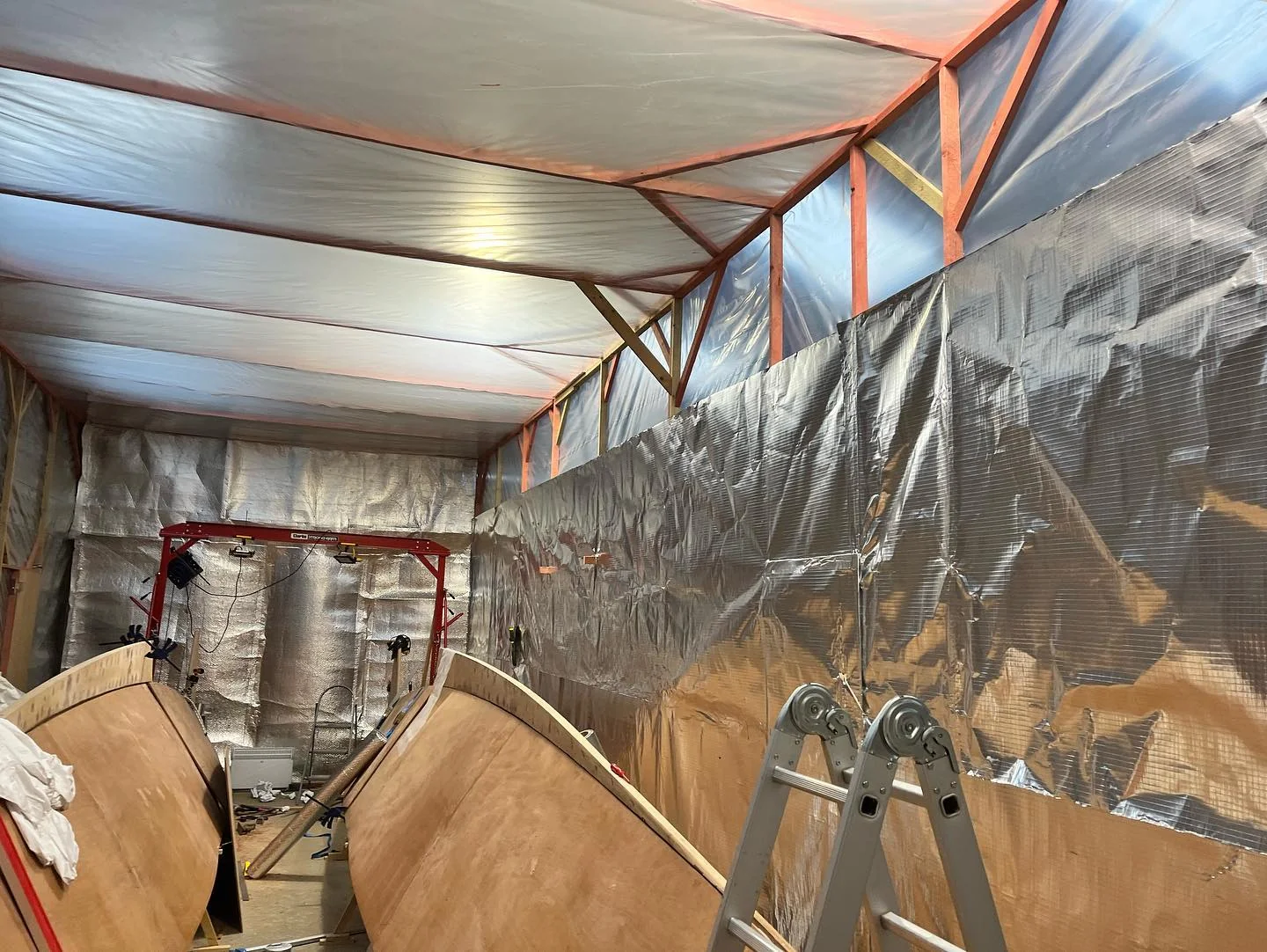
I’m Upgrading Our Workshop Tent
After three weeks refreshing my graphic design skills, I’m back in the workshop upgrading our tent. It’s going silver, much warmer, and should cut our heating costs roughly in half.
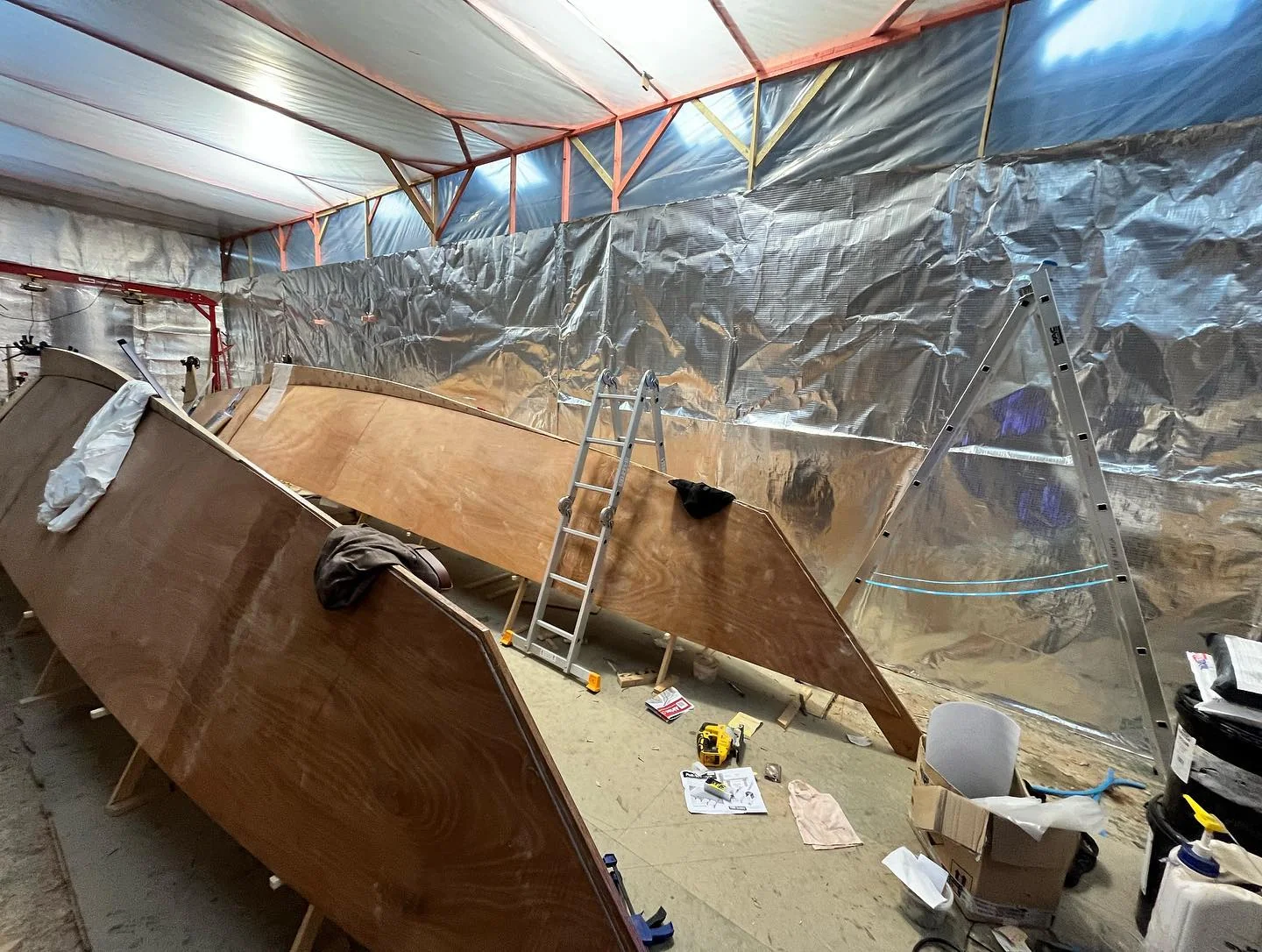
Making the Workshop Tent Silver
After three weeks refreshing my graphic design skills, I’m back in the workshop upgrading our tent. It’s going silver, much warmer, and should cut our heating costs by at least half.
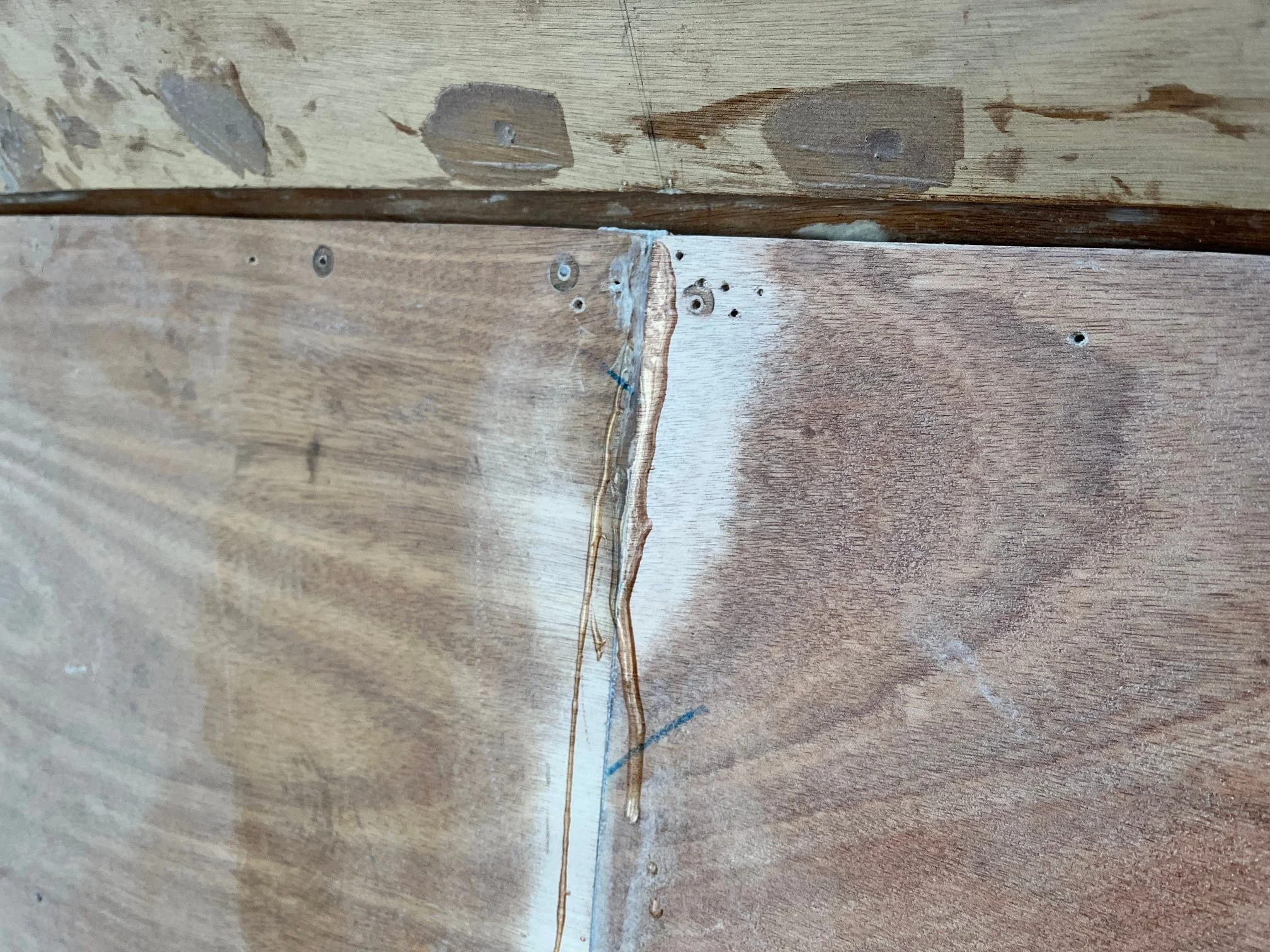
Four Stern Panels and More Sanding
With Maciek’s help, I dry-fitted four stern panels and finally completed the hull sides on both lower hulls. Now I’m sanding, filling and preparing the panel ends for glass tape—because apparently boatbuilding is mainly sanding.
The Hull Sides Are Finally Fitted
After a long and painful job, I’ve fitted and laminated all the hull sides and got the workshop tidy again. Next I’m making fillets and sending Adam to the workshop for his first weekend of laminating both hulls.
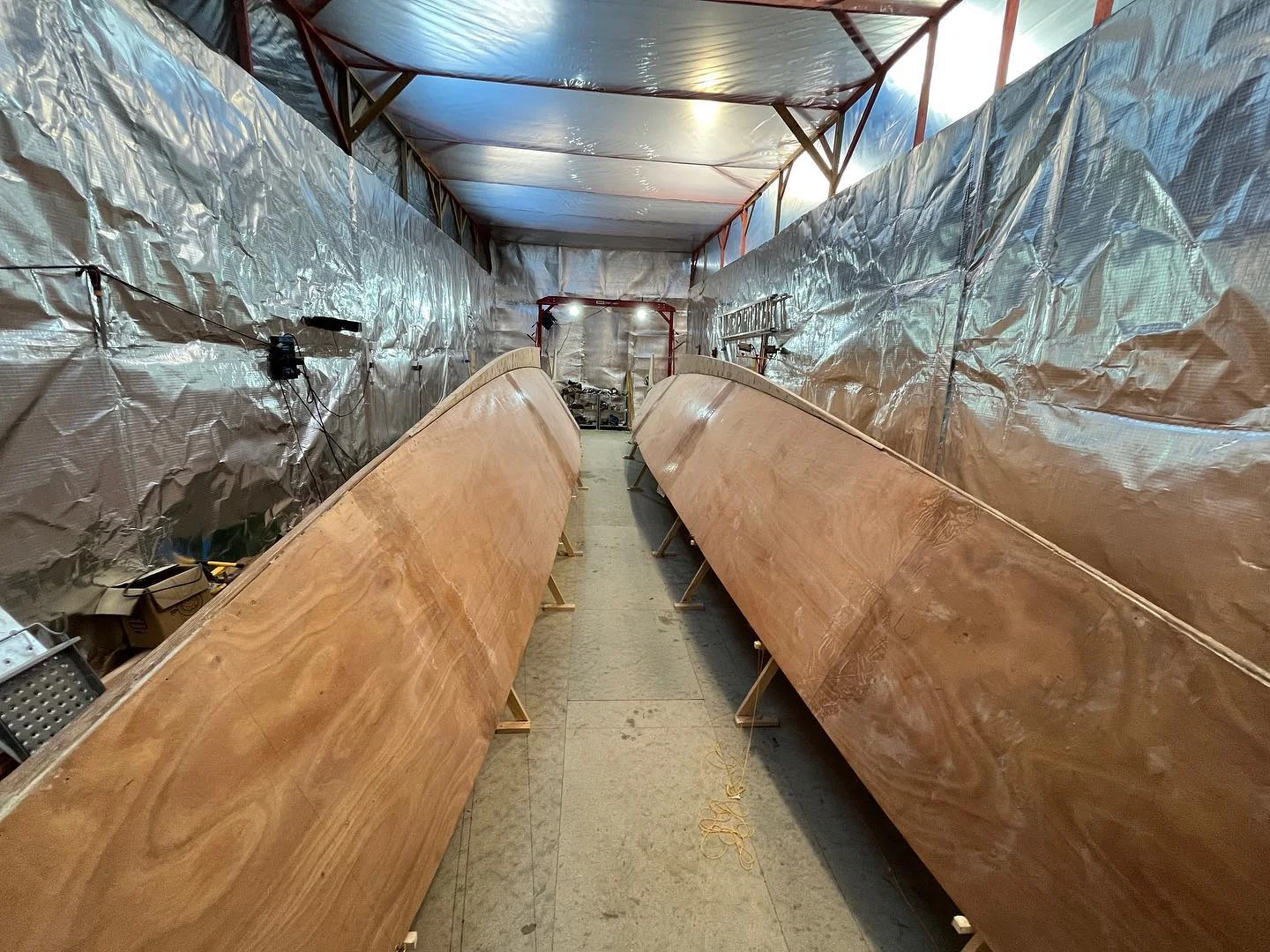
Breakfast Between the Tiki 38 Hulls
I had breakfast—technically lunch—with a view between the Tiki 38 hulls.
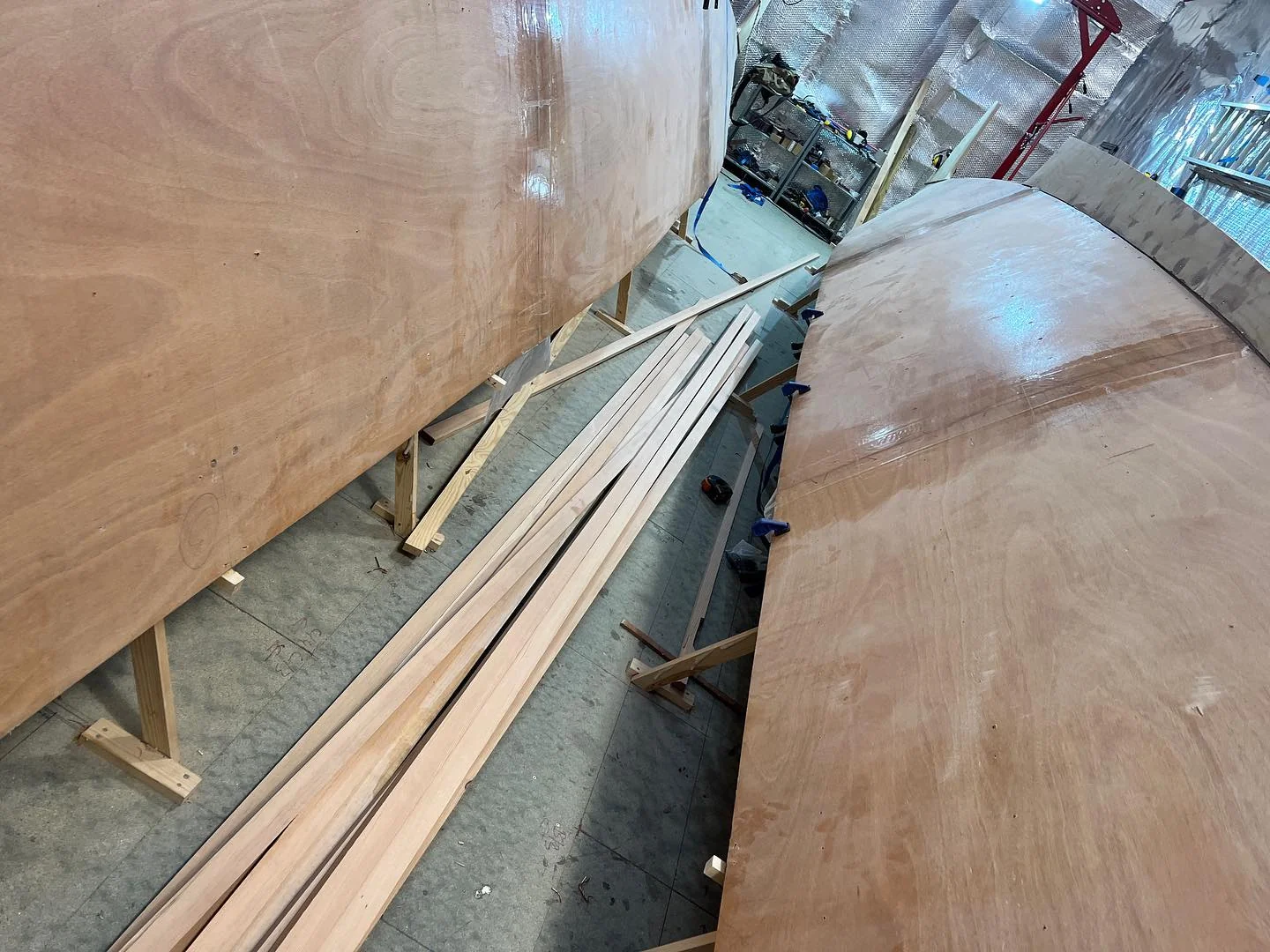
Taking Stock of the Timber
I’m taking stock of our timber before the next stage of work. The tidying is mostly just a byproduct—and it looks good.
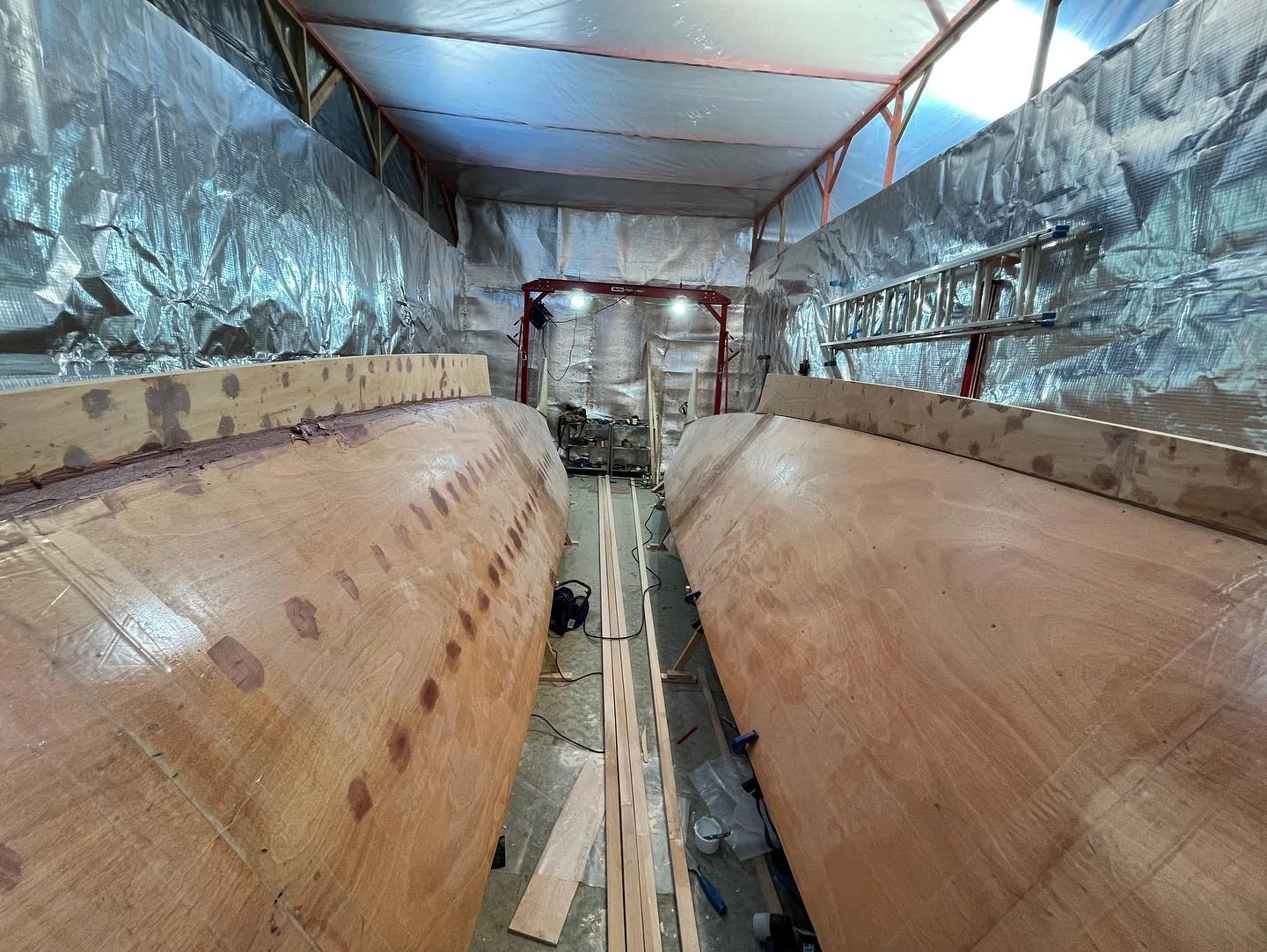
Filling the Holes in My Hulls
I’ve been filling the gaps and holes in the hull panels, getting them smooth and ready for laminating. Madness continues.
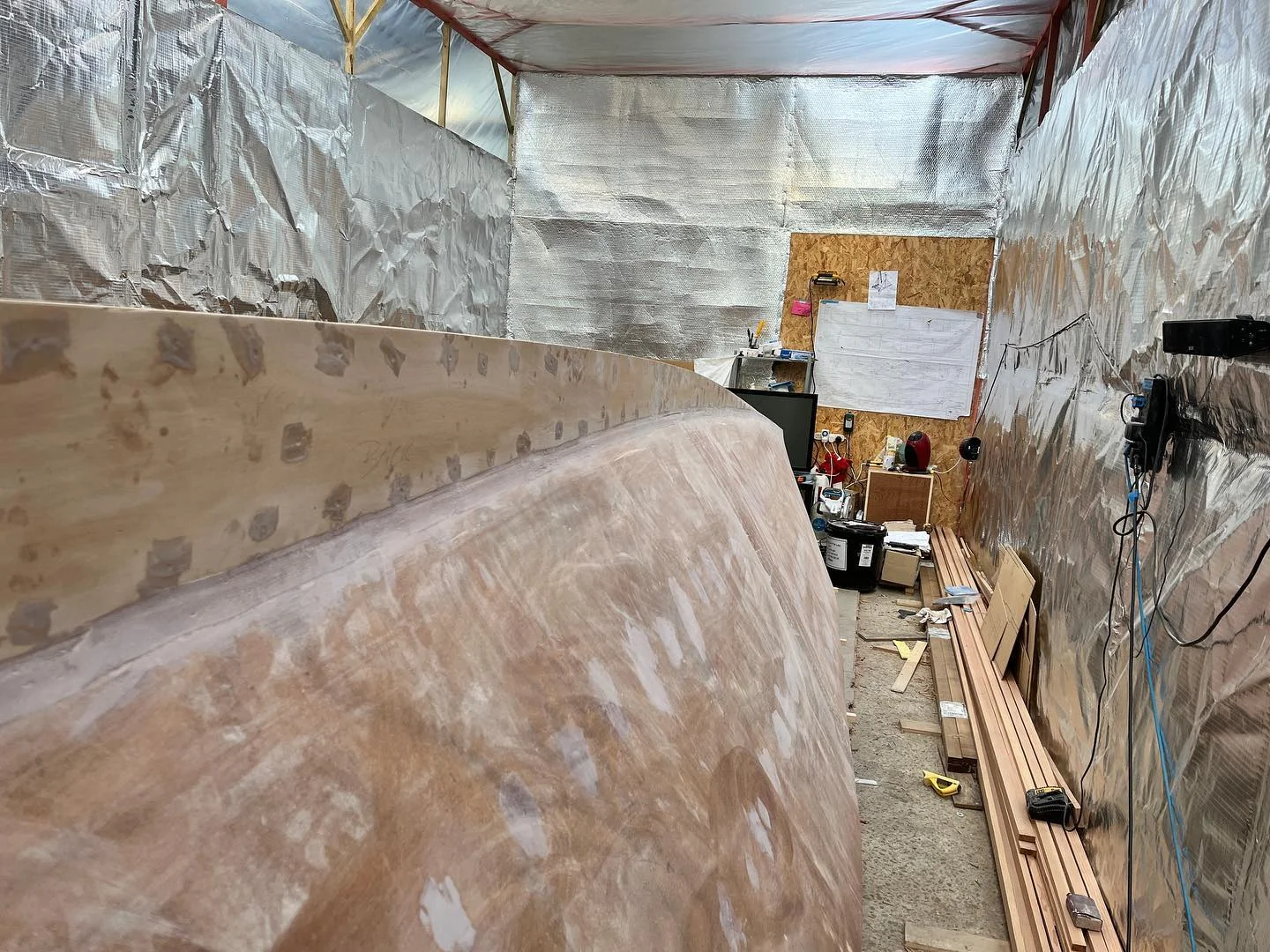
Sanding the Hull Through Storm Eunice
While Storm Eunice raged outside, I spent a surprisingly calm day in the workshop sanding the hull towards its final shape. There’s still more filling and sanding to come, accompanied by Tevye.
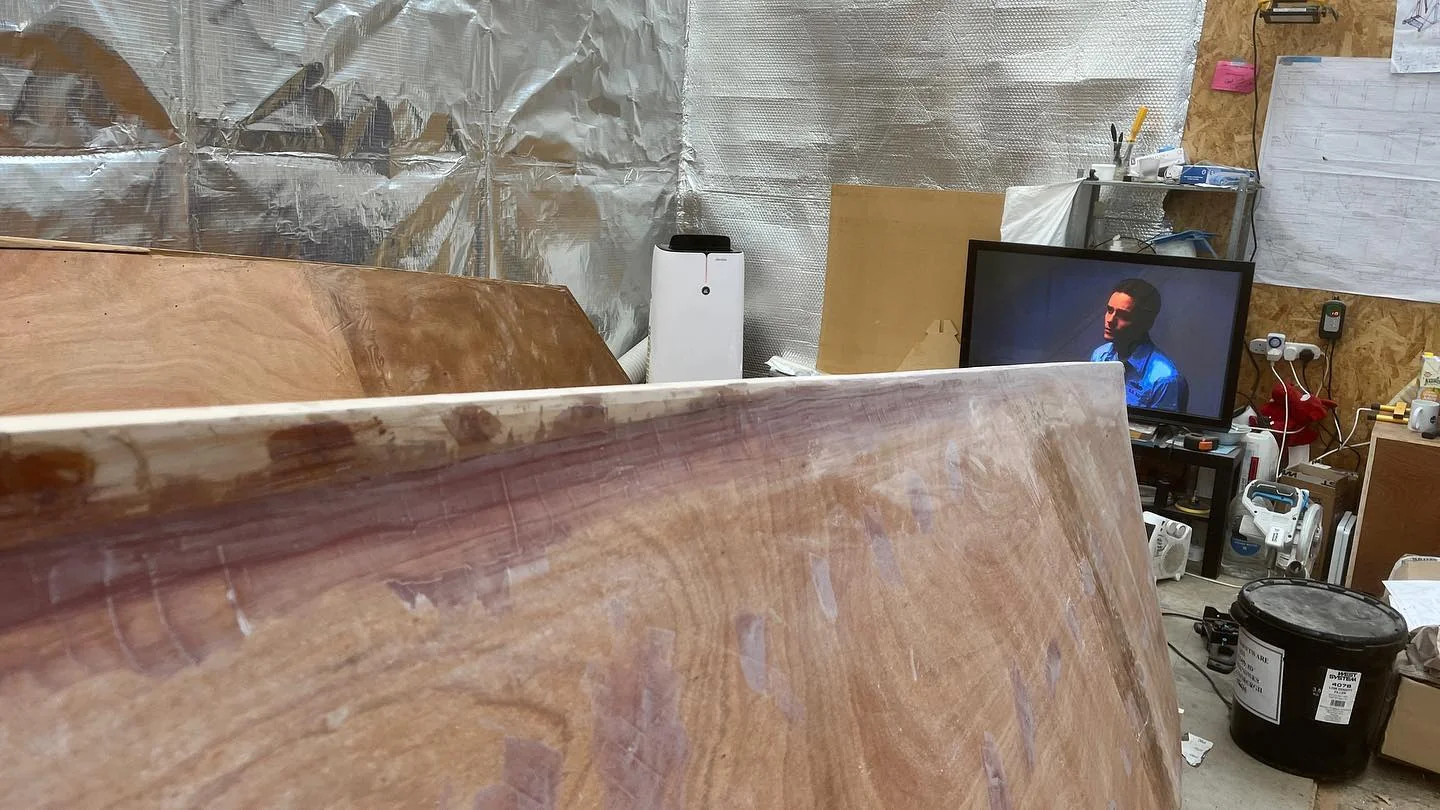
Defining the Hull Edge with Filler
After a week of angry seas and three named storms, I finally got back to the workshop. A more fluid second layer of epoxy filler worked beautifully, and the hull edge is now taking its final shape.
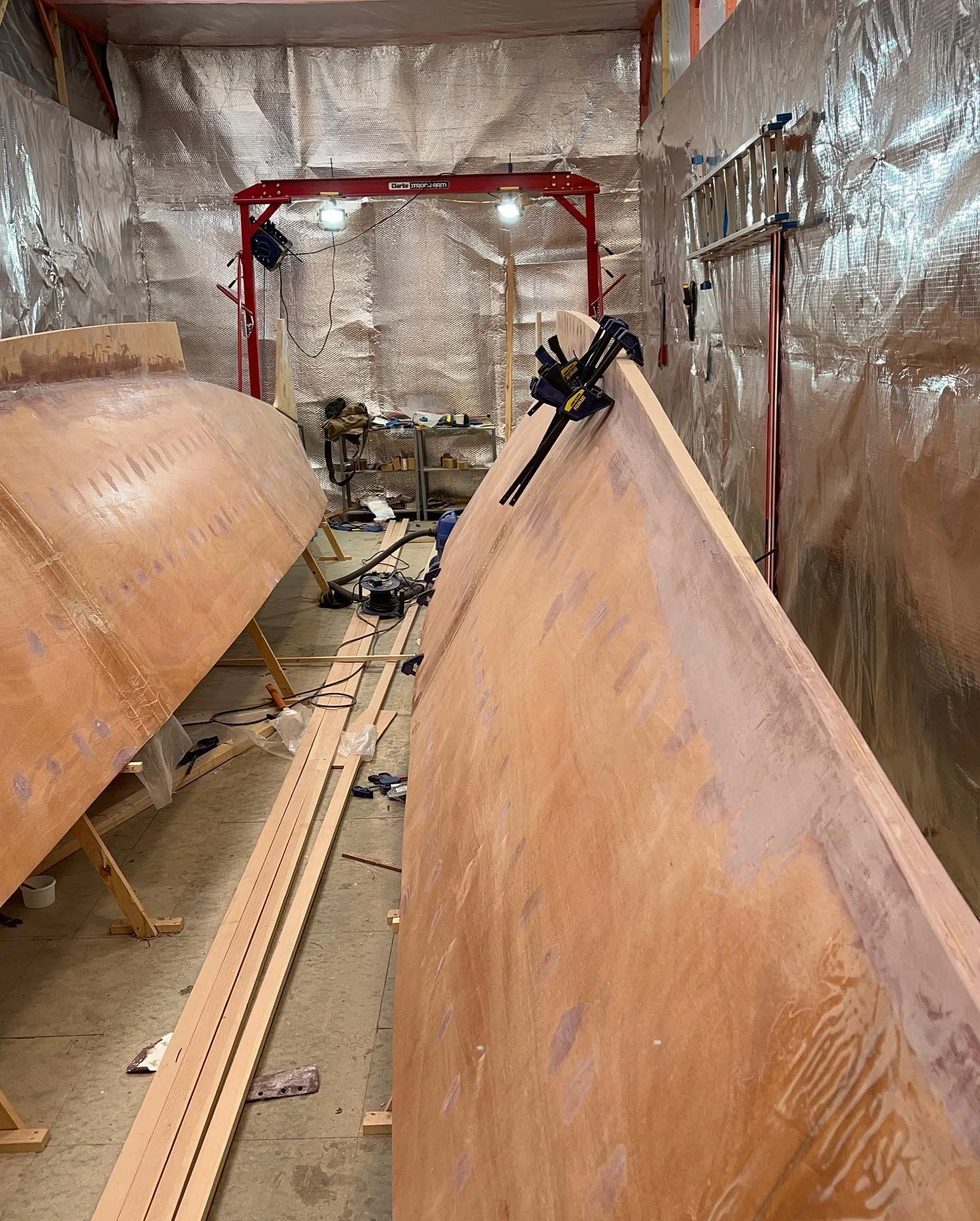
Straightening the Hull for Stringers
I took a short break from filling gaps to fix a damaged stringer batten and straighten the hull’s wobbles. It worked a treat, and she’s starting to look like a boat.
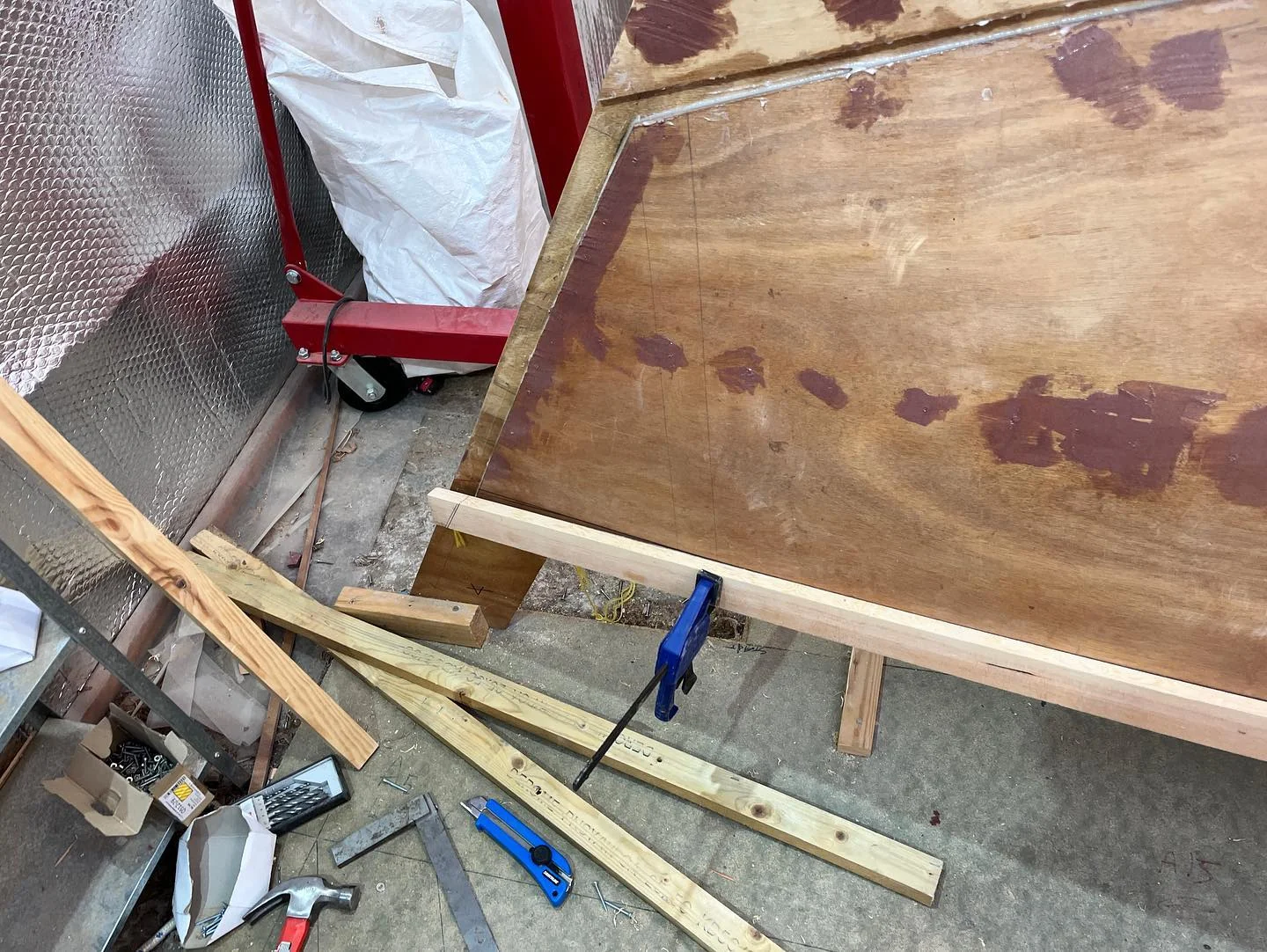
Outer Stringers Before Lamination
I cut and epoxy-soaked two outer stringers, ready to glue them into place with plenty of pilot holes. That means another round of crawling under the hull before lamination can begin.
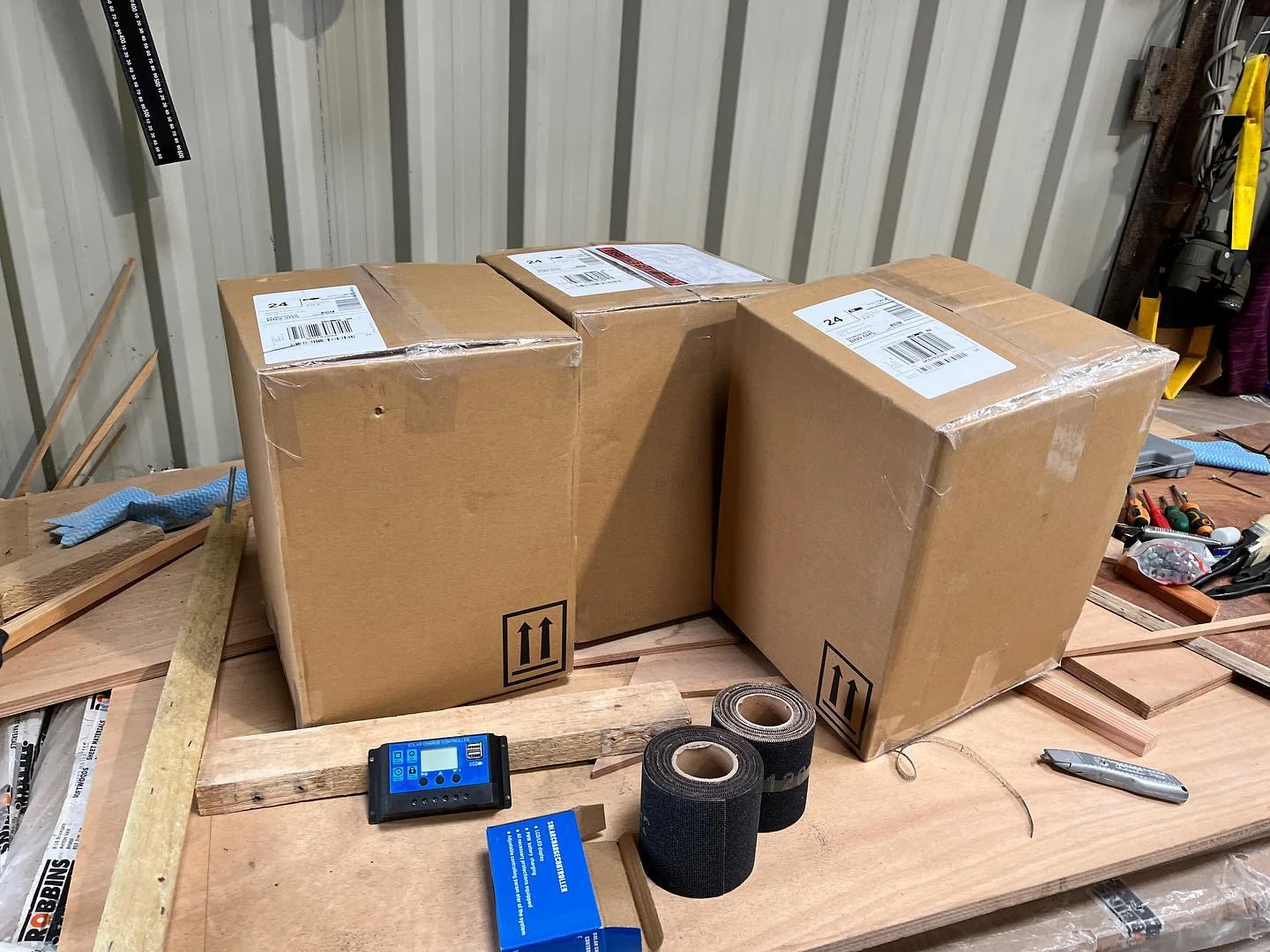
Sanding the Bows Between Deliveries
With epoxy work ruled out by a day of deliveries, I finished the bows and spent the day testing my new sanding board and mesh. It works a treat.
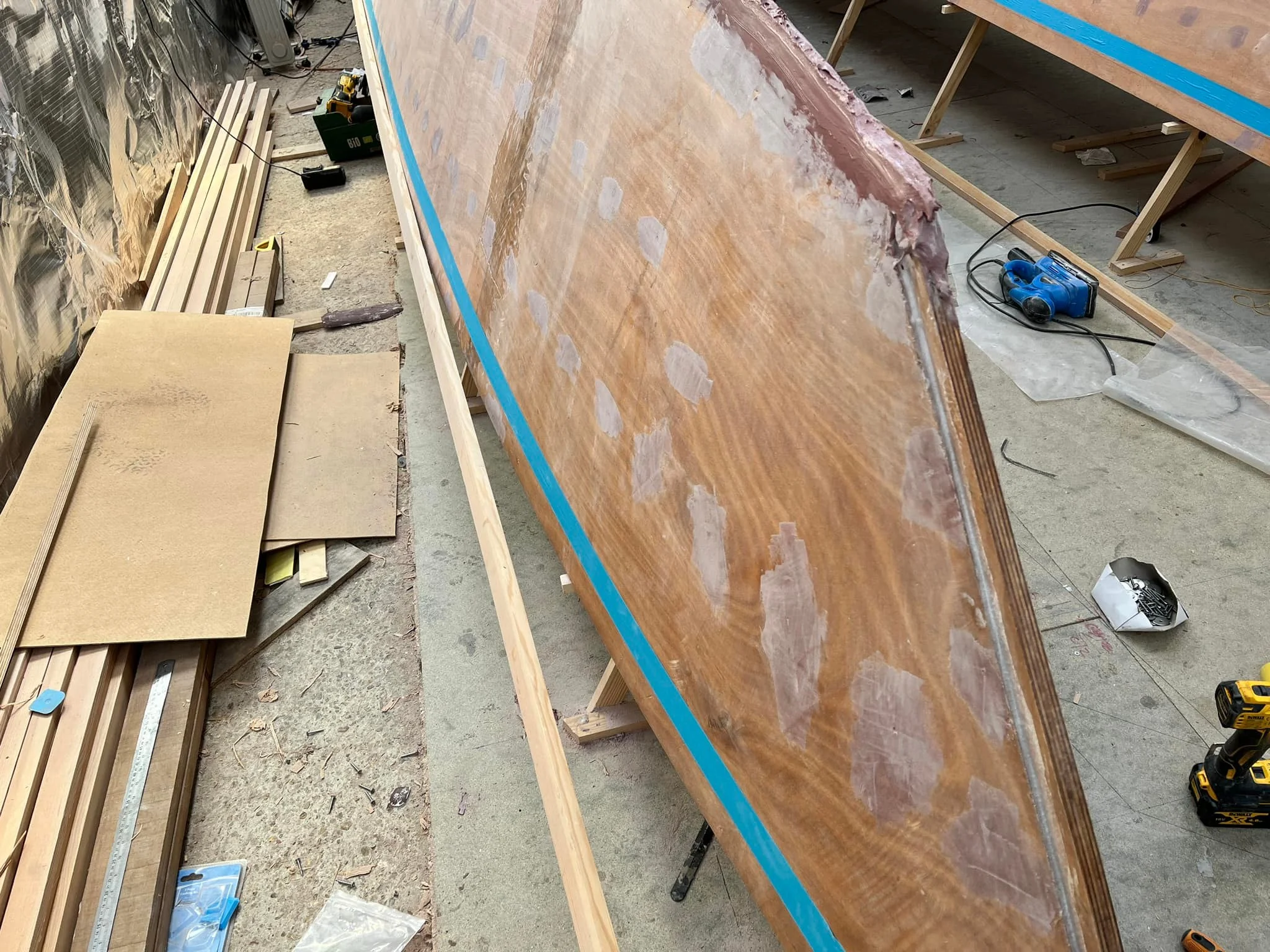
Dry-Fitting the Remaining External Stringers
I’m dry-fitting the remaining external stringers, while explaining why my apparently tidy workshop is mostly a photographic illusion. A few may get glued permanently today—but probably not all three.
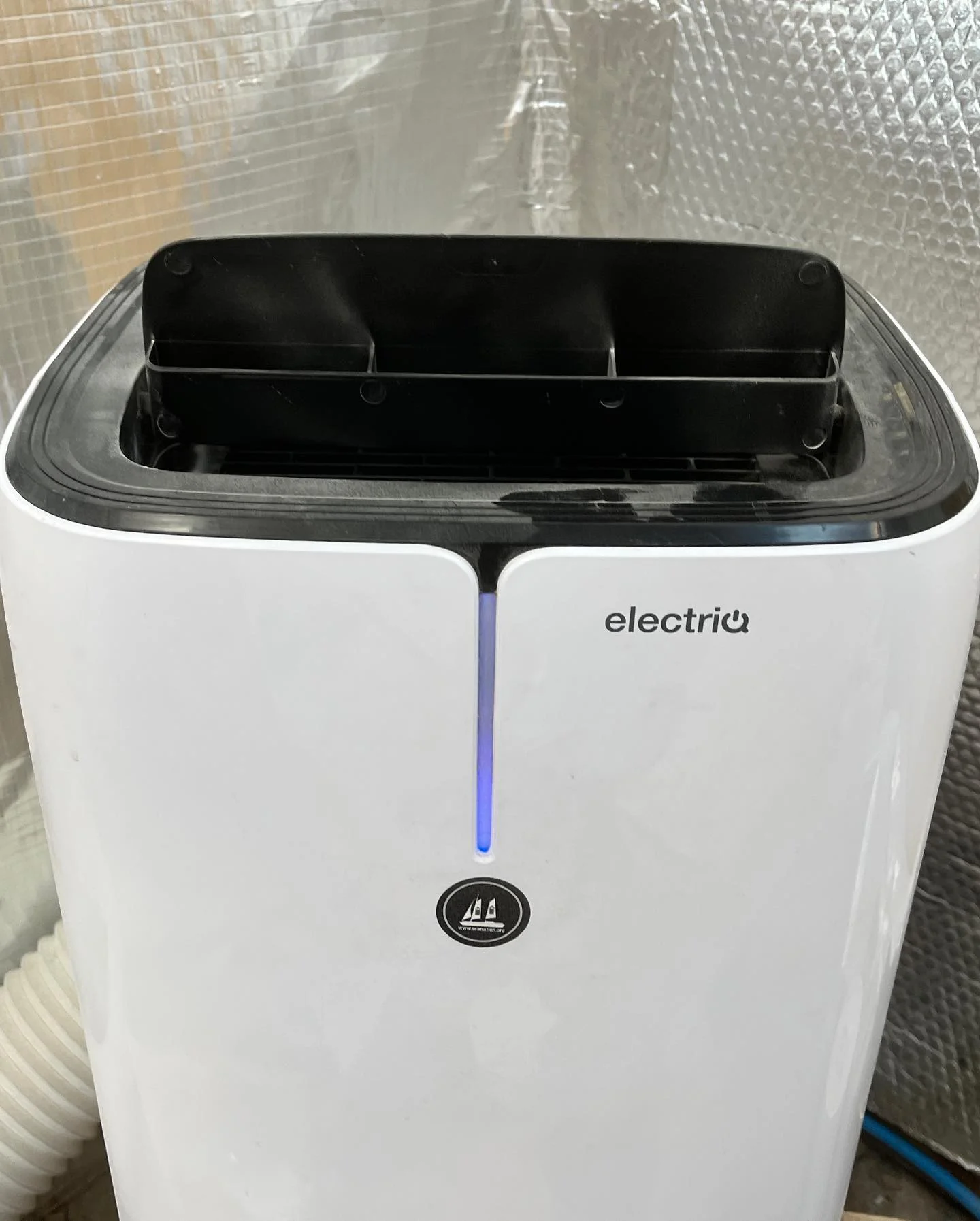
Spring Arrives in the Workshop
Today I switched the workshop air conditioner from heating to cooling for the first time this year. At 21°C, it was suddenly a little too warm for gluing that 11-metre piece of wood with epoxy.
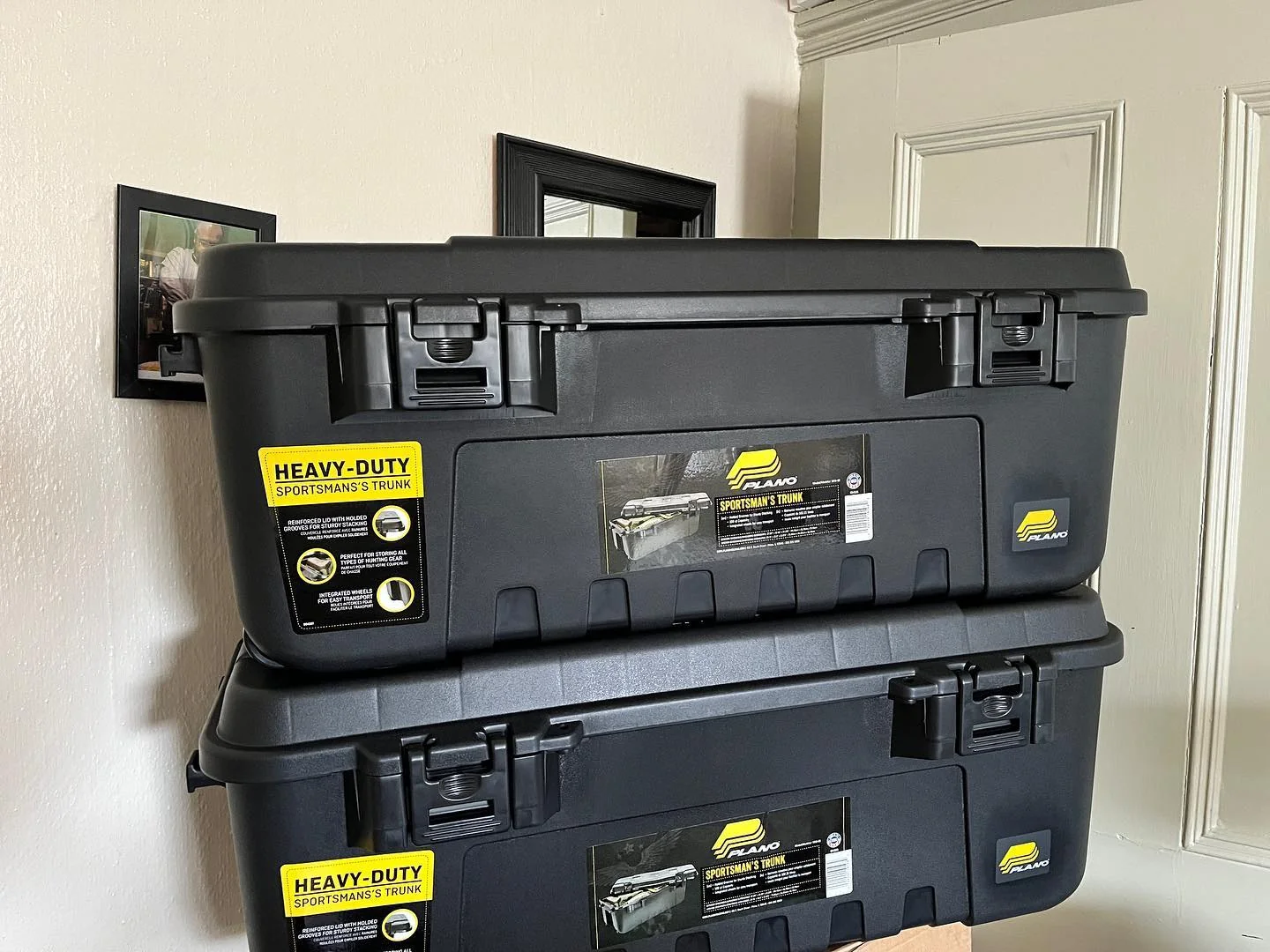
Our Onboard Storage Solution Arrives
We’re getting ready to leave our winter hideout in Brighton and move back to Newhaven and Nimrod to step up work on IKAROA. Our onboard storage solution has arrived, with a couple of boxes each for our stuff.
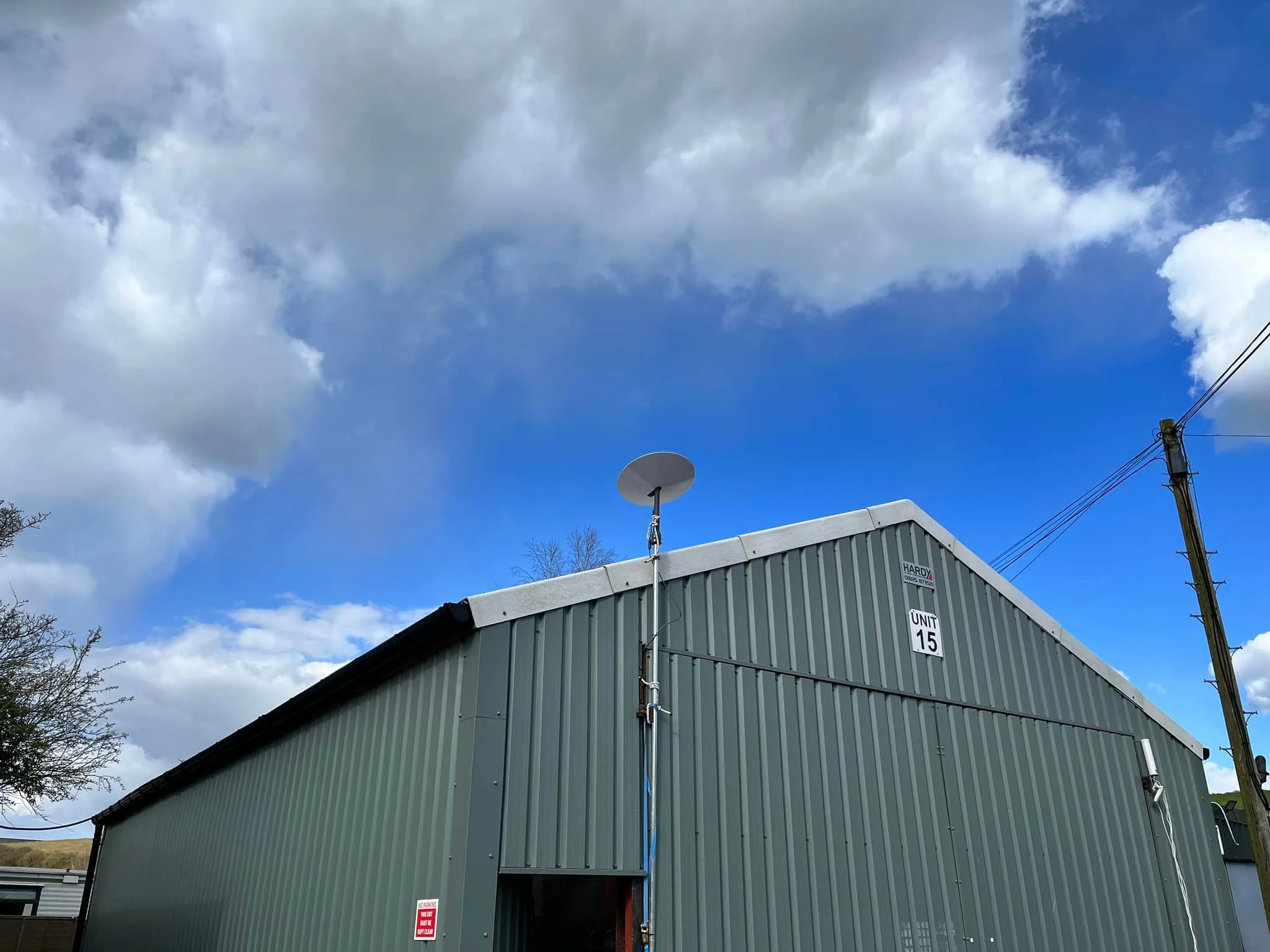
MacGyvering Starlink Back to the Workshop
After moving to Nimrod, I moved the office back to the workshop and reconnected Starlink with a suitably MacGyver-style setup. It works perfectly.
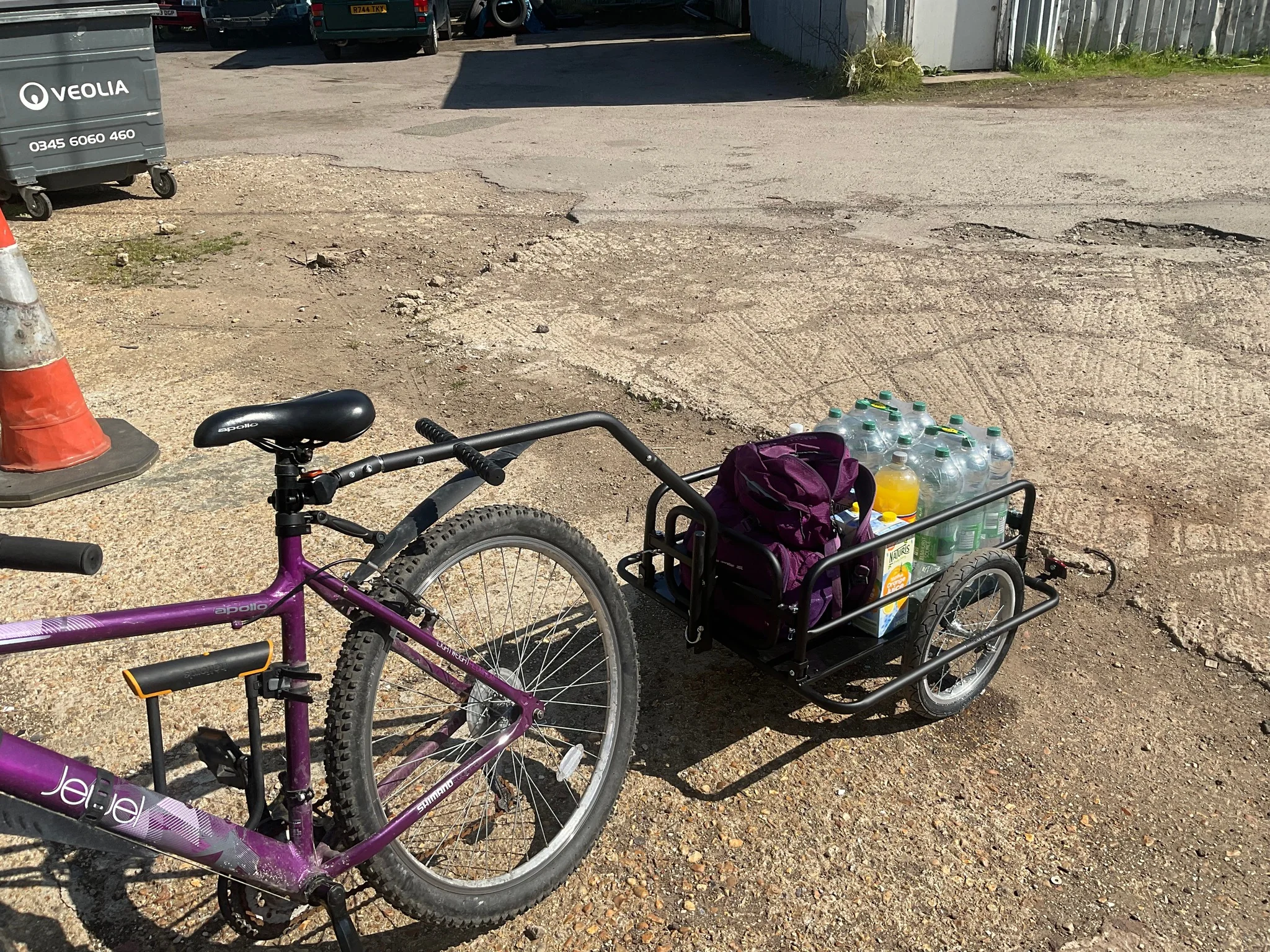
Testing a Flat-Pack Trailer by Bike
We tested a flat-pack trailer by hauling about 40kg of supplies home by bike. It worked brilliantly—and should be useful aboard the boat later on.
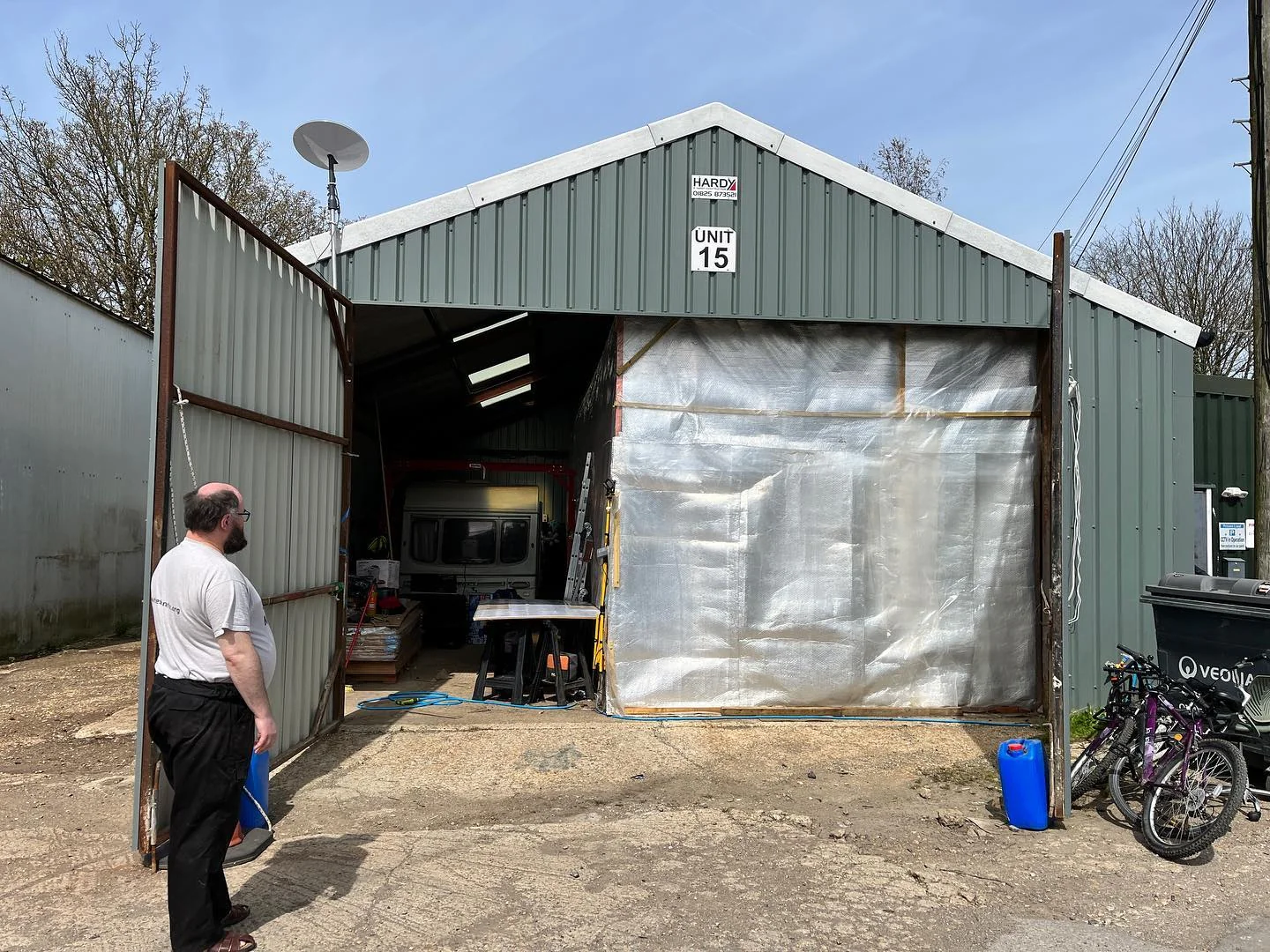
Making Room for Long Timber
We moved our caravan out of the workshop to clear space for turning the hulls and handling long iroko and timber pieces. Now I can sort the plywood by thickness without shifting a tonne of it every time.
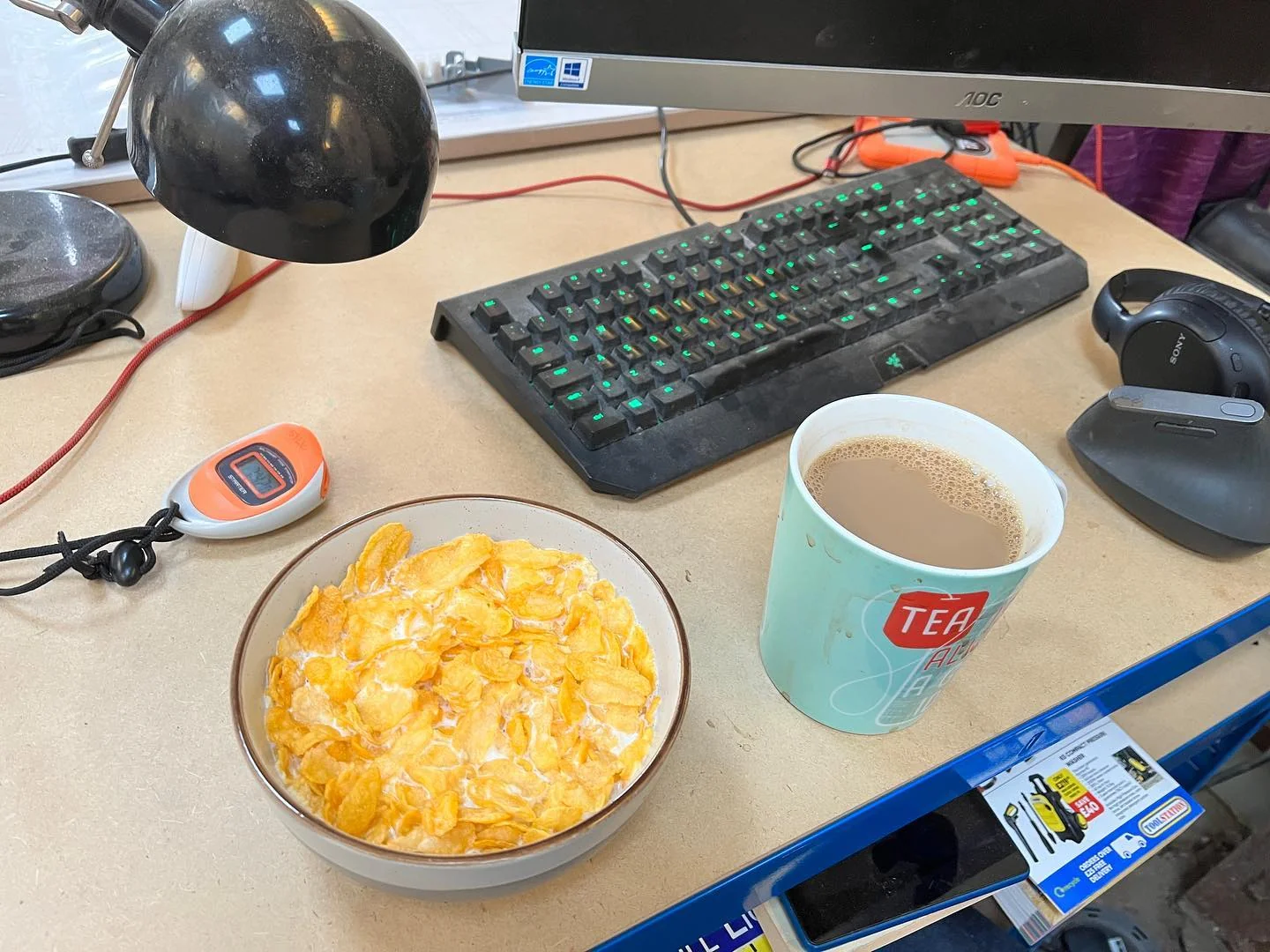
Cornflakes, Coffee and Workshop Mornings
My morning workshop routine involves microwaved cornflakes, coffee and repeatedly forgetting that coffee should come first. Fortunately, Adam gets there before me and leaves a hot cup waiting.
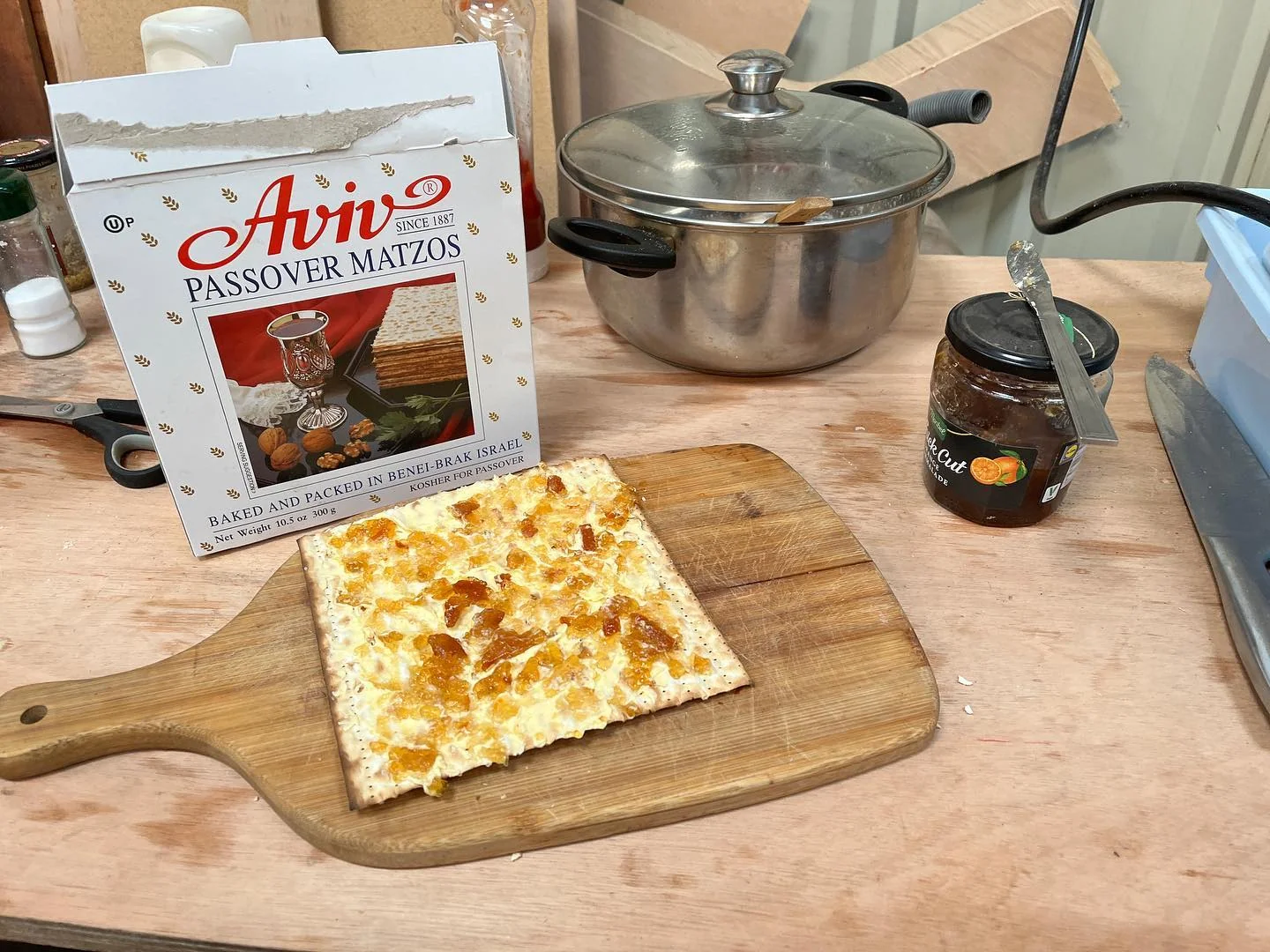
My Last Pesach in the Workshop
This was my second Pesach in the workshop, and the last one. Matzo before moving on.
Our Plan for Ikaroa as Sail Cargo
We’re letting you in on our plan to use Ikaroa as a 100 per cent clean, all-electric sail cargo vessel. I’ve also found partners in EcoClipper, who are already working towards a modern sail cargo industry.
Still Here, Still Going Strong
We’ve had a couple of setbacks and slowdowns, but we’re still around and coming back for more. Usual project commentary resumes next week.
Flexible Iroko Battens for the Keel
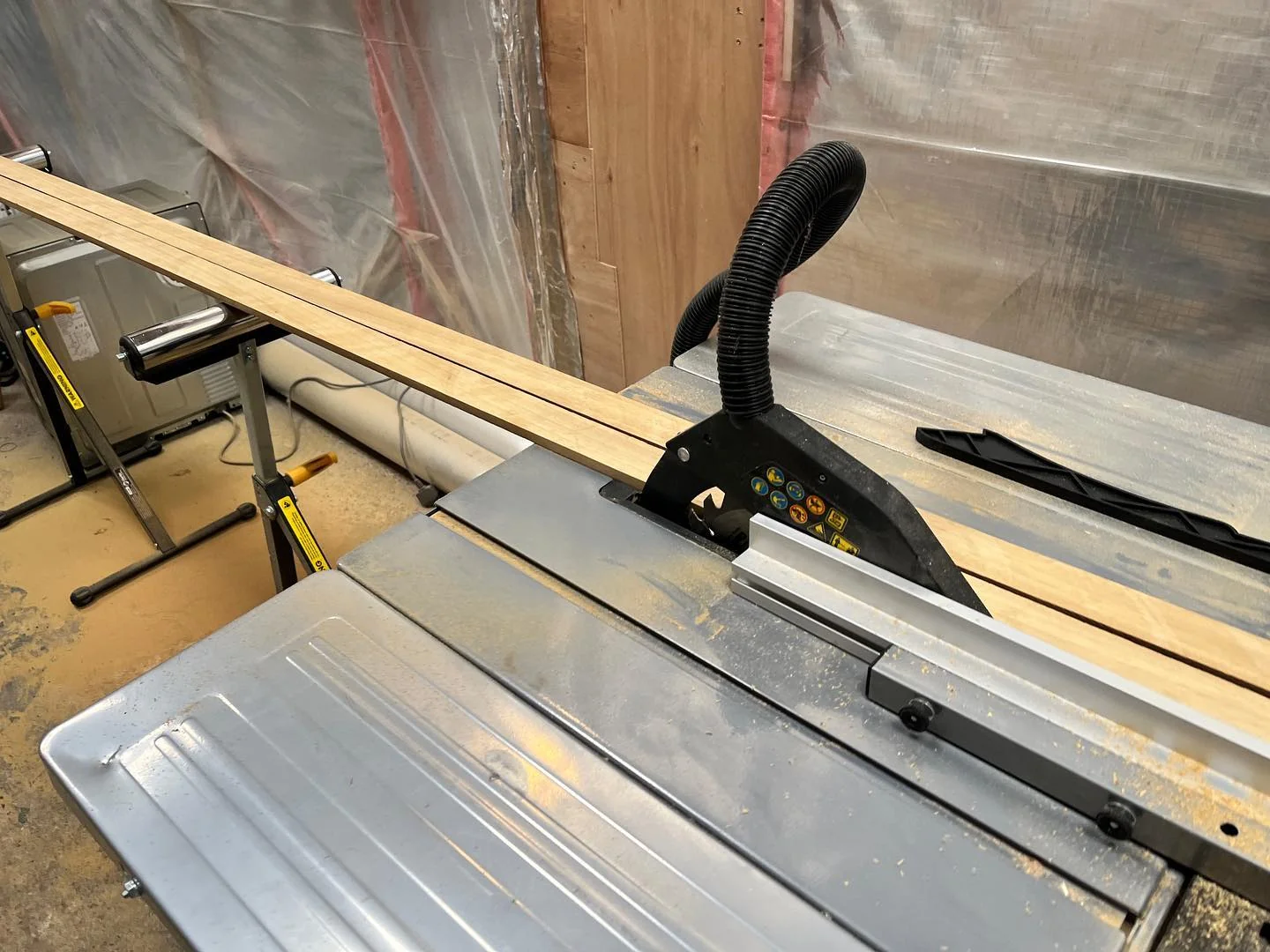
I’ve resumed work on the hulls and started preparing half-inch iroko battens for the keel, which bend beautifully into shape. We also helped our friend launch Baldur before her mast went up.
Rounding the Hulls Before Laminating
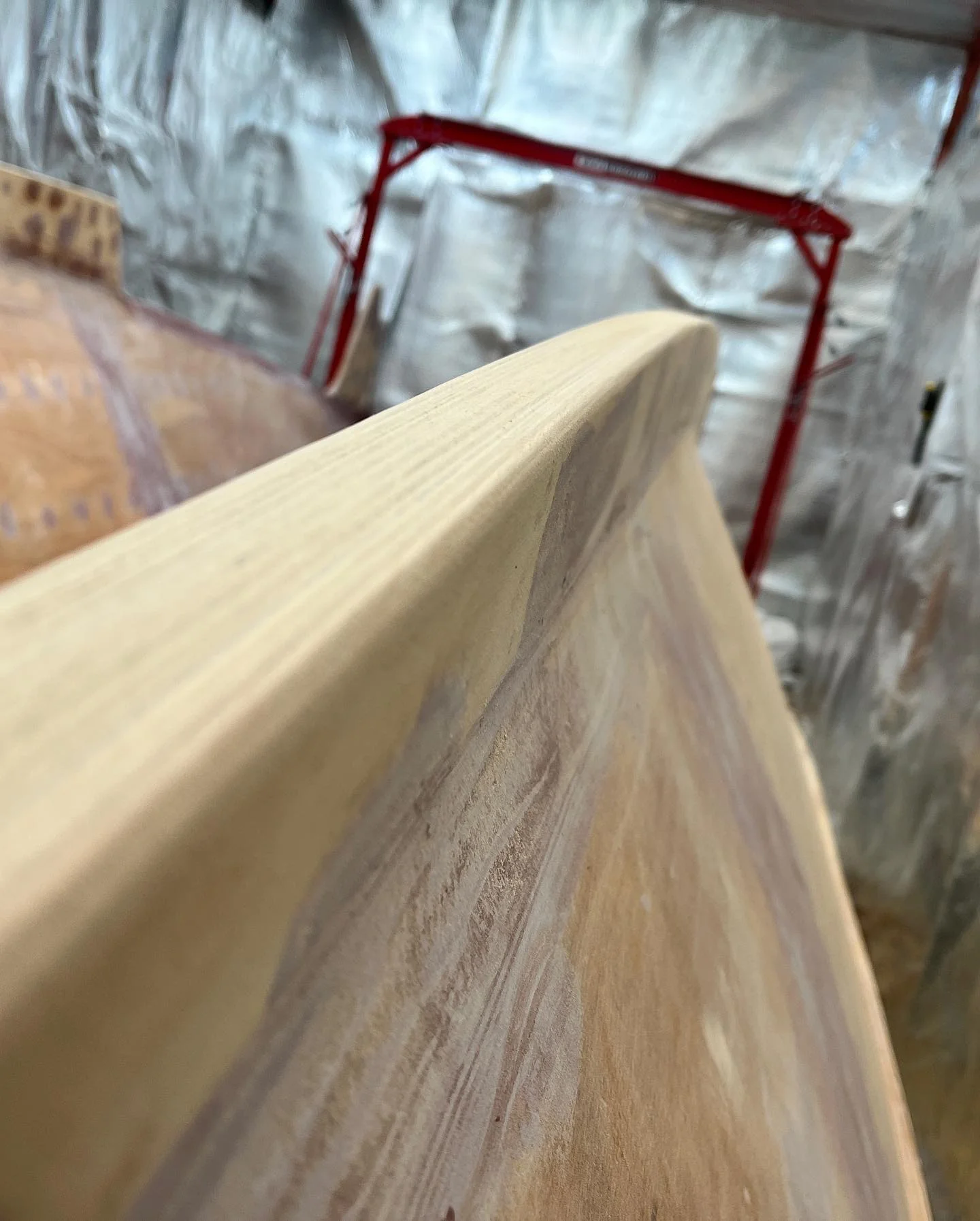
I’m finishing the hulls, rounding edges and bows before giving the workshop a serious clean for laminating. We also helped put Krister’s BALDUR mast up by hand—a terrifying but successful five-person operation.
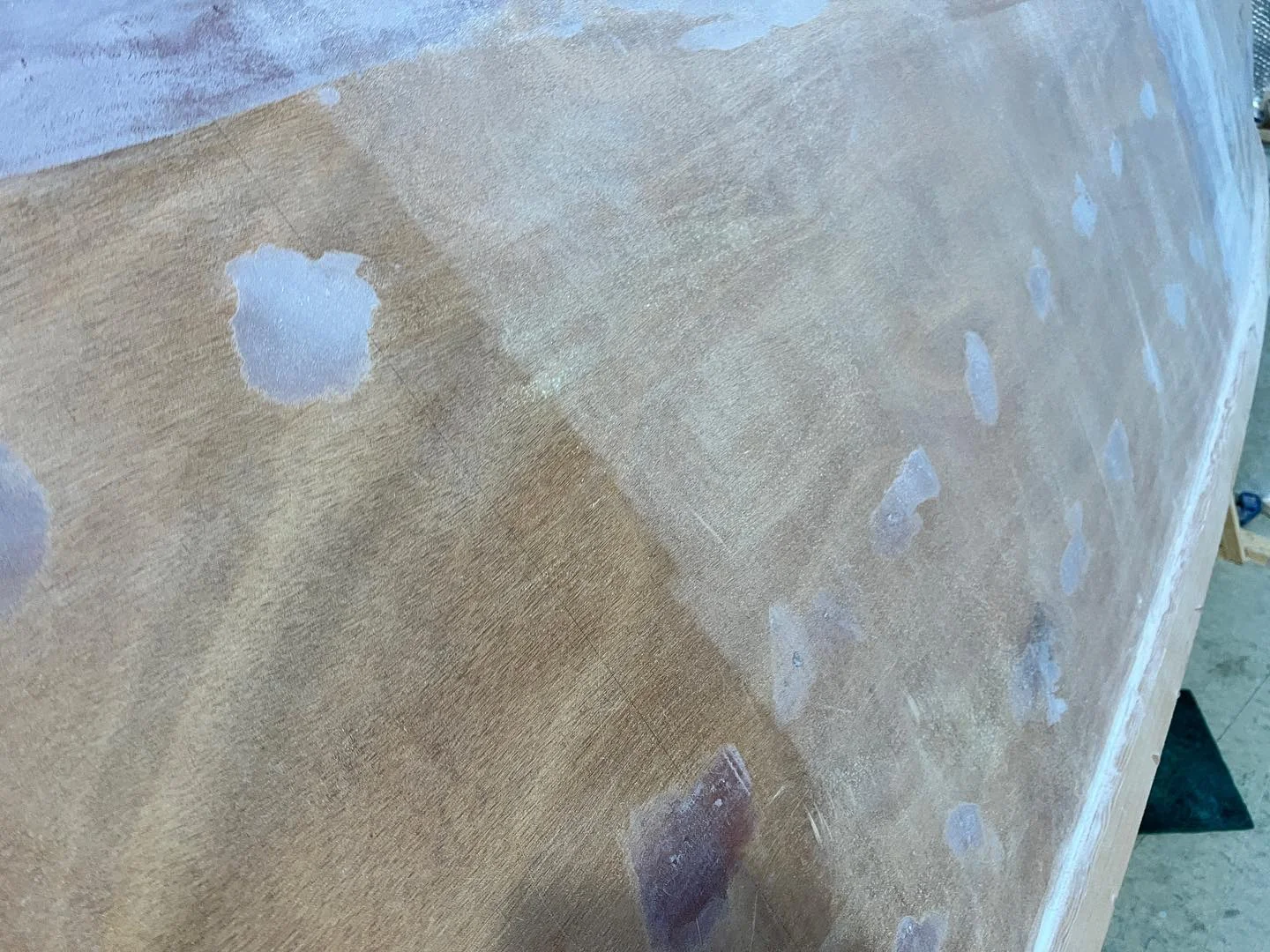
Sanding Both Hulls, One Square Inch at a Time
I spent the day sanding both hulls, vacuuming every square inch and filling the scratches, uneven fillets and stubborn screw holes. Now I’m trying to keep the tent warm enough to sand everything again and wash the hulls by evening.
Getting Ready to Laminate the Lower Hulls
We’re preparing to laminate the lower hulls, with an exciting day—and several more—of work ahead. I’m also planning regular build videos, with early access and other extras available through Patreon.
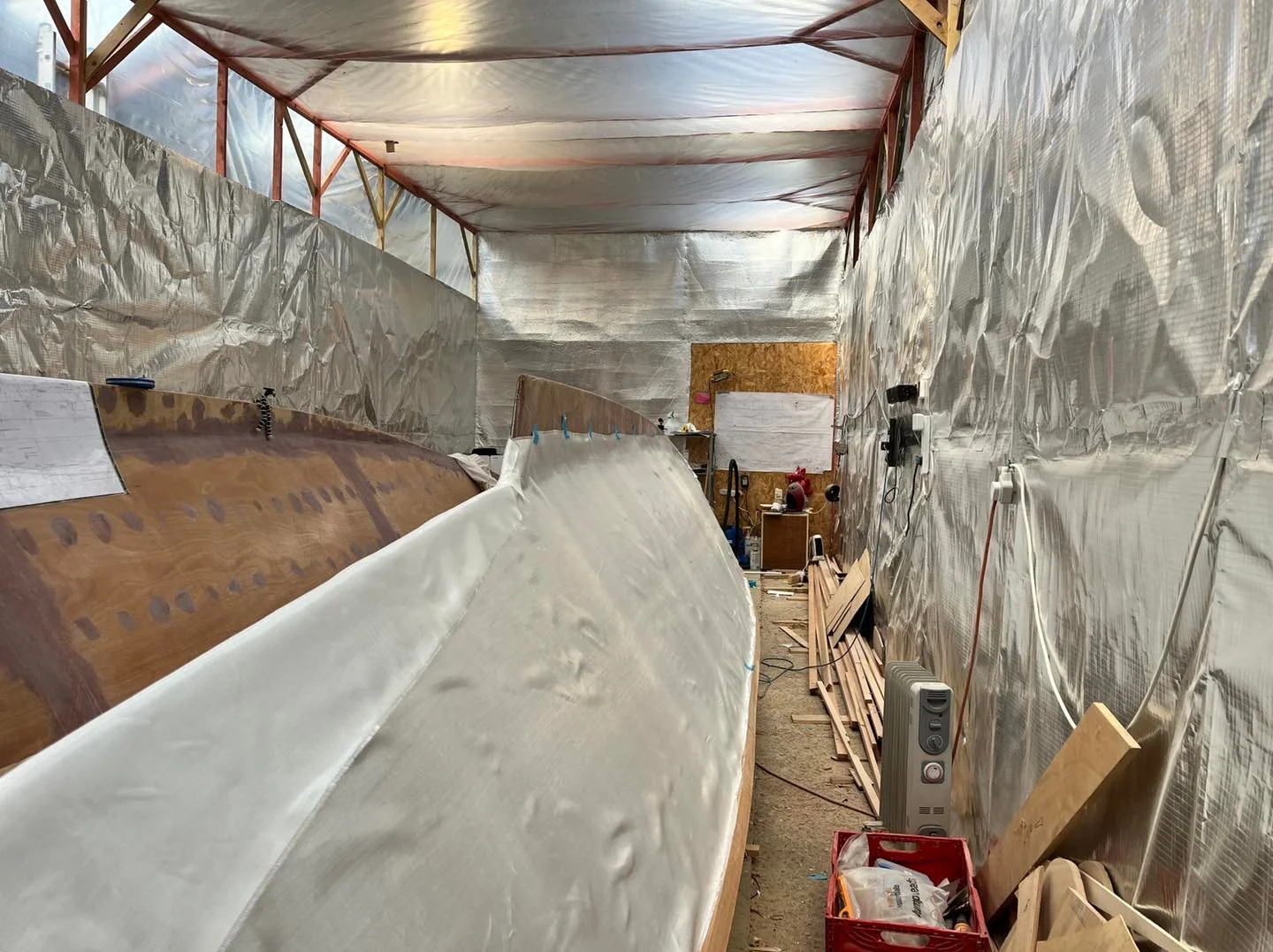
Laminating the Hulls Through the Night
I spent the night draping glass fabric over the hulls, working around the heat so the epoxy would not cure on sight. Once the reinforcement and fairing are done, I can get back to our favourite pastime: sanding.
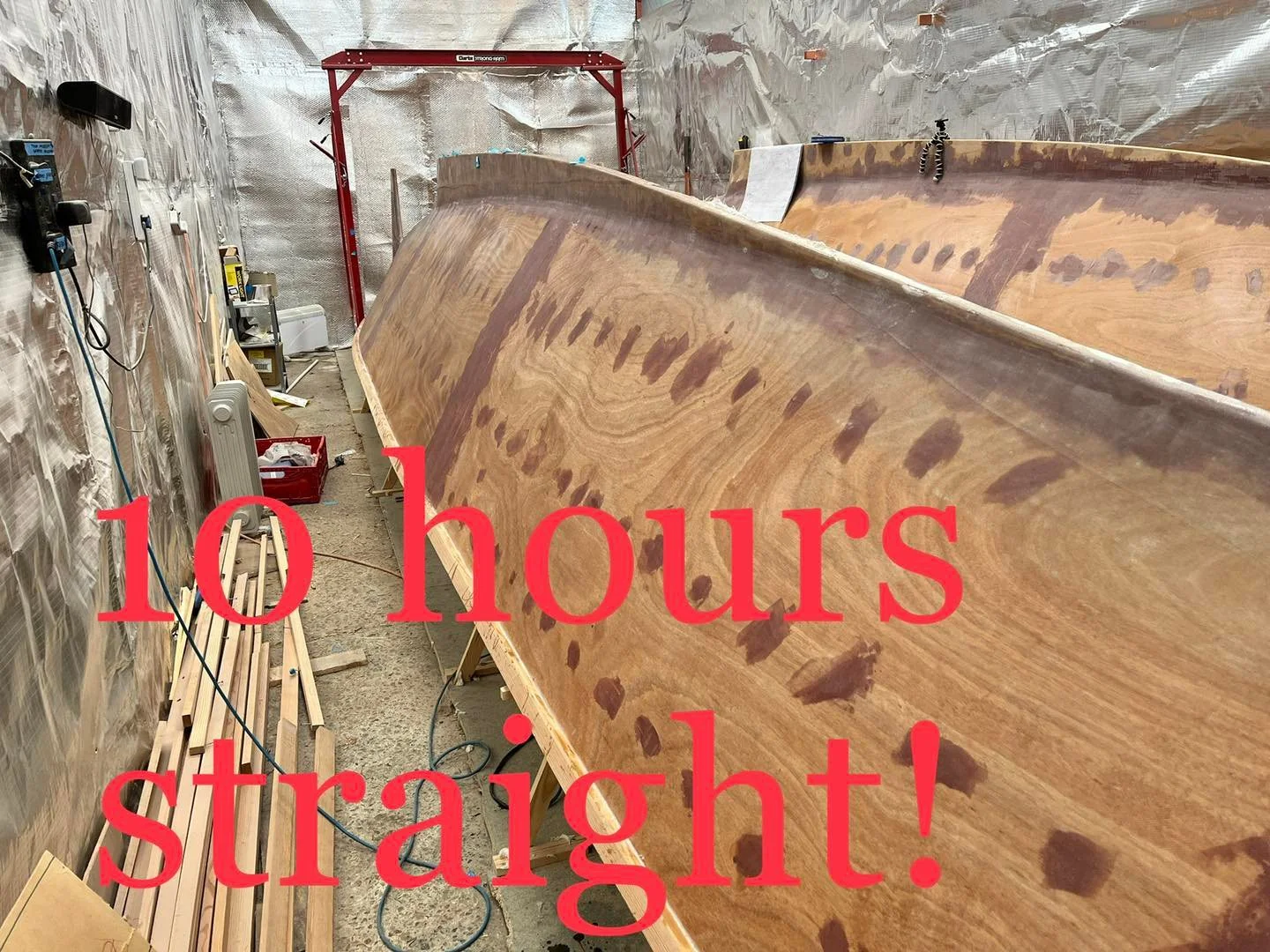
Ten Hours to Laminate a Hull
I spent ten uninterrupted hours laminating the hull, with no coffee and a few mistakes to repair. Exhausted but very happy, I’m moving on to epoxy, aramid tape and the next hull.
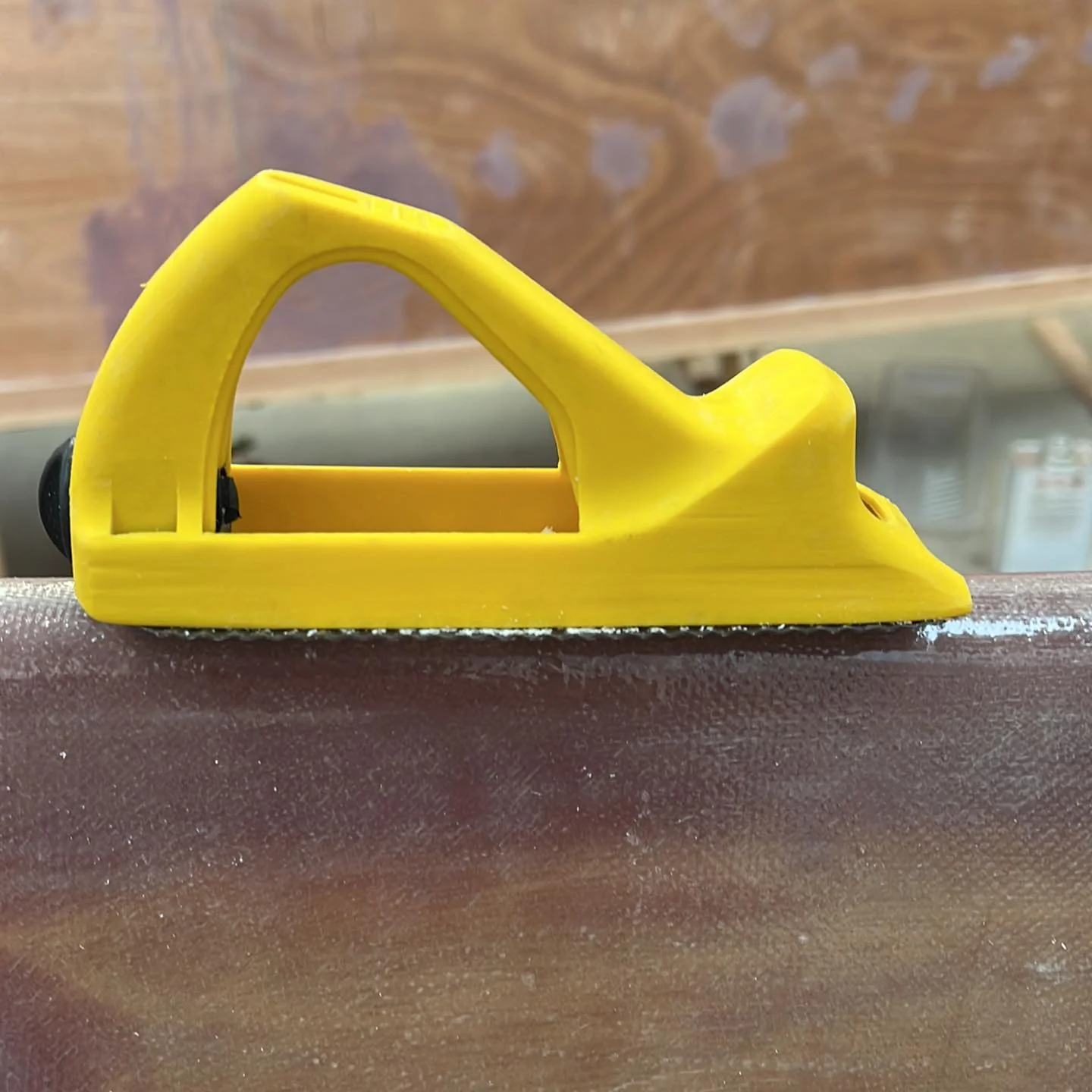
Surforming Every Bump Before Aramid
I’m smoothing every tiny bump from the laminated surface before adding the final glass and aramid layers. The aramid will protect the edges when we start dragging Ikaroa onto beaches.
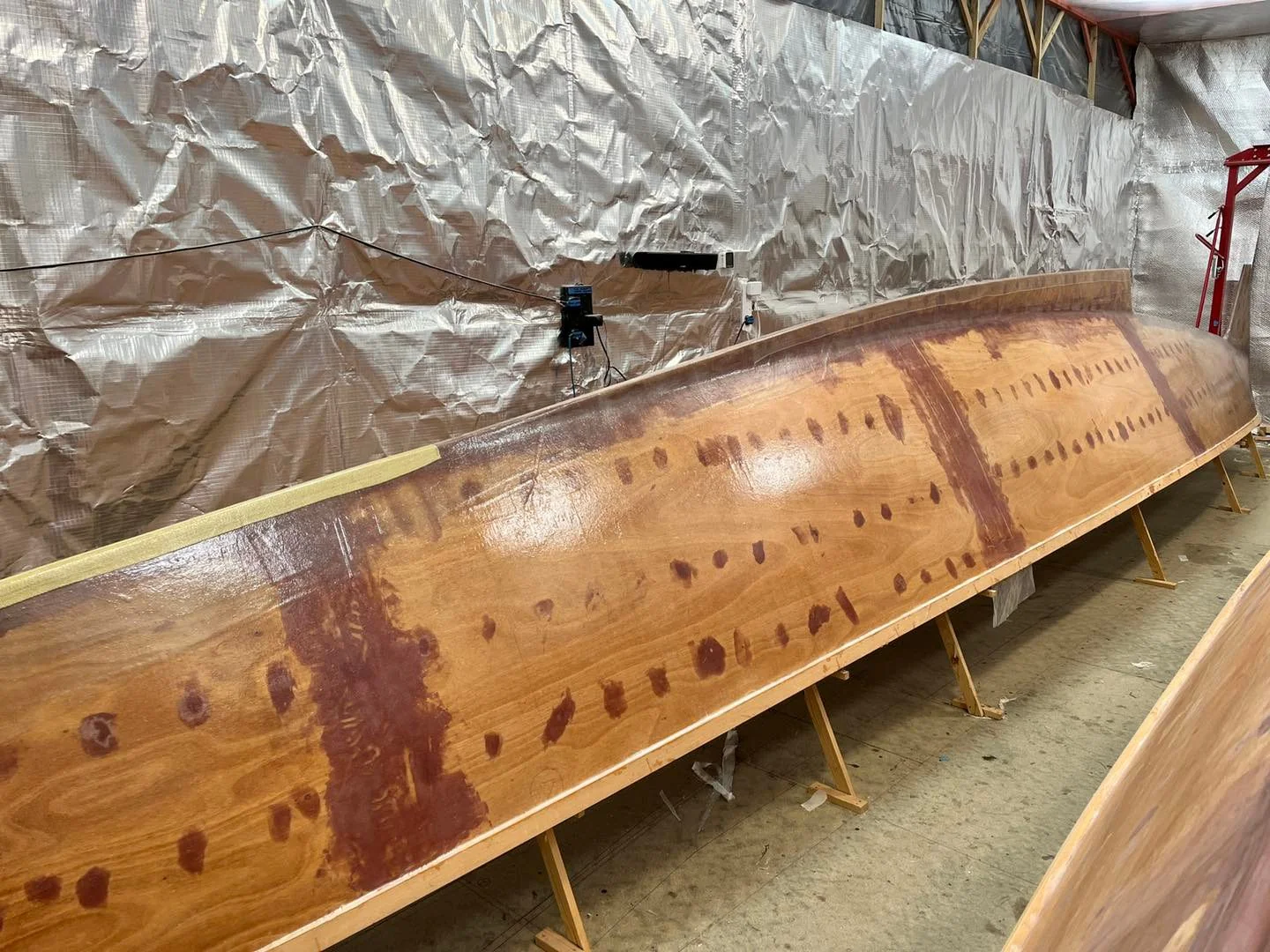
Protecting the Keel with Aramid Tape
The heat slowed me down, but I got the final epoxy layer on and added aramid tape to protect the most vulnerable parts of the keel from abrasion. Next came fairing compound—and then the same work again on the second hull, the beauty of catamarans.
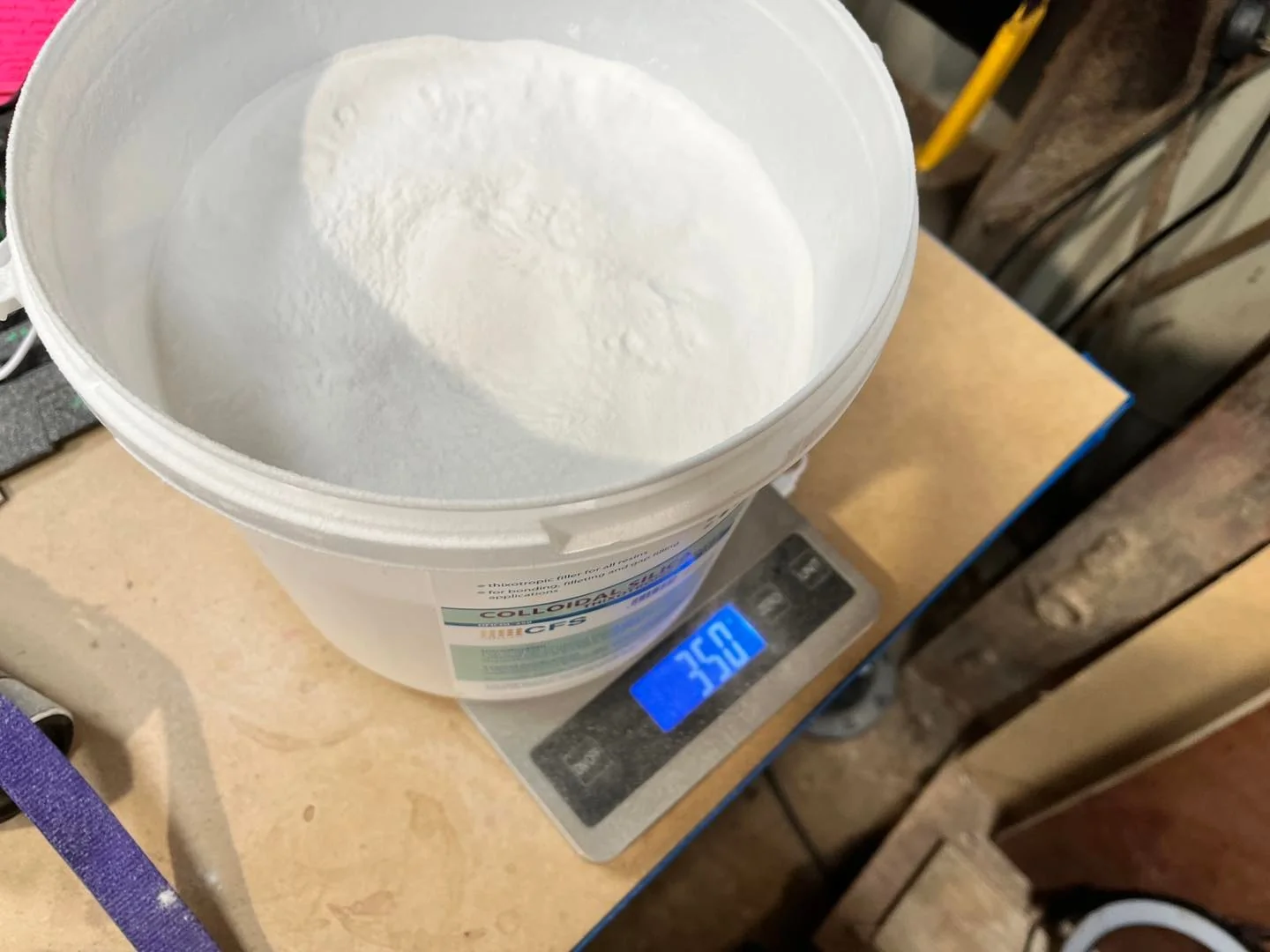
Fairing the Hull, One Slow Bit at a Time
I’m fairing the hull with glass bubbles and colloidal silica, working through it 20–25 cm at a time. It is smooth enough, but painfully slow, and I’m already dreaming of sanding.
Finding the Best Fairing Tool
I spent five days and 15 square metres of hull testing tools before finding a large, stiff plastic squeegee that made fairing much easier. The first hull is now faired, and I’m moving on to laminating the second.
Finding the Best Fairing Tool
I spent five days and 15 square metres of hull testing fairing tools before finding a bigger, stiffer plastic squeegee that actually worked. The first hull is now faired, and I’m moving on to laminating the second.
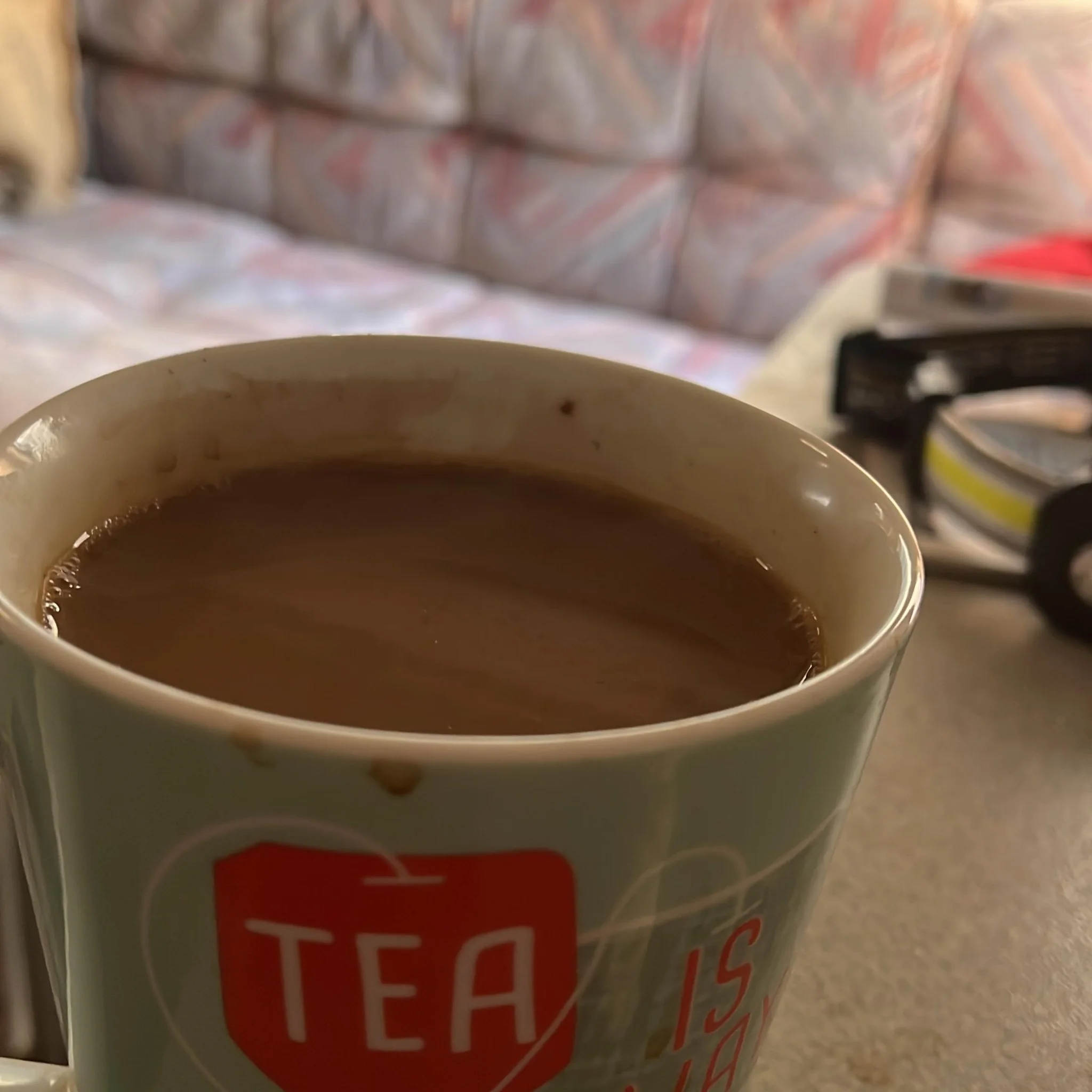
Coffee After a Night of Laminating
I barely slept after finishing laminating at half past one, and the heat made daytime work impossible. So I had coffee and read the history of building Gleda instead.
Cork Insulation and Condensation in Boats
I’m asking how condensation has affected other Wharram boats, and how people have dealt with it. I’m planning to use a thin layer of cork inside Ikaroa for both insulation and the interior finish.
Fairing the Freshly Laminated Second Hull
I laminated the other side of the second hull, added aramid, and tried a very thin, runny layer of fairing compound to fill the weave. The cooler weather was a welcome relief after battling the heat and amino blush.
Moving Heavy Materials Without Crushing My Feet
I use straps to hold plywood in place and move heavy materials around the boatyard—because dropping 30kg on my feet got old quickly.
Narrowing the Iroko Keel Pieces
I’m still avoiding sanding hulls, so I started narrowing the iroko pieces for the keels. The dimensions also give me a useful check on the plywood, glass and epoxy laminate thickness.
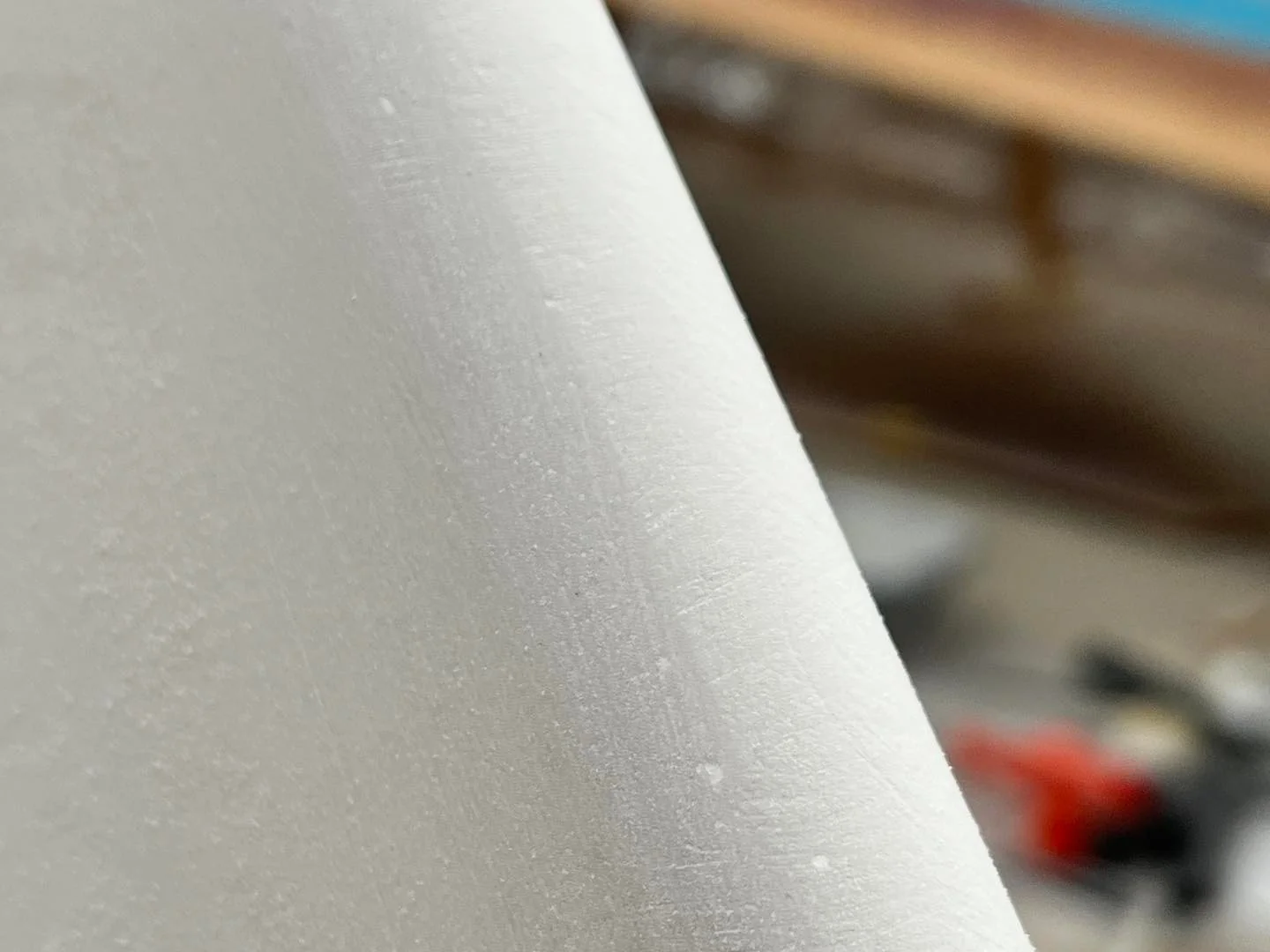
The Bow Reaches Its Final Shape
I’ve finished the bow’s final shape—the first part of the hull that is truly done. Soon, this surface will be cutting through the waves, unchanged beneath its protective paint.
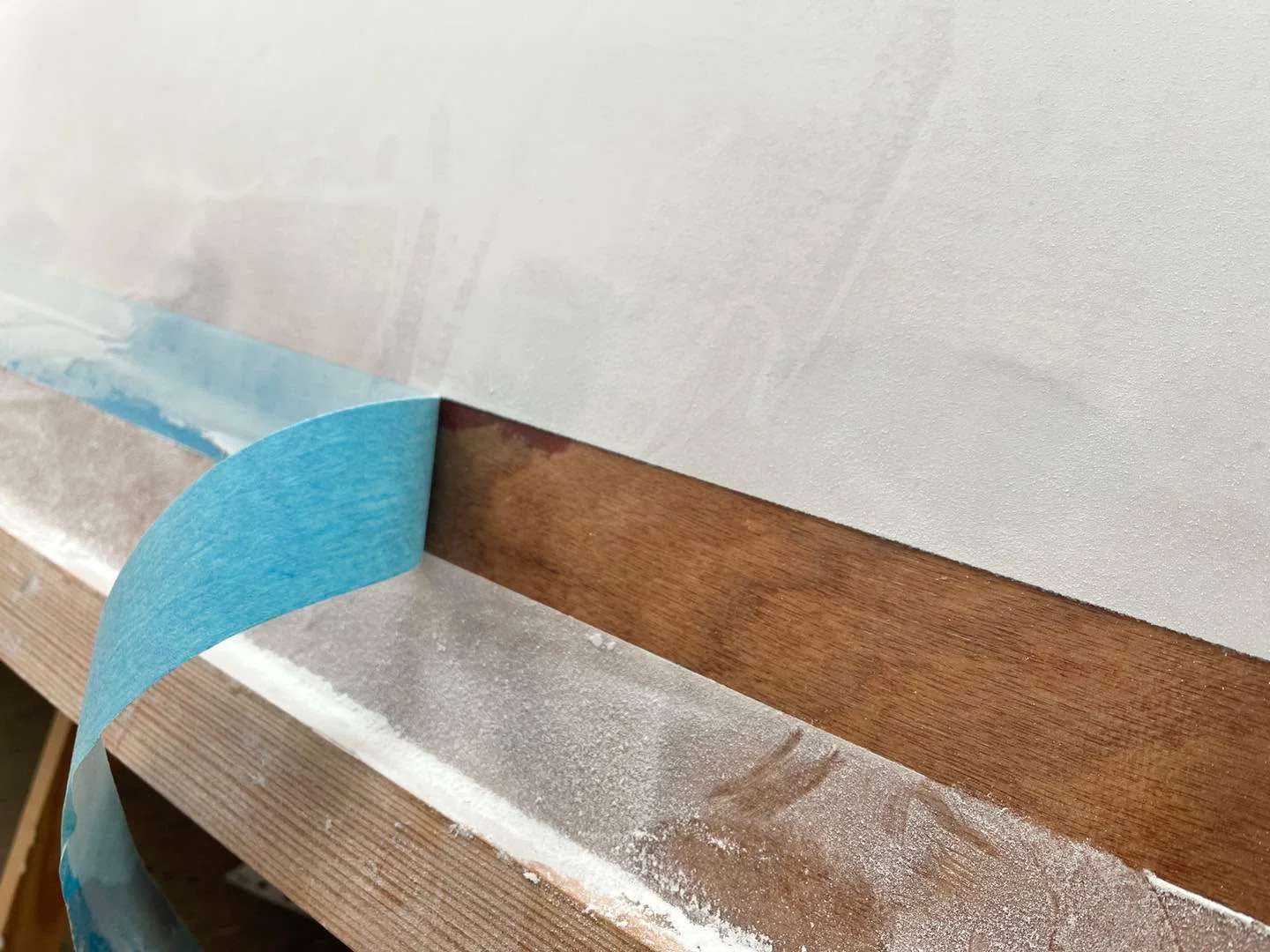
Sanding the Hull Smooth
I’m sanding the hull curves smooth before painting and turning the hulls. The fairing compound is coming along nicely—though leaving the tape on too long was less clever.
A Faster Way to Fair the Hulls
I’ve found a much faster way to apply fairing compound to the laminated hulls, with only about an hour of sanding per side. The tent may also be nearing the end of its service as our workshop.
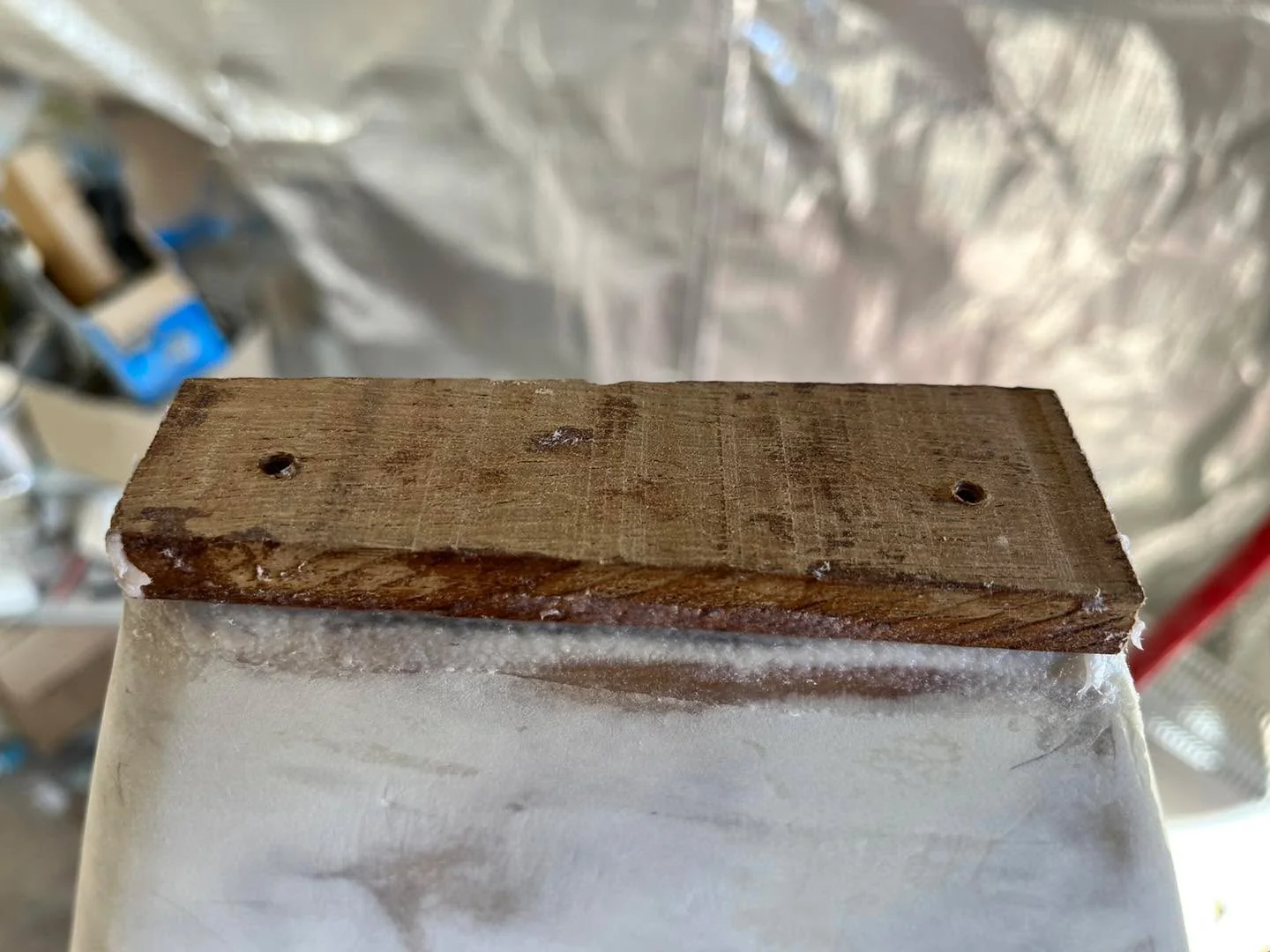
Iroko Shoes on the Keel
I shaped iroko battens for the keel and skeg, glued them in place, and then spent the day sanding until my arms vibrated. The hulls are looking wonderfully golden, and I’m still on track to turn them next week.
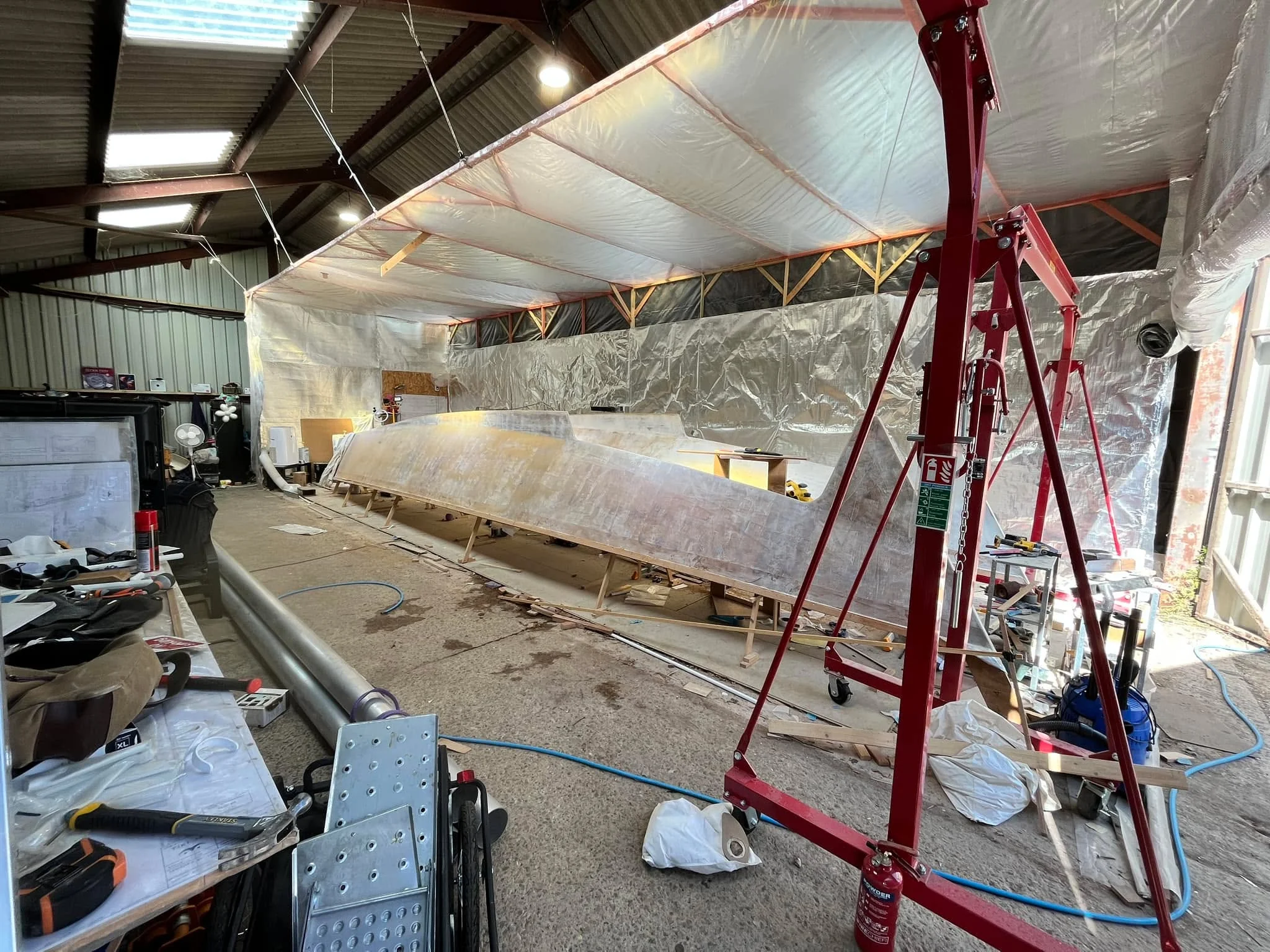
Finally Seeing the Hull Properly
I finally got to see the hull from more than a metre away, and I really like what I see. We dismantled one side of the tent, and suddenly there is so much space.
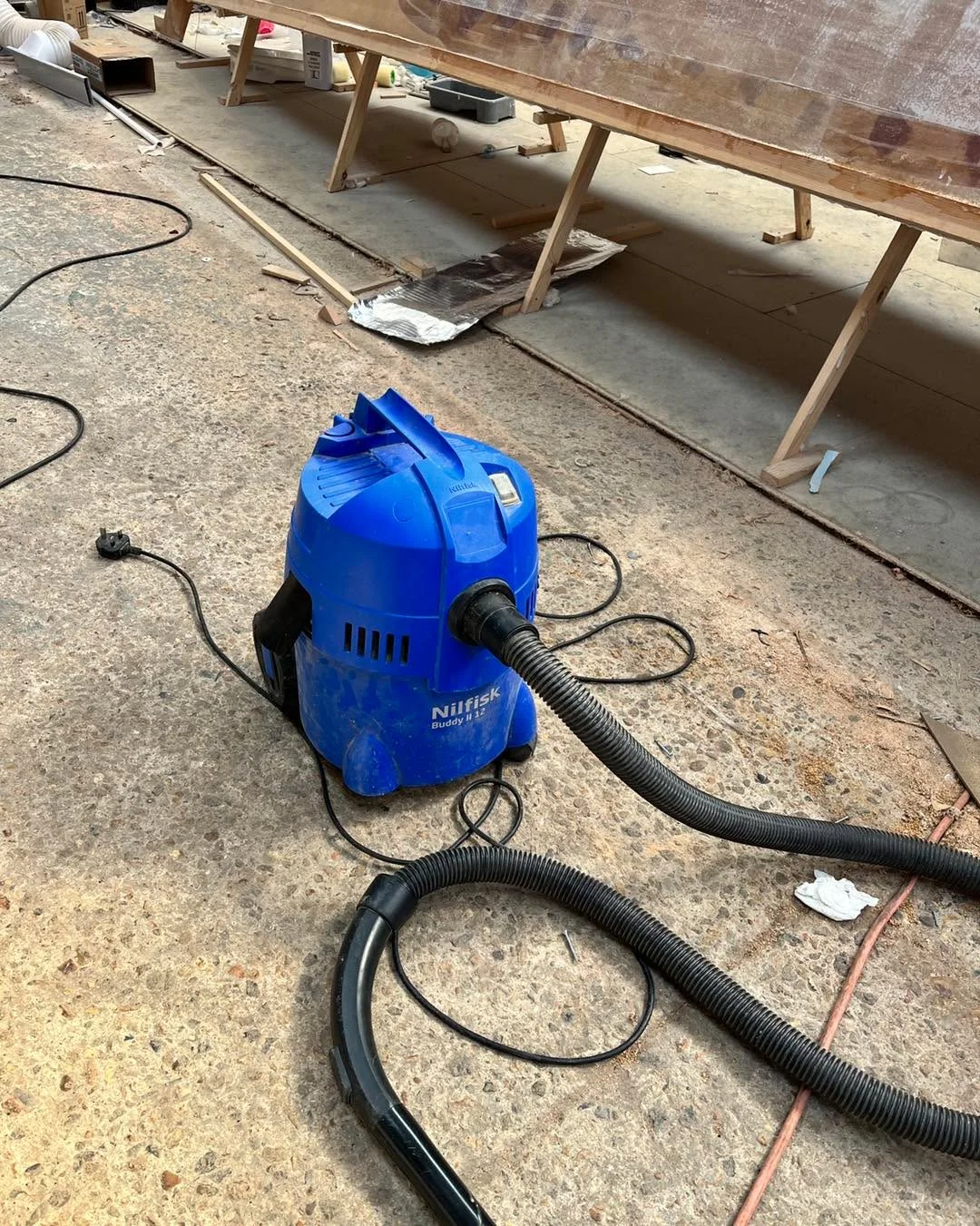
When the Wet-and-Dry Vacuum Went Feral
I learned the hard way that our Nilfisk wet-and-dry vacuum is not watertight. After it nearly cooked itself, I replaced it just in time to vacuum and paint the hulls before turning them.
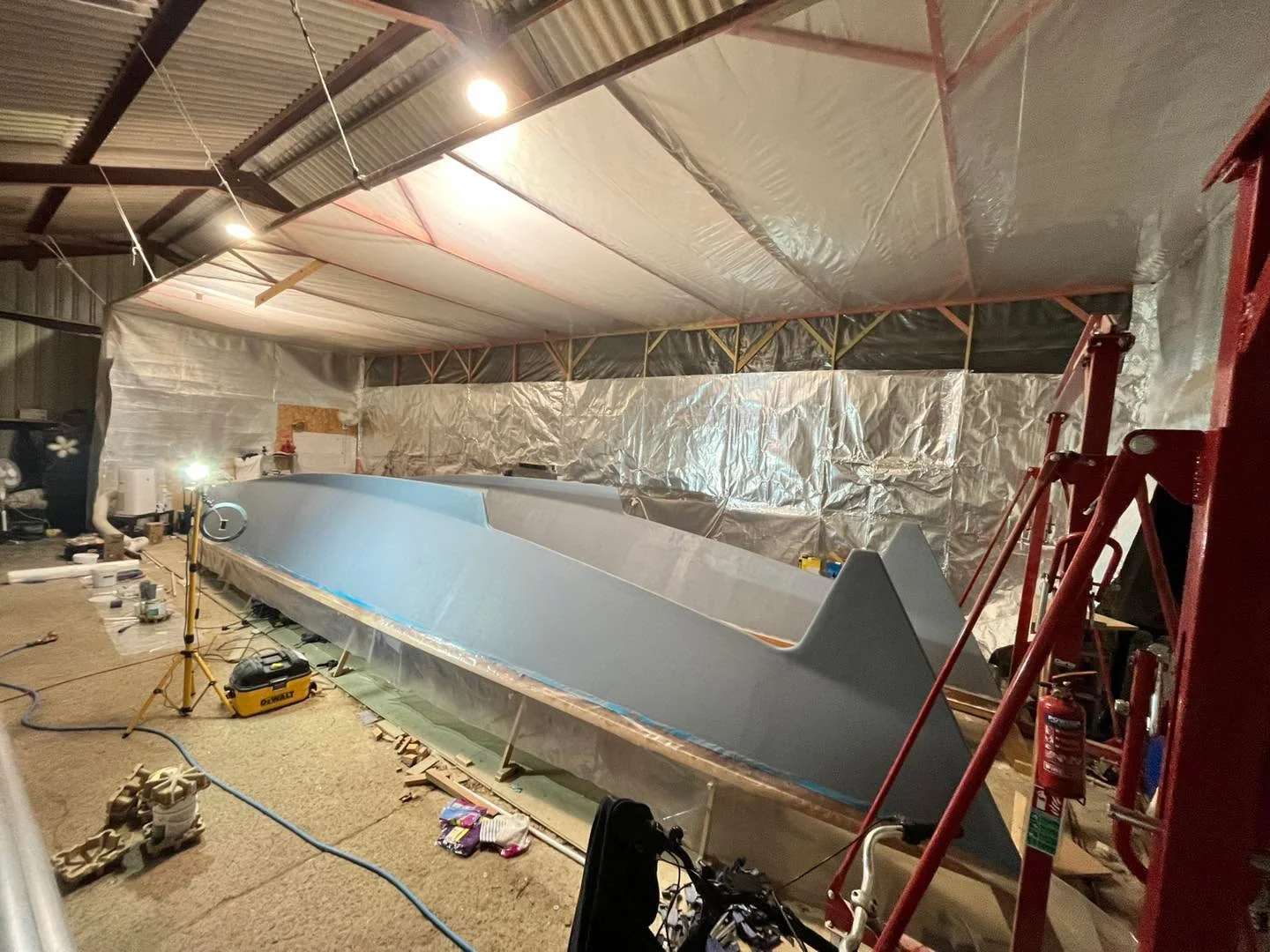
Ikaroa Is Looking Pretty Now
I’m so pretty now 😍 Ikaroa’s hulls are looking very smart in their grey finish.
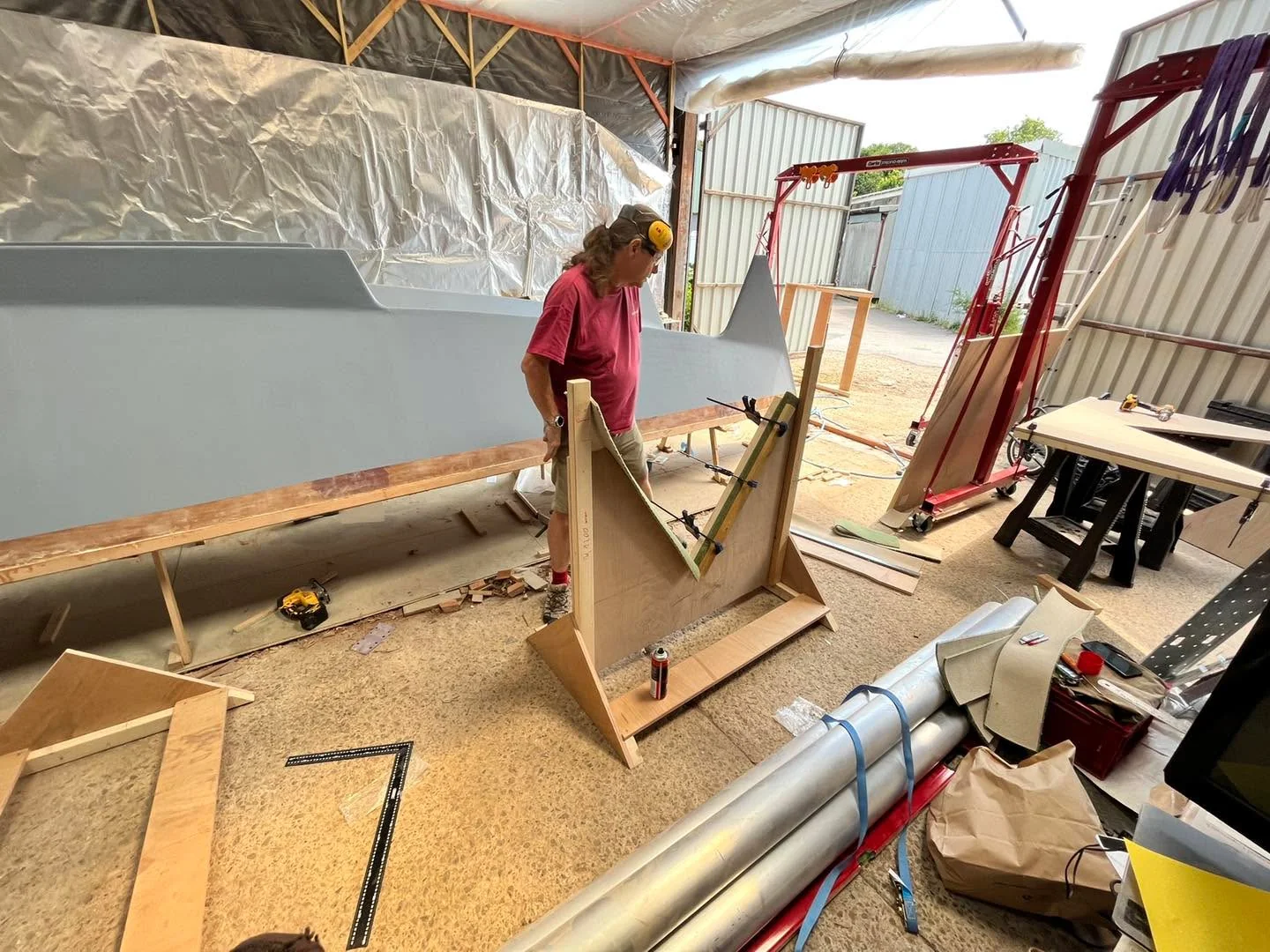
One Hull Turned Over at Last
I finally turned one hull over after working almost without a break for 28 hours. Huge thanks to Eamon for making it possible—and now I need sleep.
Keel Fillets After Turning the Hulls
I’ve reorganised the workshop and started making the keel fillets, using a runny epoxy and microfibre mix to fill the gaps between the backbone, bulkheads and hull sides. A thicker layer and glass tape will follow.

Trying to Work on the Boat
After getting out of bed, finding coffee and pretending to be human, I try to work on the boat.
How Tough Is a Thin Interprotect Layer?
I’m testing the cured Interprotect coating from a mixing bucket and finding that even 0.05 mm makes a remarkably tough continuous film. With Coppercoat and polyurethane still to come, I’m starting to believe the hull will be nicely protected.
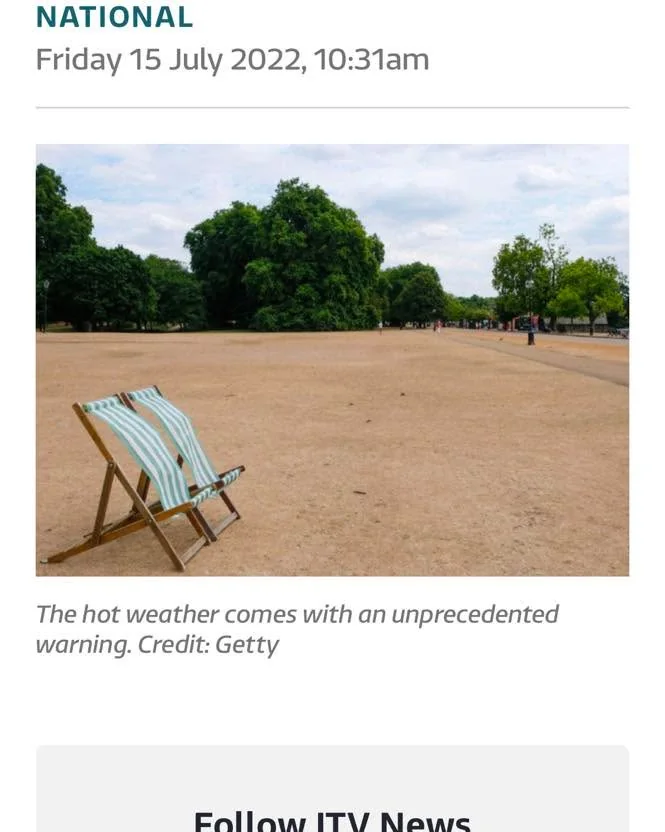
The Heatwave Has Beaten Our Epoxy
With the Met Office issuing its first red heat alert and temperatures possibly reaching 40 degrees, I have no chance of working with epoxy on Tuesday—even with slow hardener.
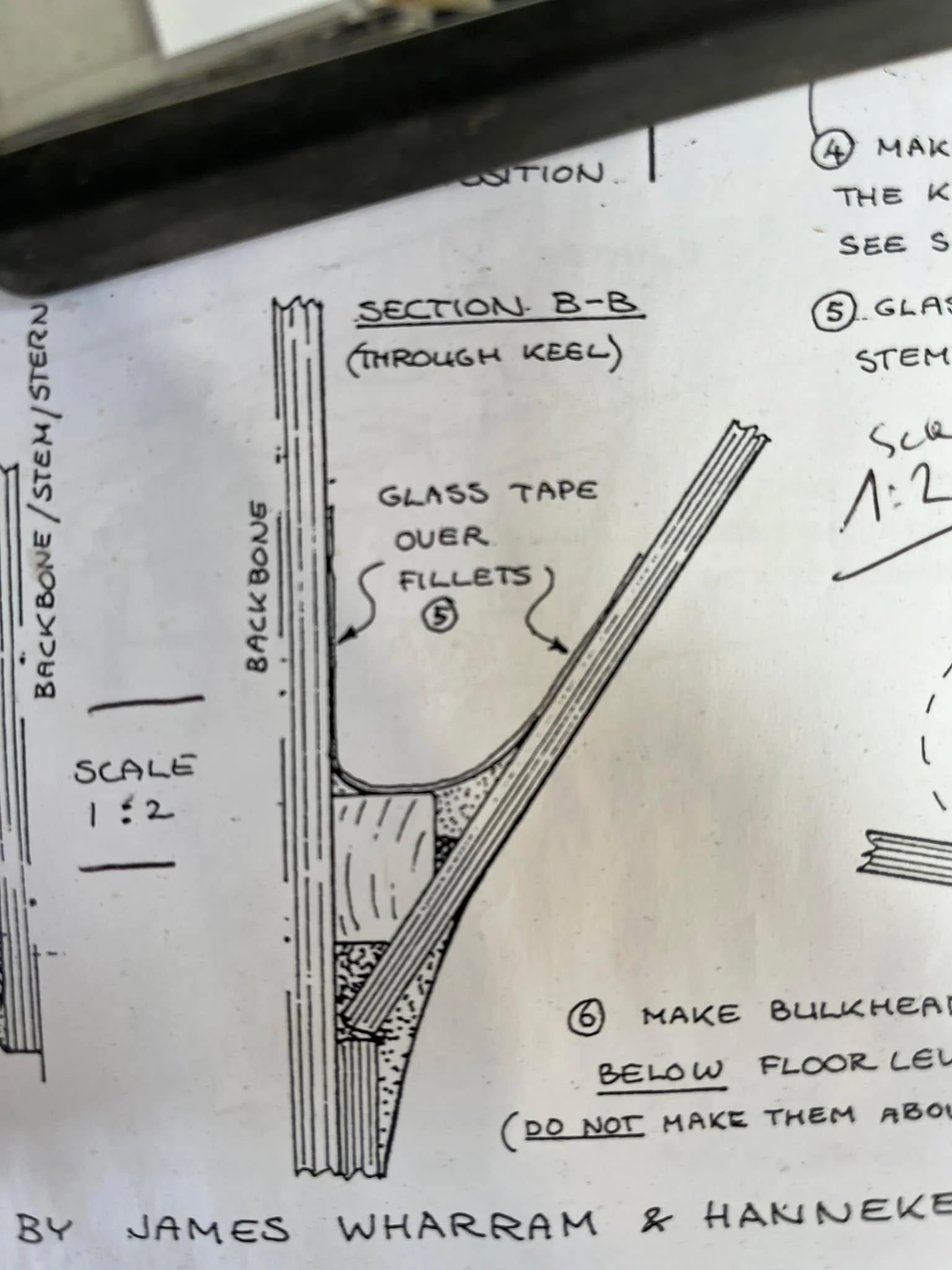
Second Keel Fillets in the Heat
I’m pressing on with the second layer of keel fillets, despite the workshop reaching 29.5°C before mid-morning. I’m also glassing the panel joints from inside and making hard plastic spatulas that cannot be broken by reaching too far.
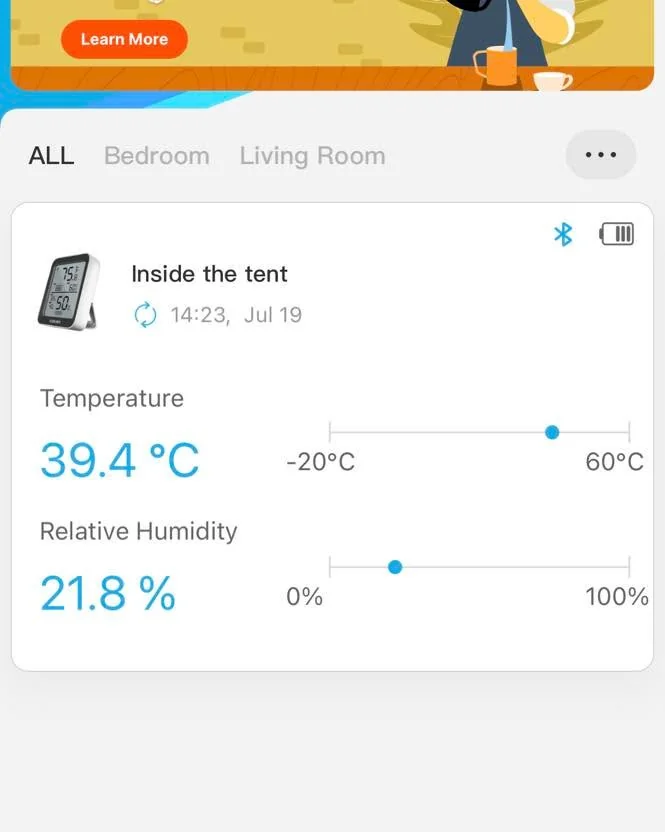
Filleting in a Very Hot Workshop
I managed a few hours of putting fillets on before the workshop reached 27°C and there was no point continuing. Visitors still get coffee, though I remain firmly opposed to iced coffee and decaf.
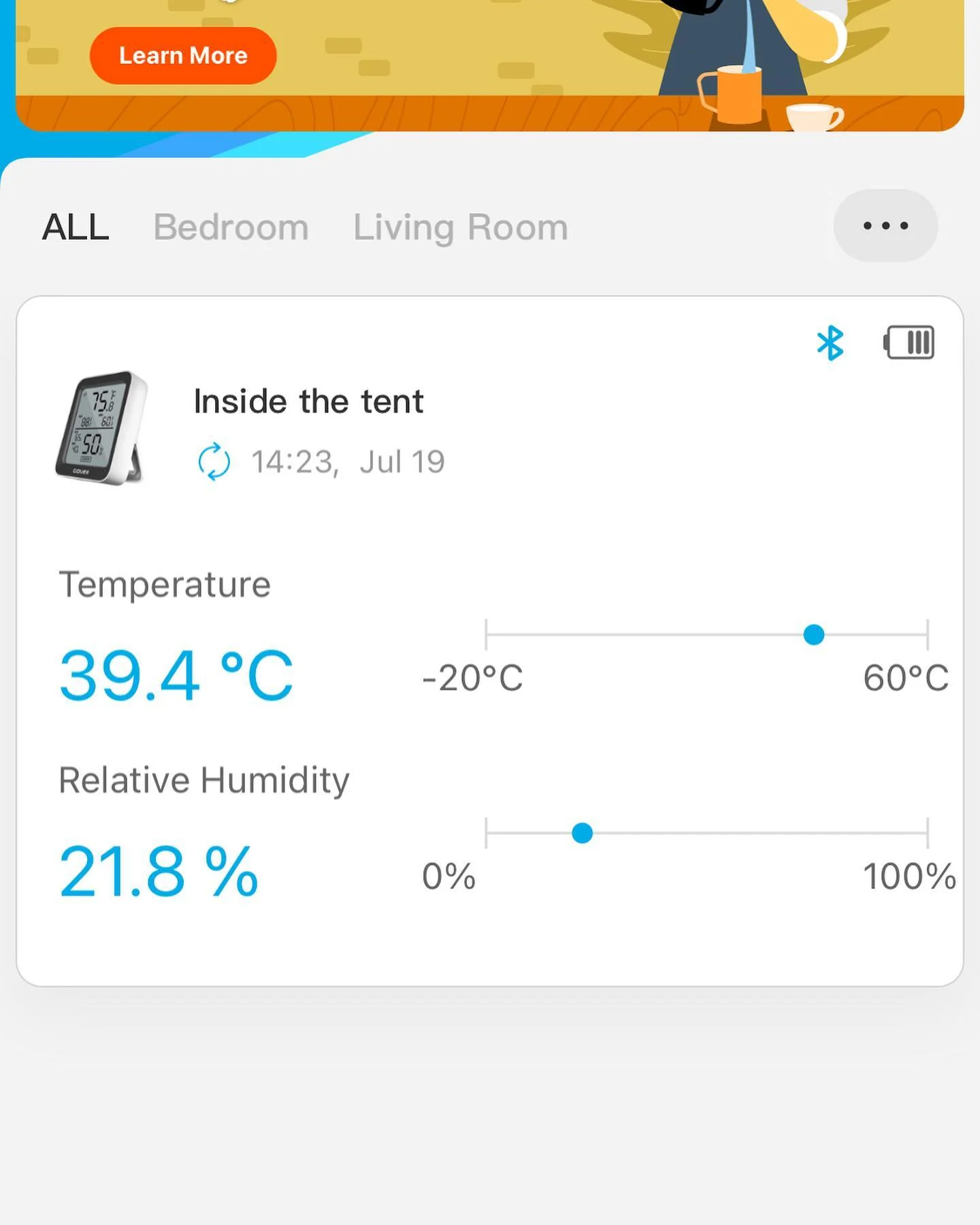
Hot Enough for Iced Coffee
The workshop was hot enough to make iced coffee sound almost tempting. Almost—I’m still drinking mine hot, because cold coffee is poison, just slightly less dangerous than decaf.
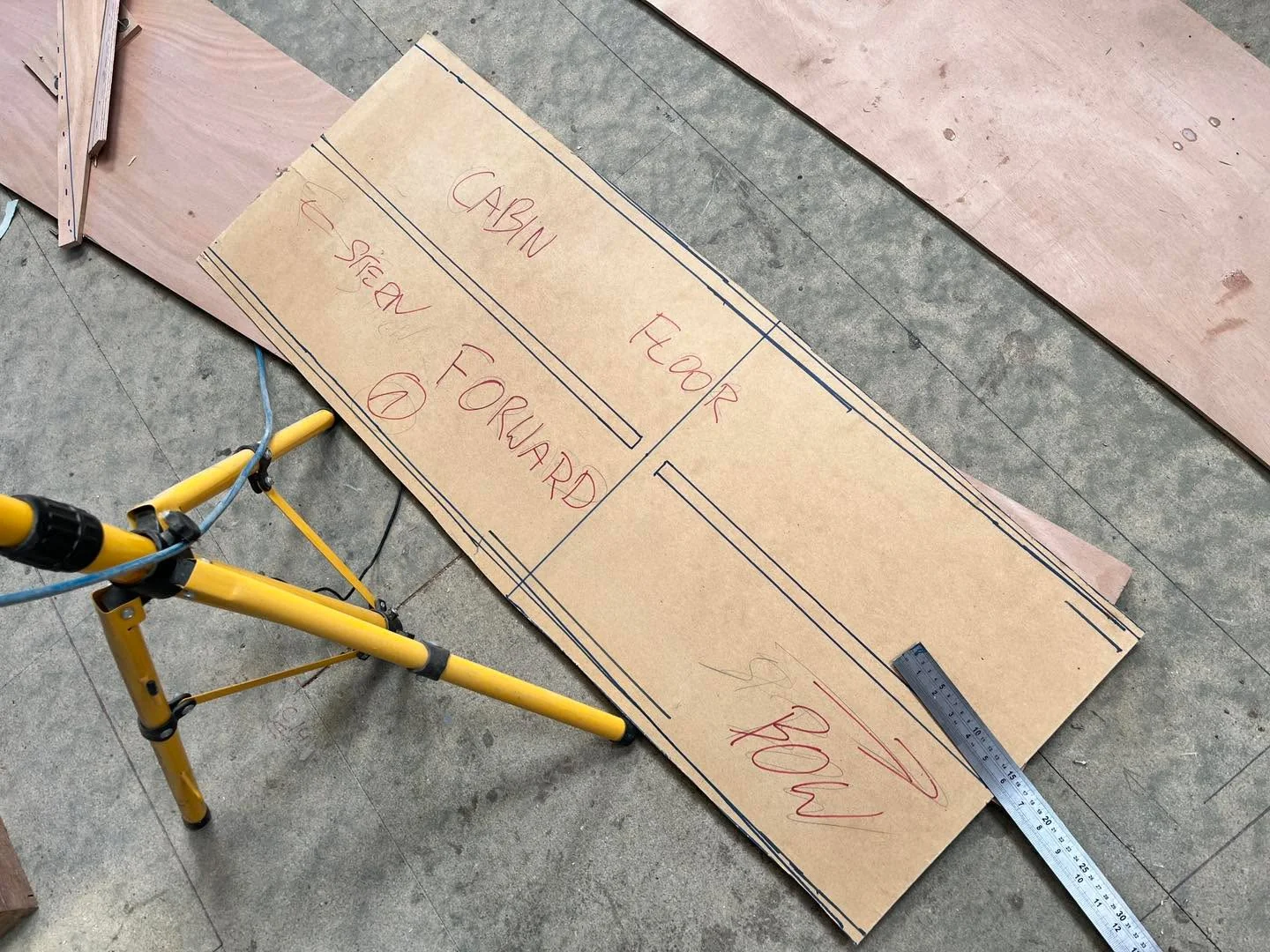
Preparing Floors for the Cabins
I started preparing the cabin floors, with underfloor painting and epoxy work next. I’m also switching from “hull 1” and “hull 2” to starboard and port as the interior work begins to diverge.
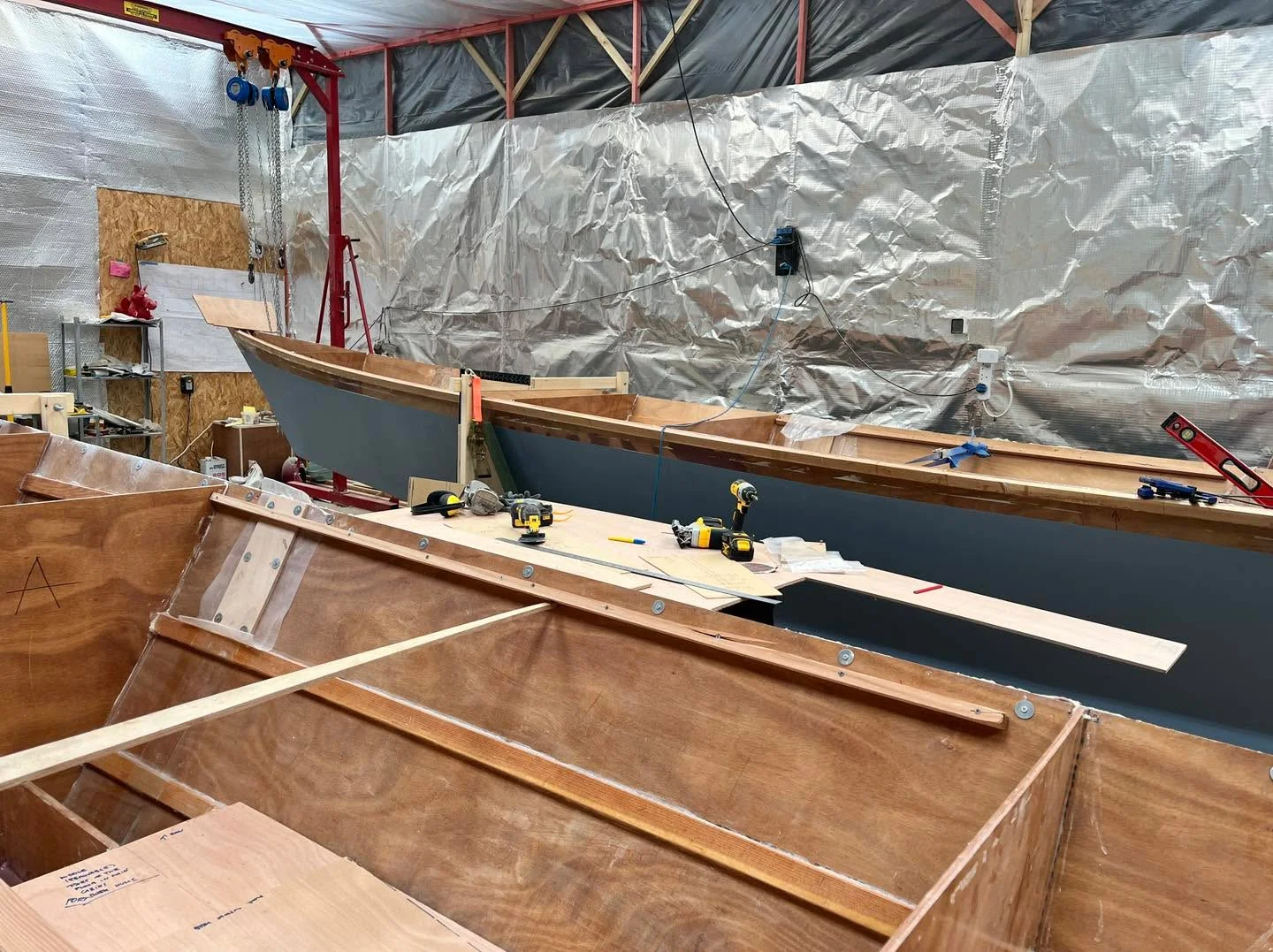
Getting Back to Boat Work
I’m struggling to find my rhythm again after a weekend off, so I’m sanding keel fillets, preparing floors and glassing the hull joints. I also made a rather handsome fillet-sanding tool that works better than it looks.
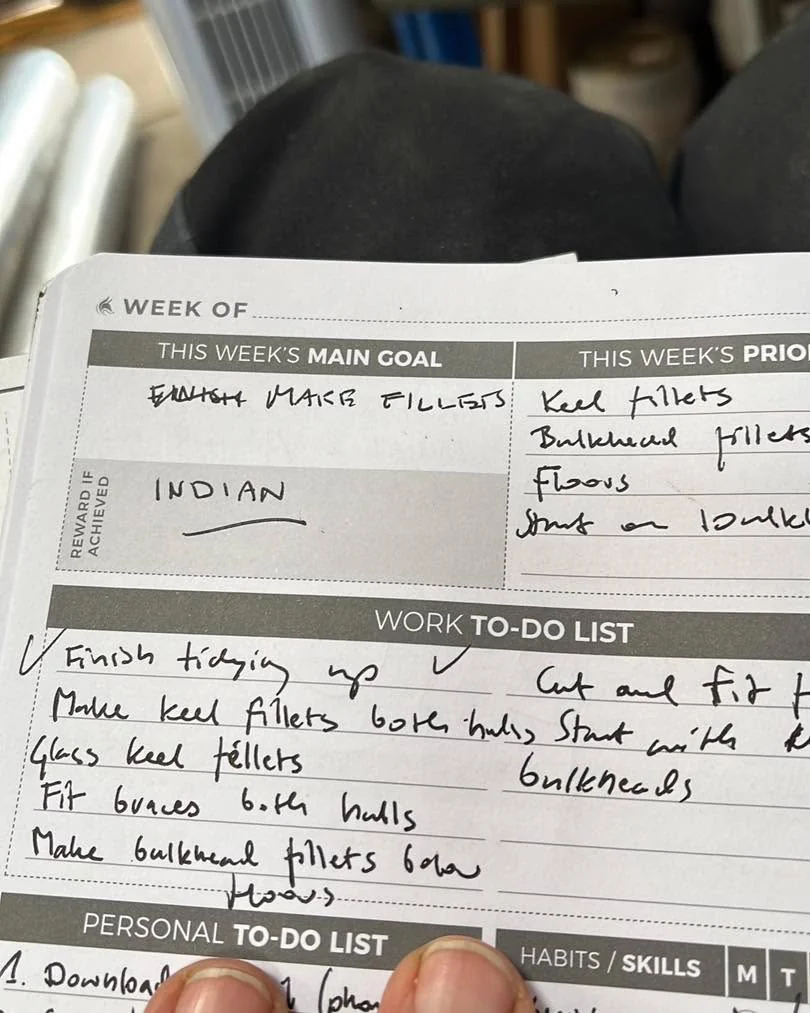
The Less Visible Side of Boatbuilding
I share the planning, timekeeping and ordering behind my boatbuilding. Breaking the work into small tasks matters, especially when a late primer order nearly caused trouble.

The Workshop Runs Out of Coffee
It is scary in our workshop right now: we’ve run out of coffee, and the shops don’t open until 10am on Sunday.
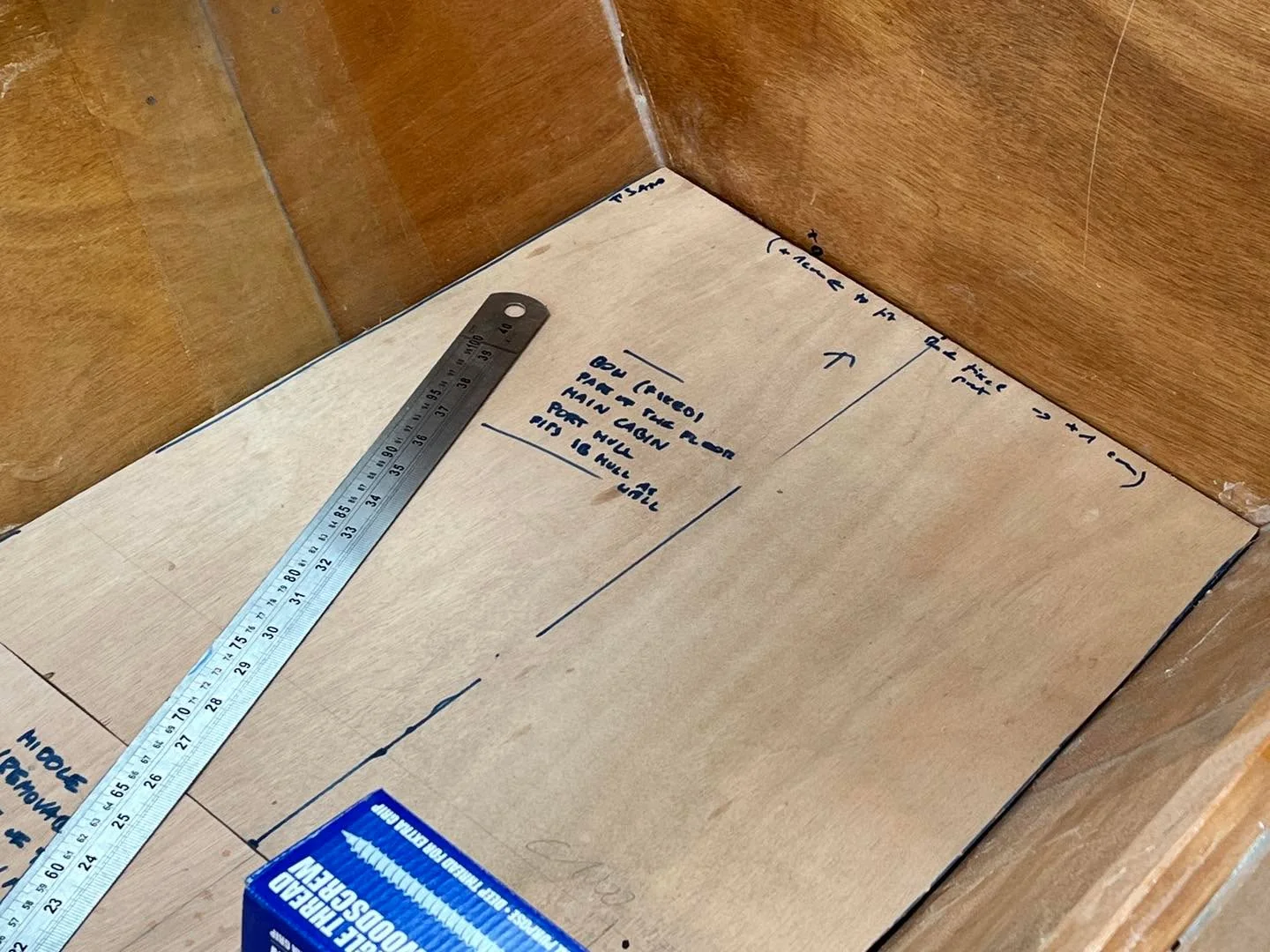
Dry-Fitting the Hull Floors
I’m dry-fitting the floors before the epoxy work, and the best surprise is that the hulls are actually identical at floor level. A floor made for one fits snugly into the other—which feels like an achievement.
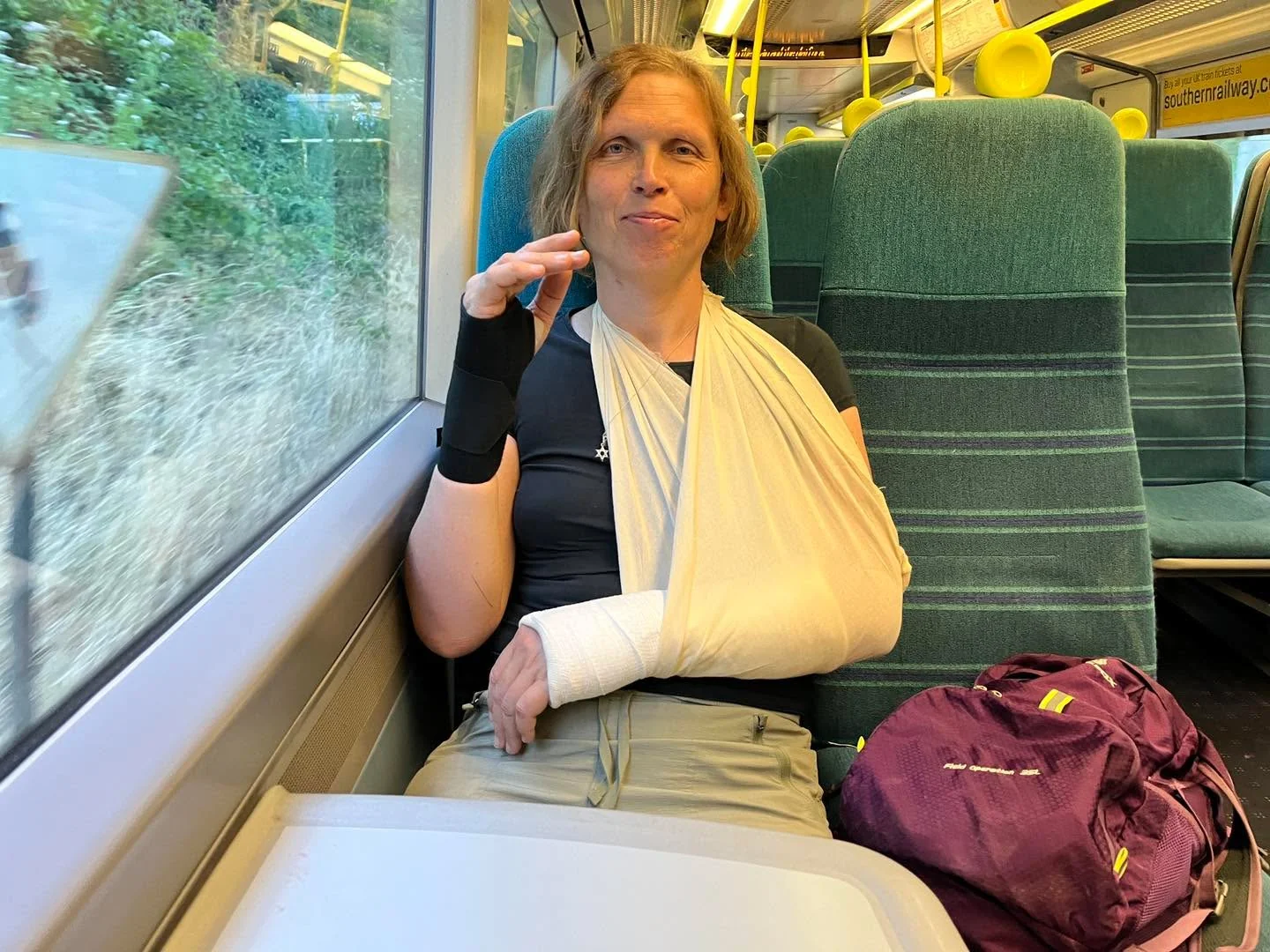
A Bike Fall Interrupts Boatbuilding
I was meant to be re-rigging a Colin Archer near the Arctic Circle, but a slow bike fall left me with injuries to both hands and my knee. Boatbuilding commentary will resume when at least one hand works again.
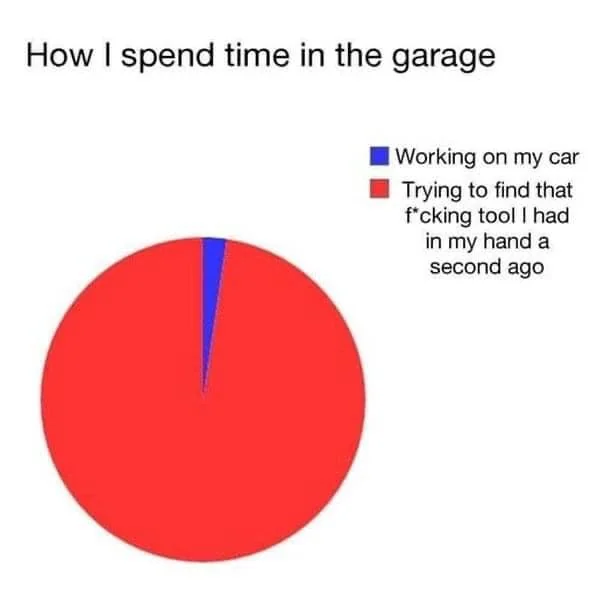
Working on a Boat, Finding Tools
I found this garage-work meme surprisingly relatable to working on a boat. Yes, apparently I still had a few weeks to go.
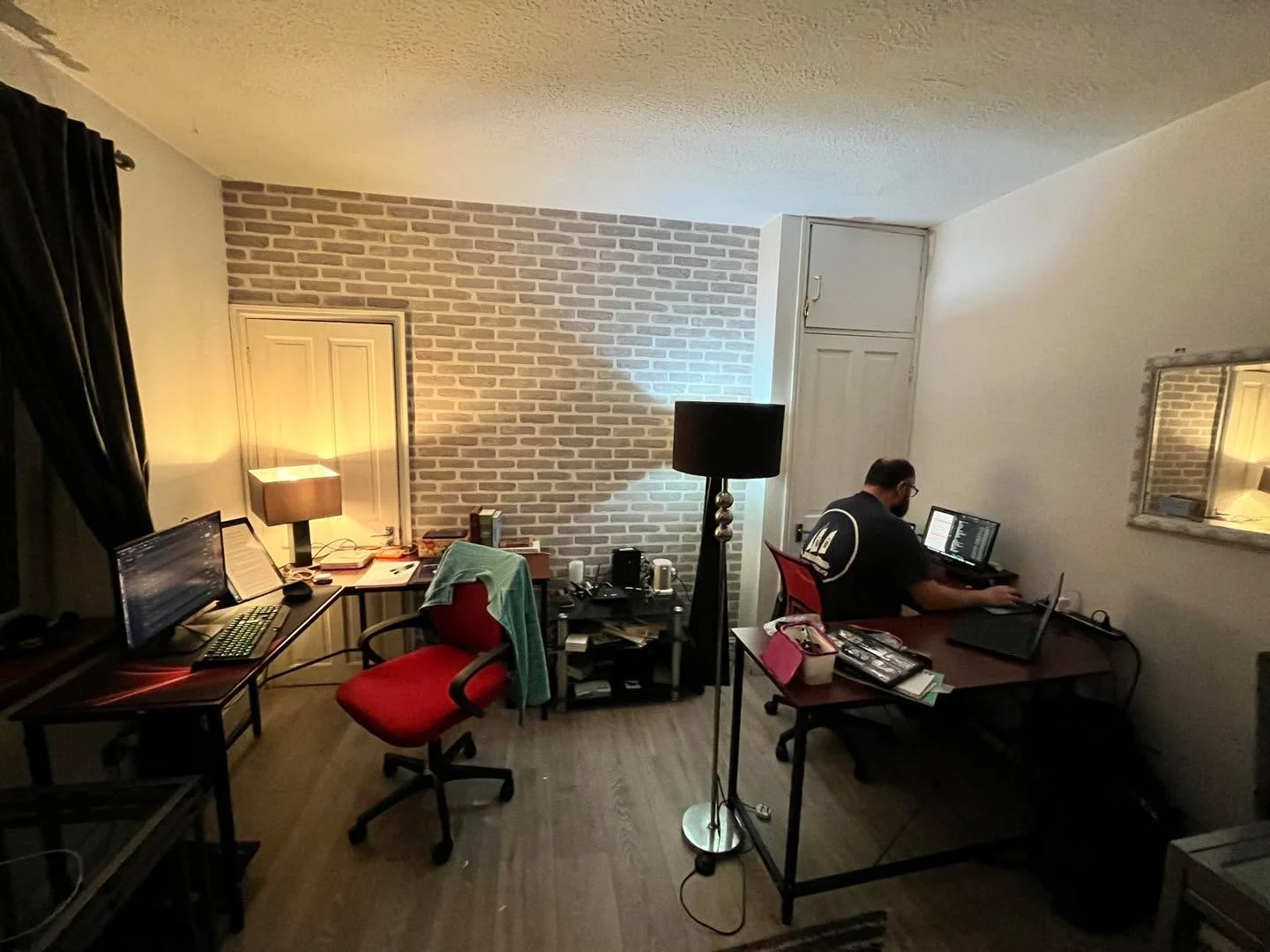
Our Centre for Controlling the Universe
Our office is taking shape, although one desk is still missing. This is where the magic happens, powered by dreams and a huge amount of caffeine.
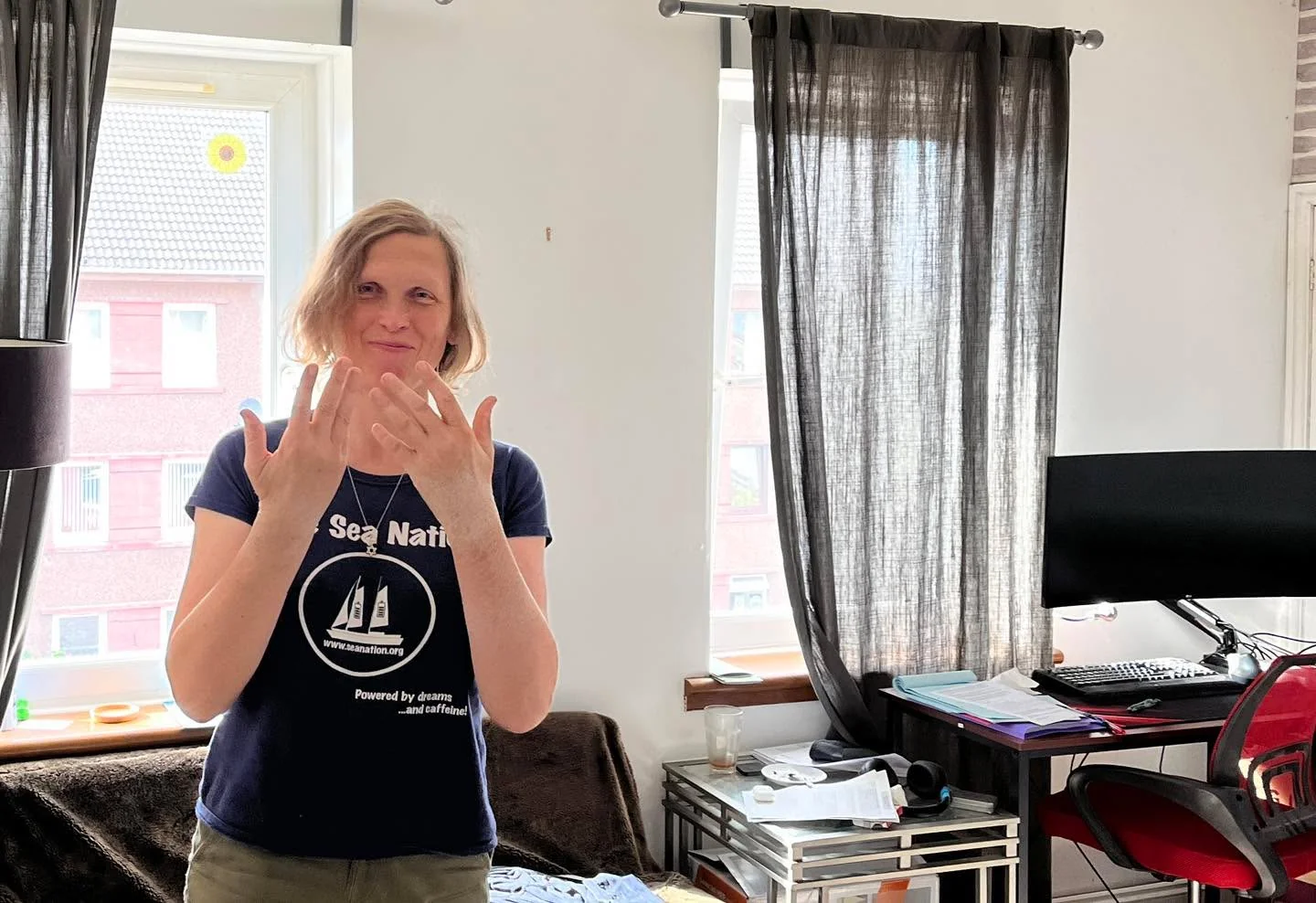
My Wrists Are Finally Free
My wrists are finally out of casts, although they’re still stiff. We’re staying in Edinburgh over winter, but I’ll be sharing how we plan to completely electrify the Wharram.
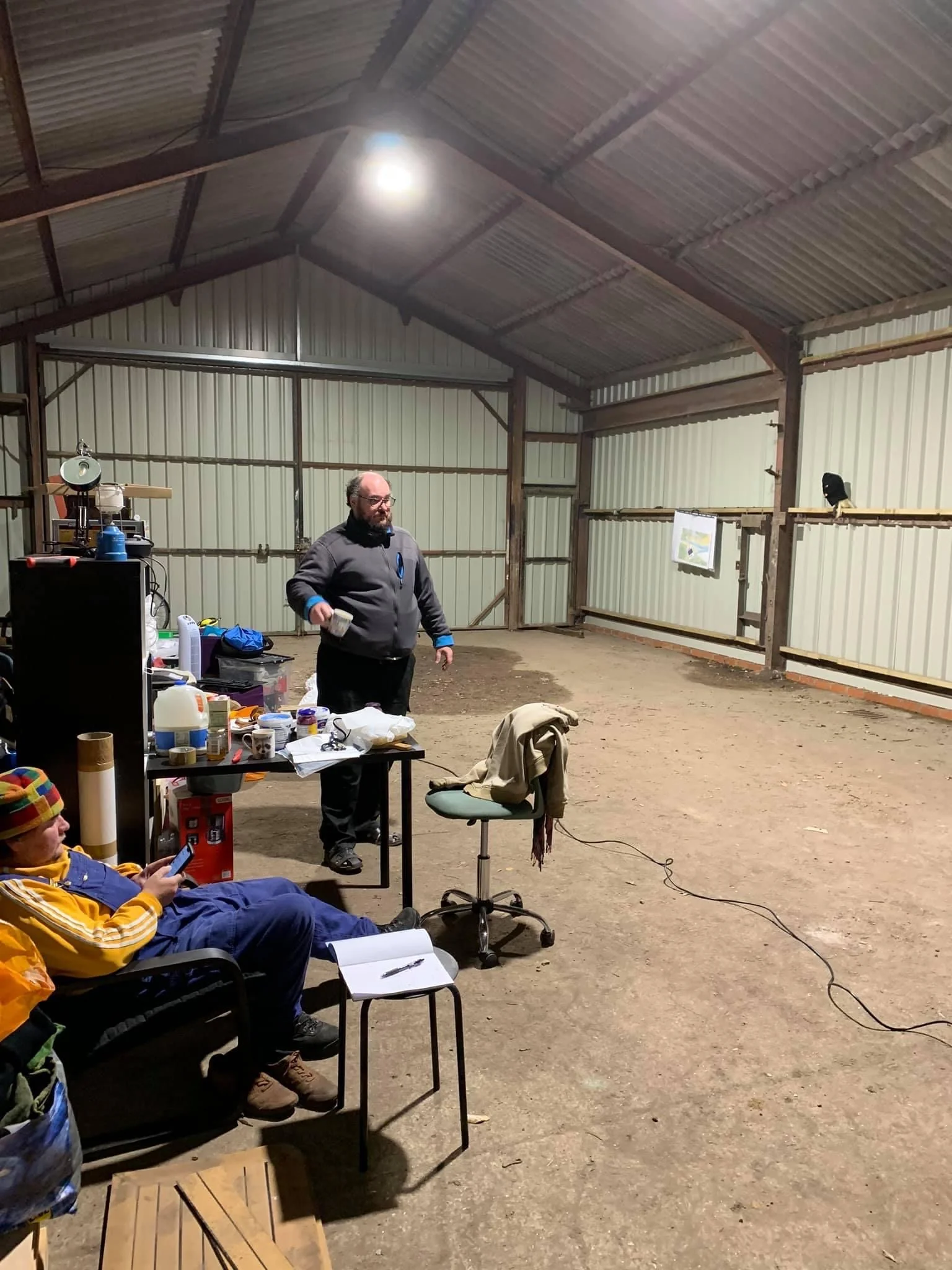
The Value of Being Scared
I’ve been scared of this project from the beginning, not just now. Big dreams usually require doing frightening things repeatedly—and waiting longer than a month to see the results.
Back to Working for Myself
I’ve officially finished working for others and am starting to work for myself again. The boat work is still a couple of days away, but regular updates are resuming now.
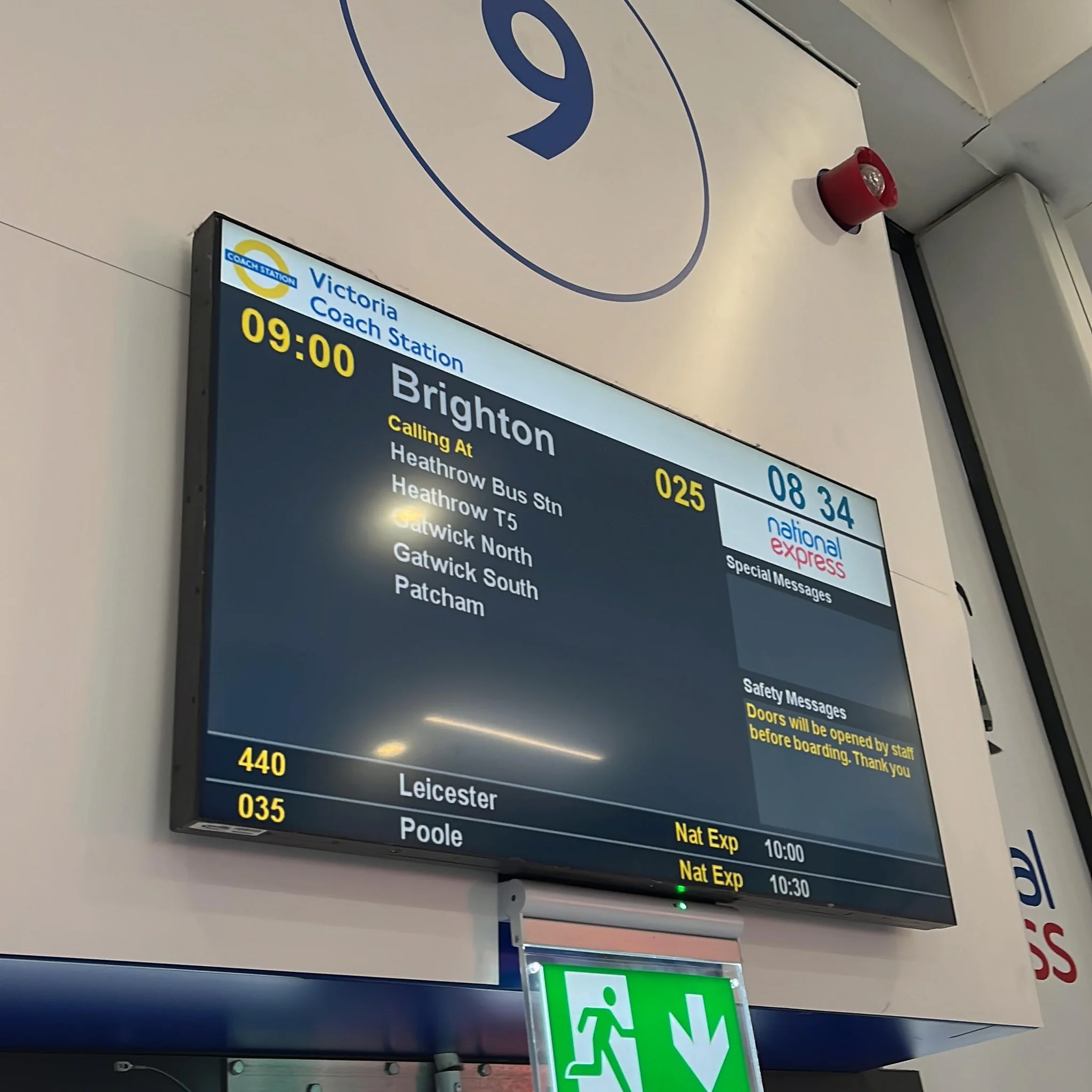
Almost Home, Back to the Workshop
I’m almost home—workshop home, that is. Back to work on our glorious boat at last!
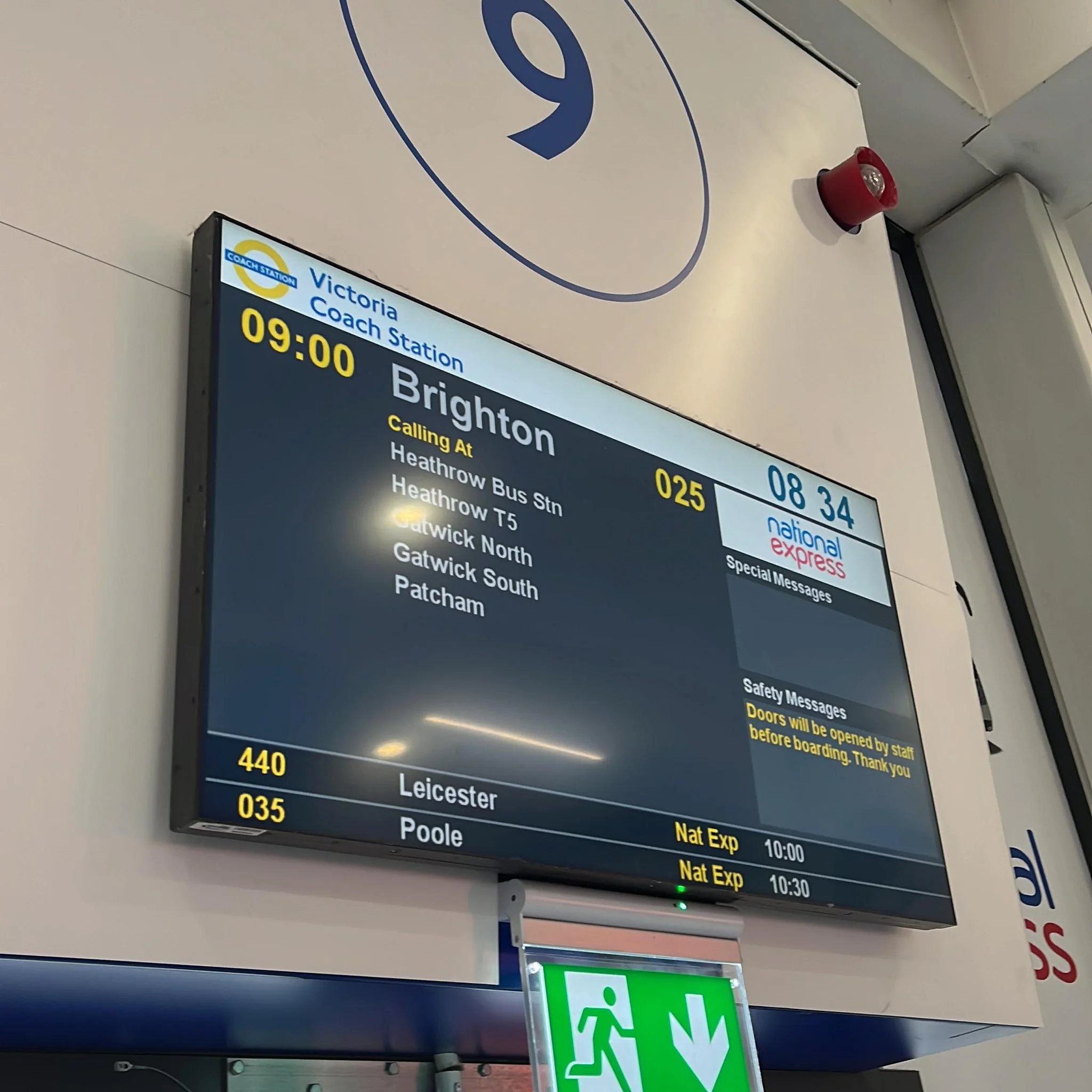
Getting Back to Work on Our Electric Boat
We’re getting back to work on our electric boat, and we’re determined to get her out by the end of summer.