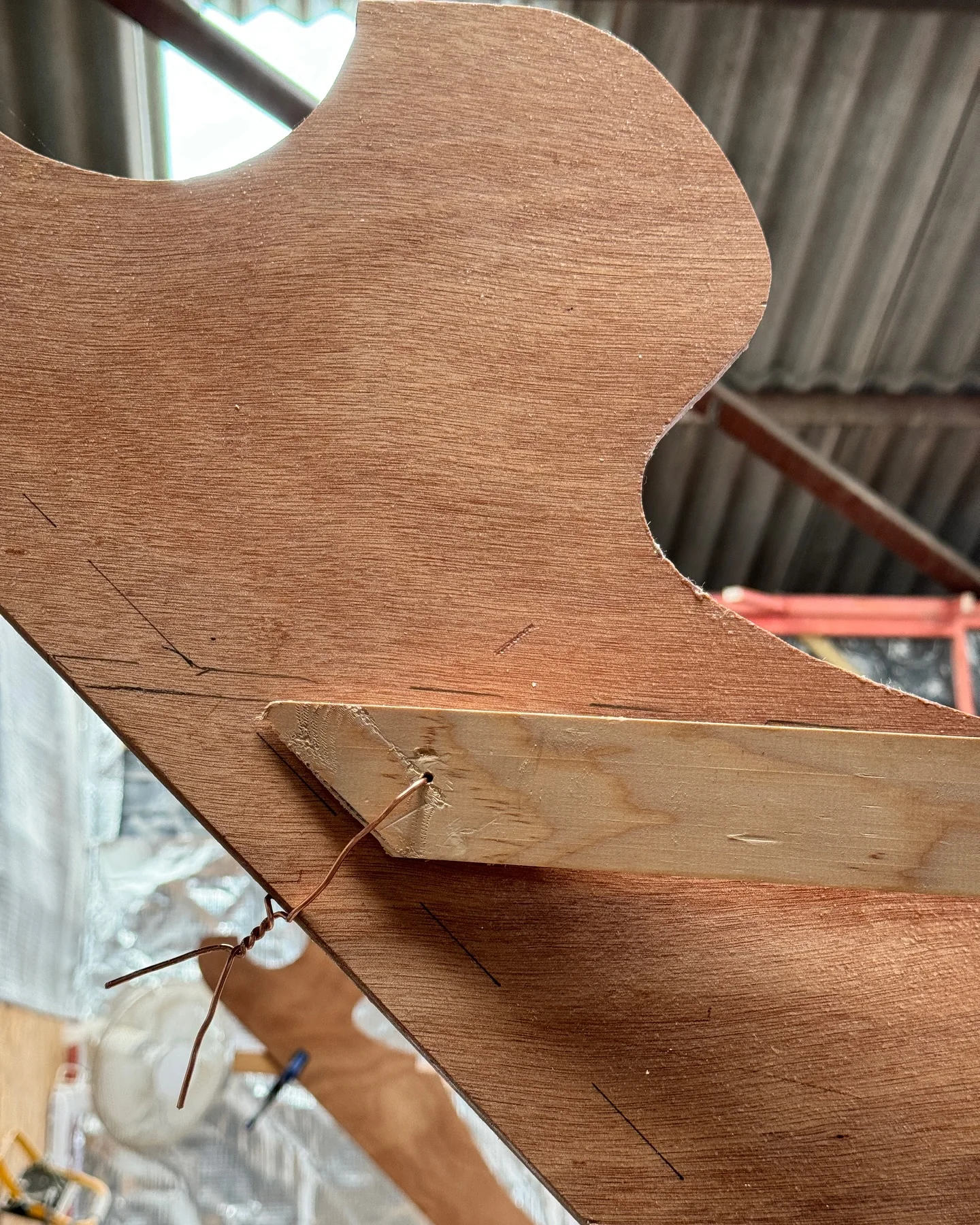
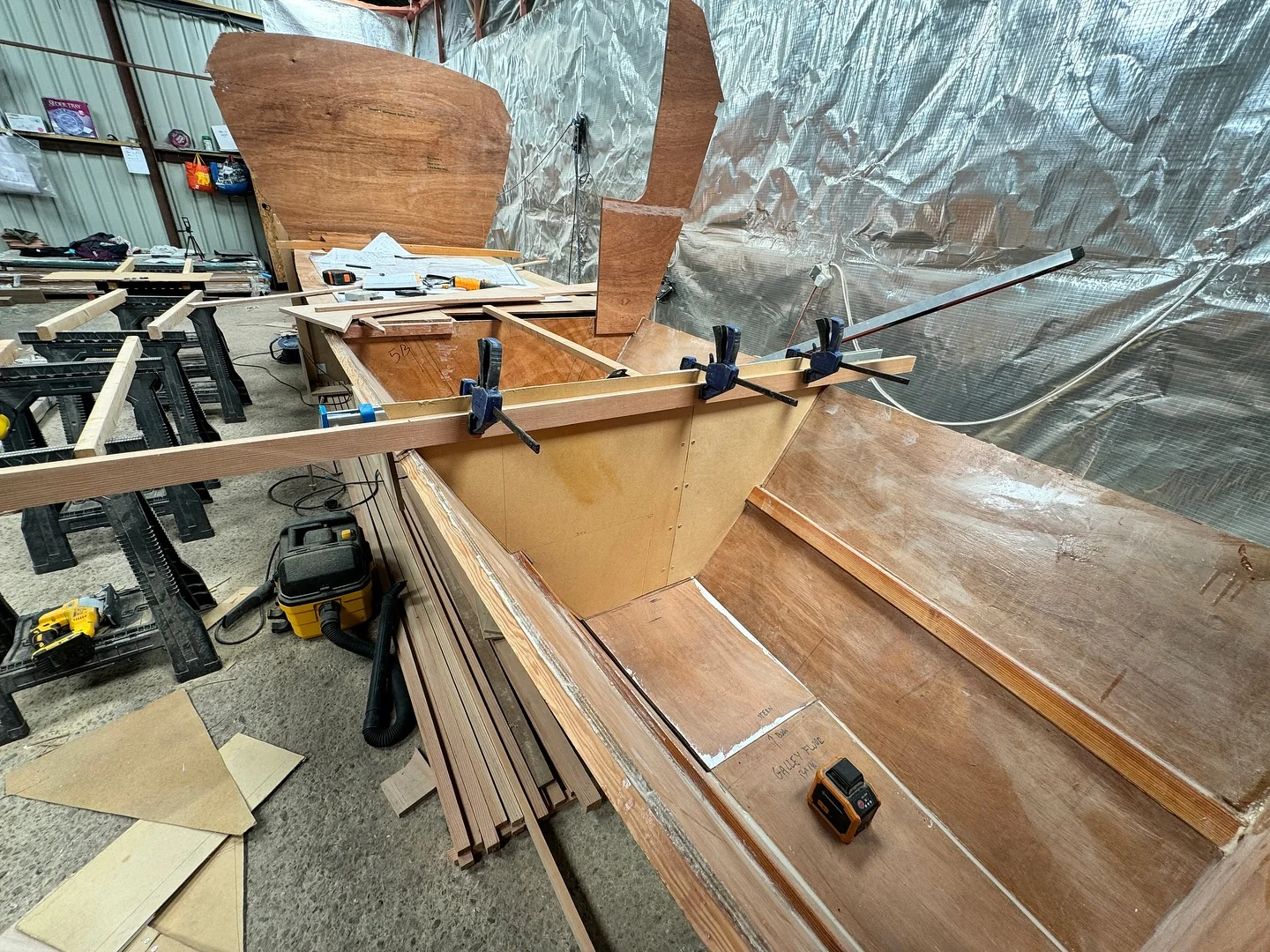
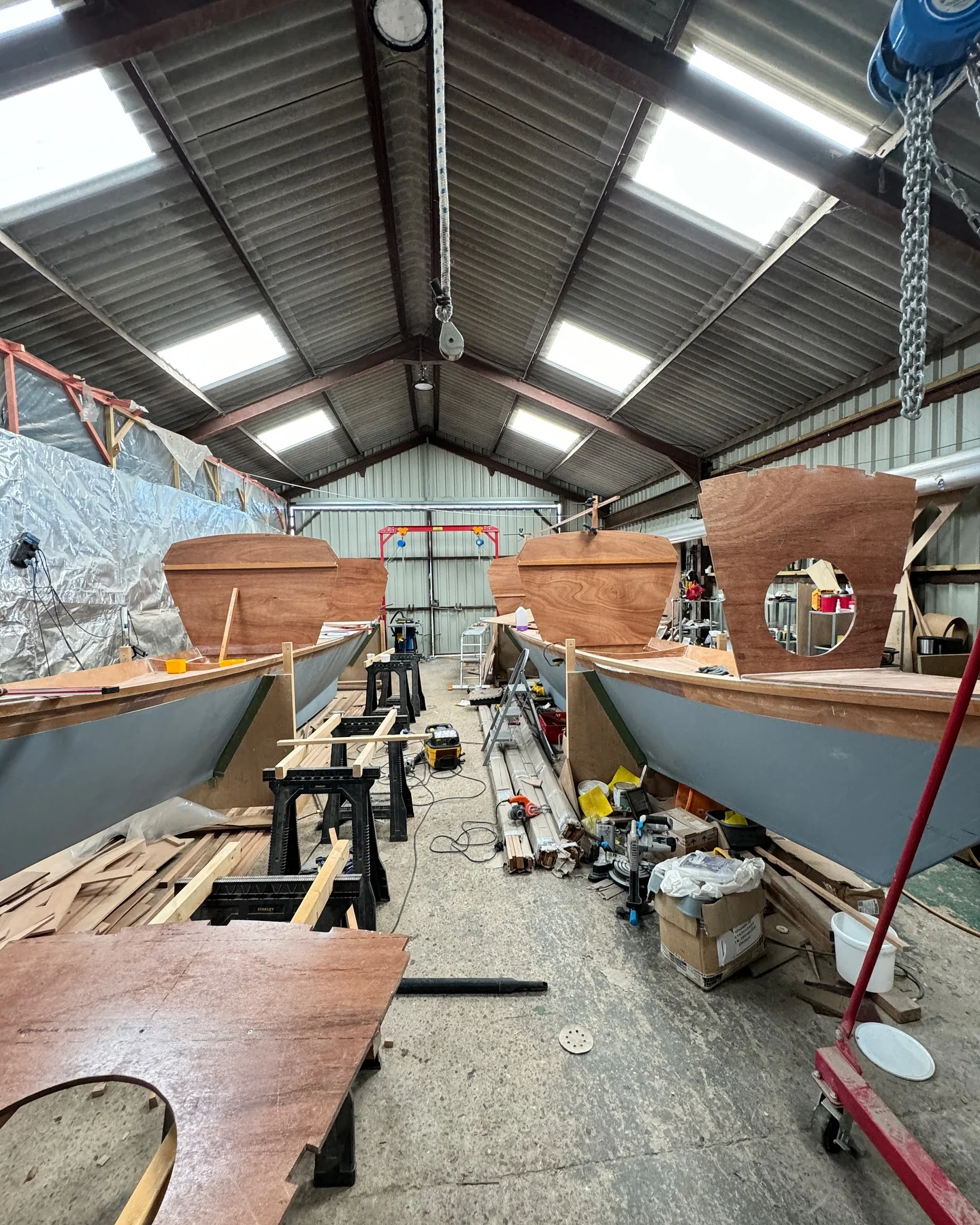
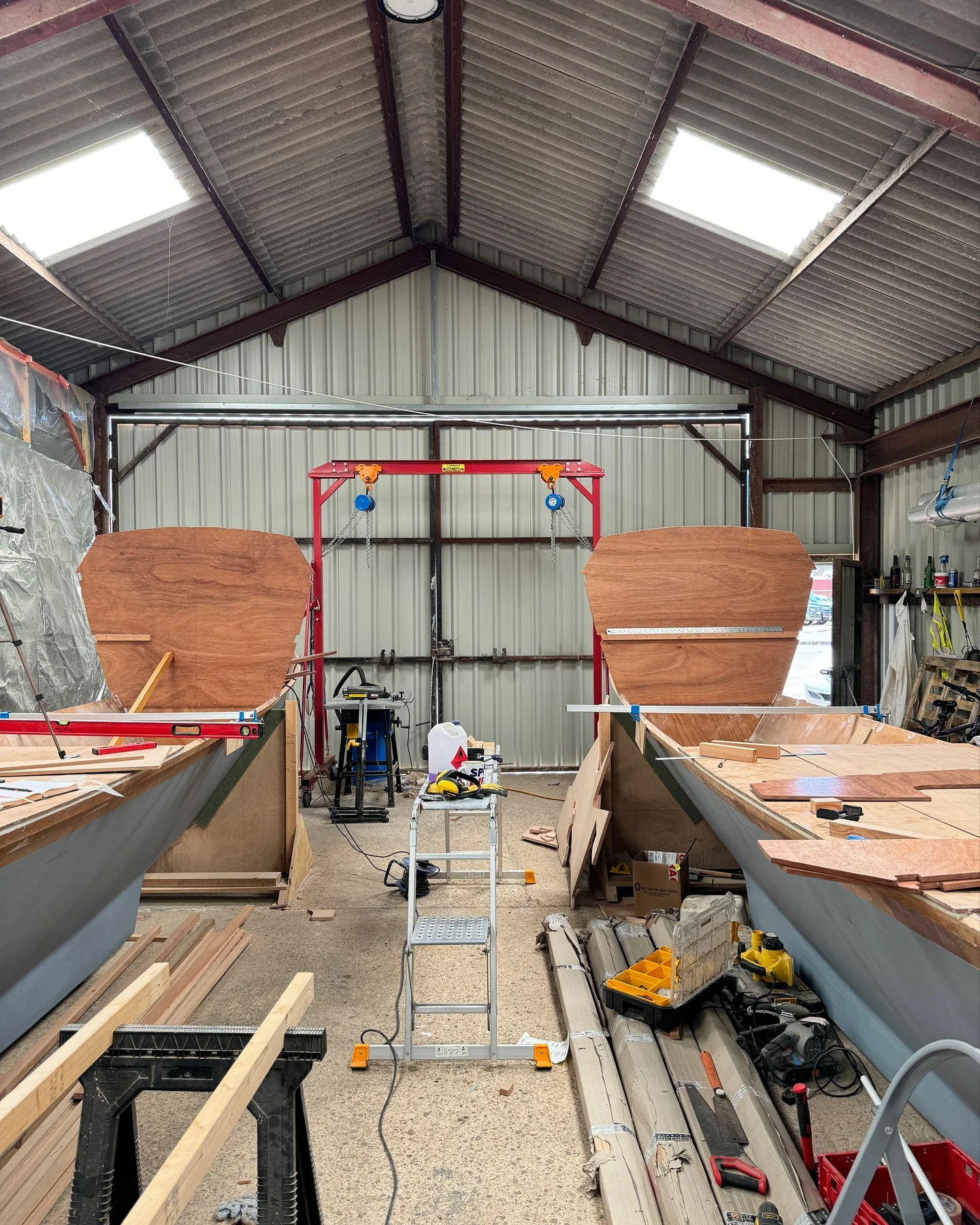
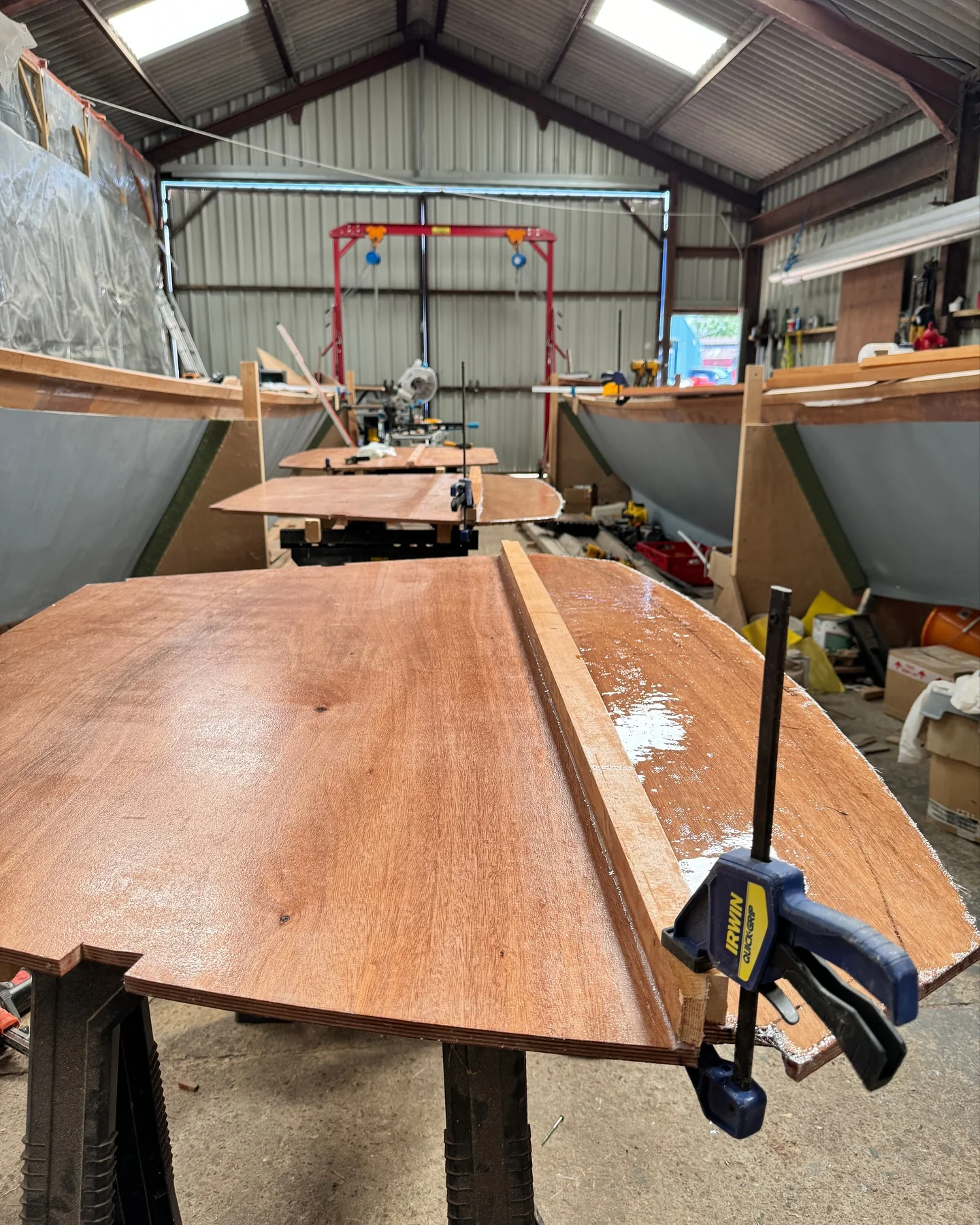
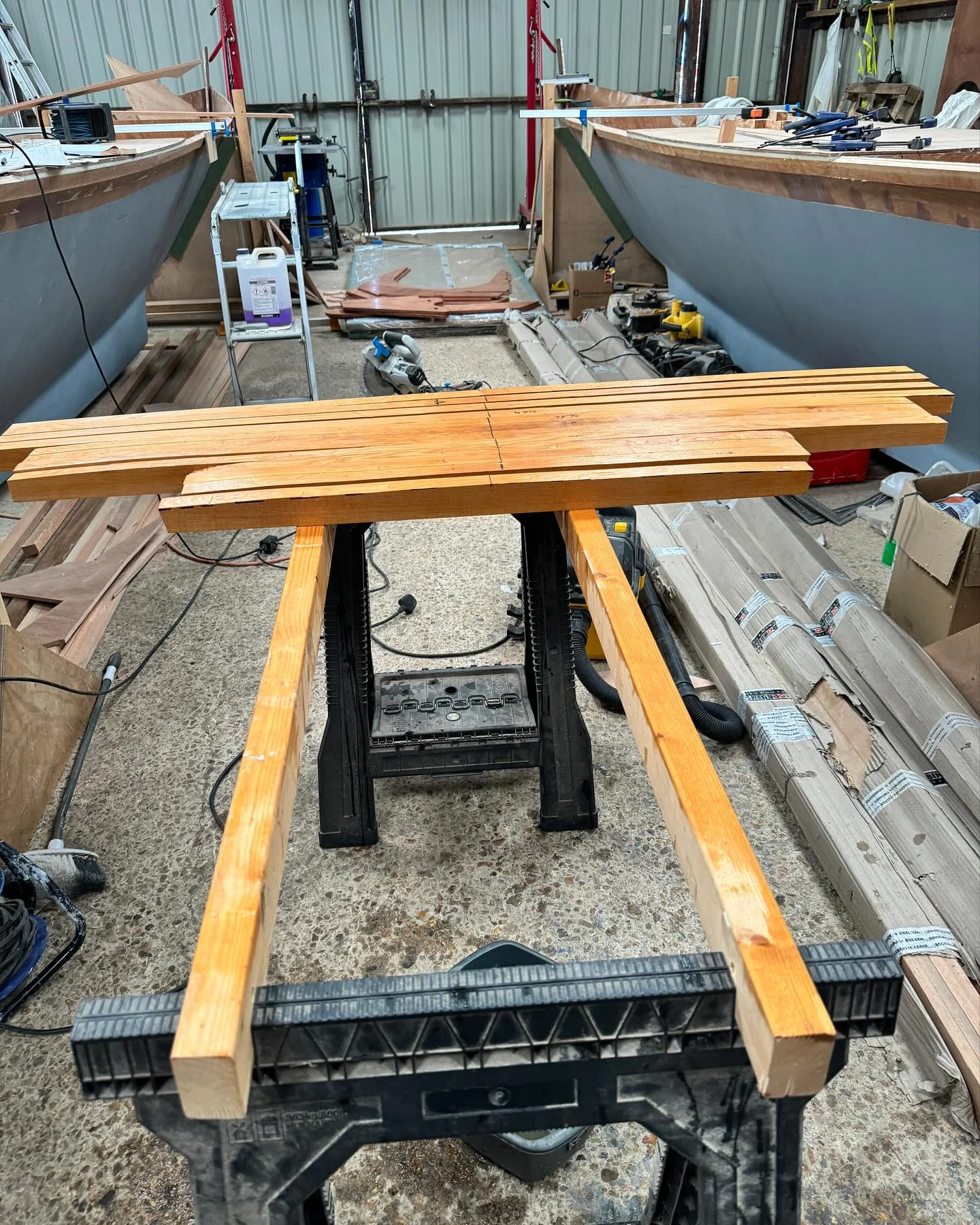
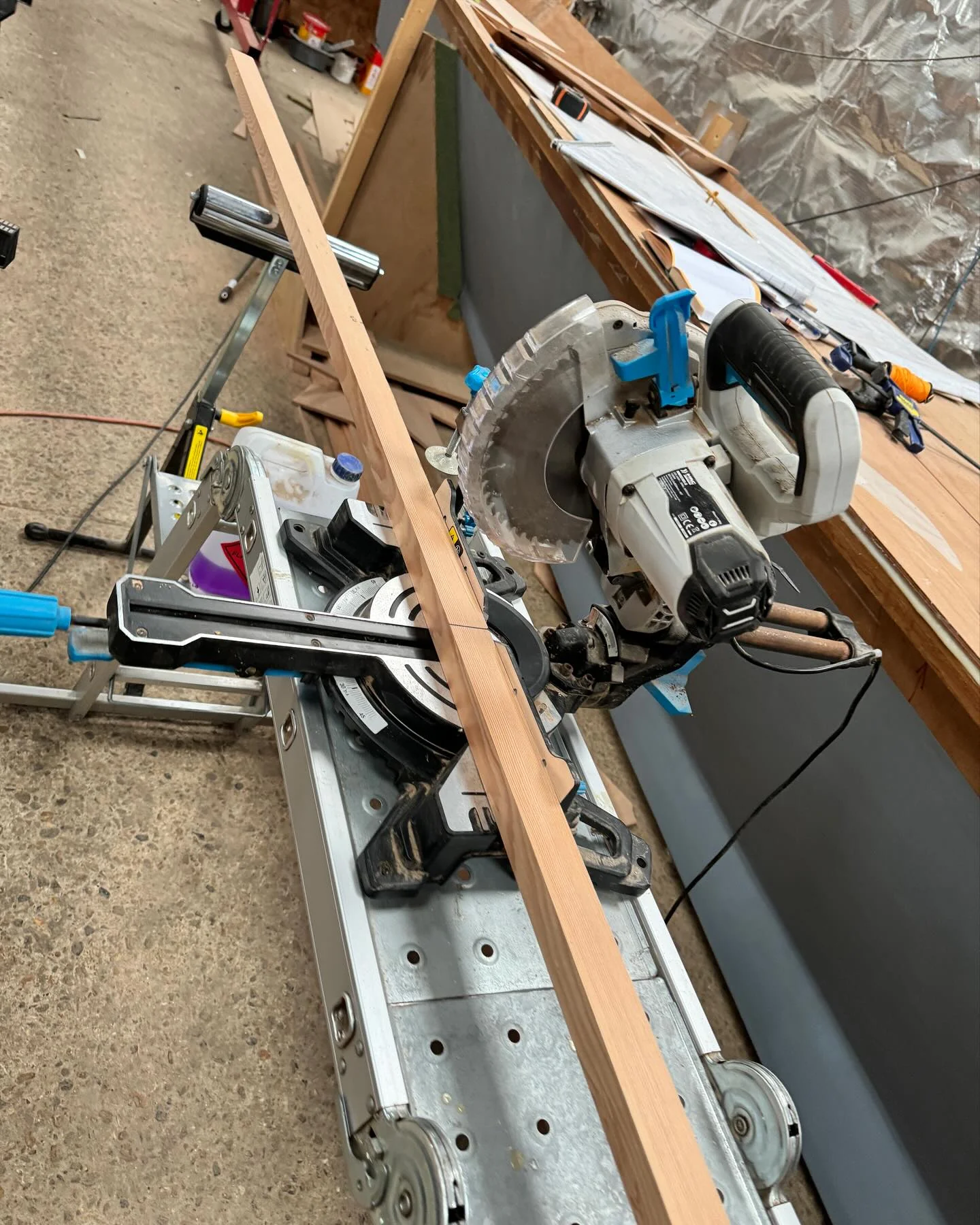
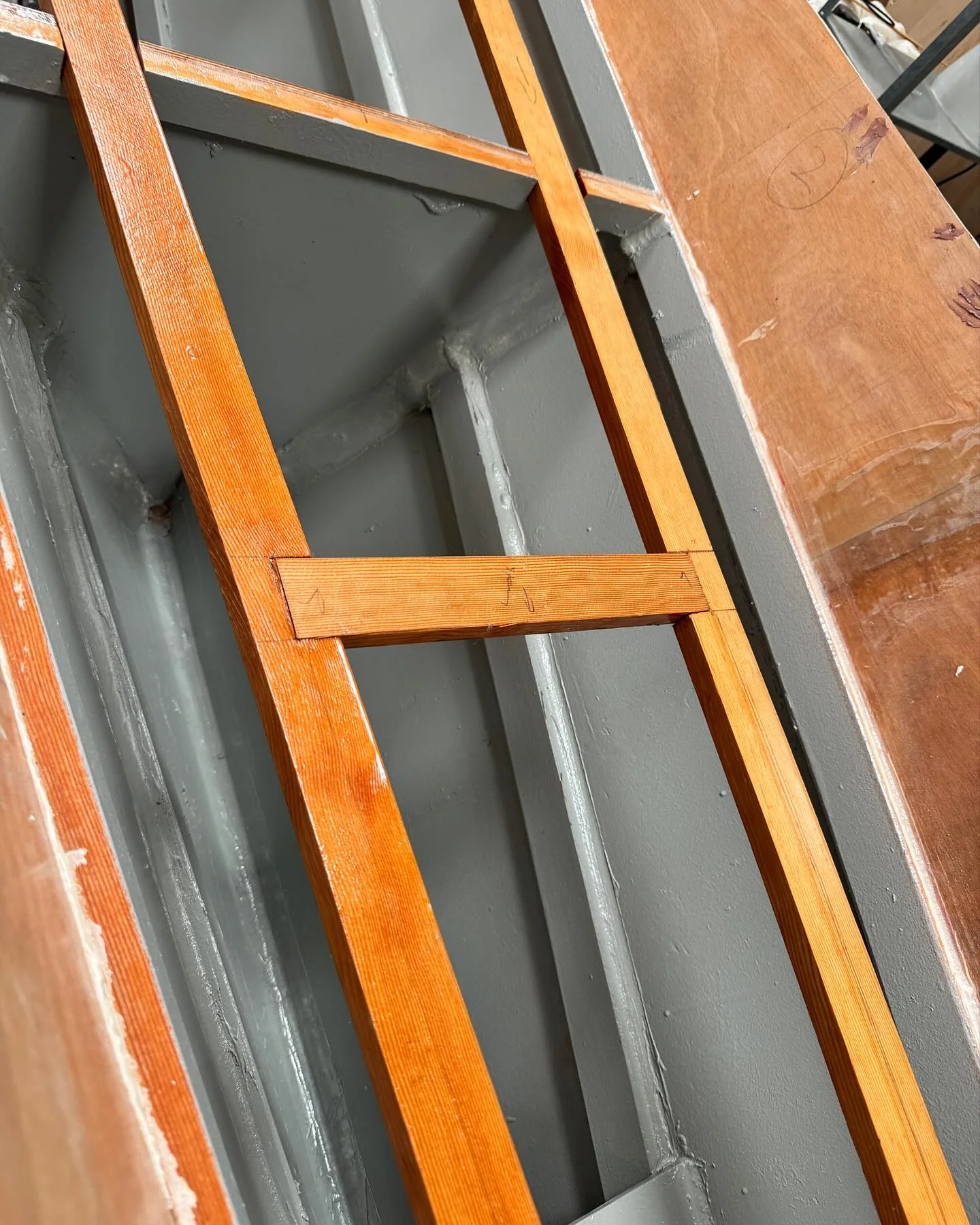
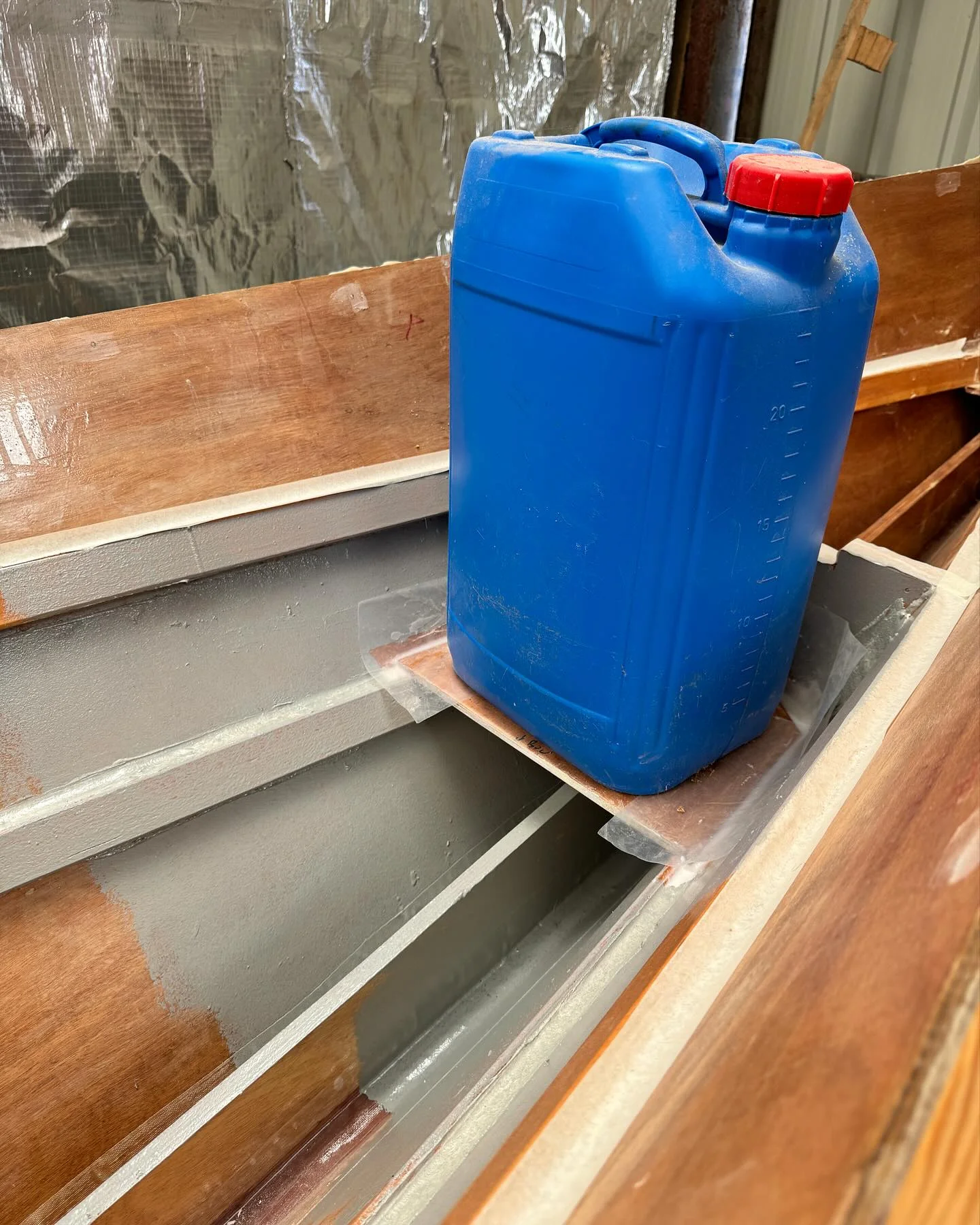
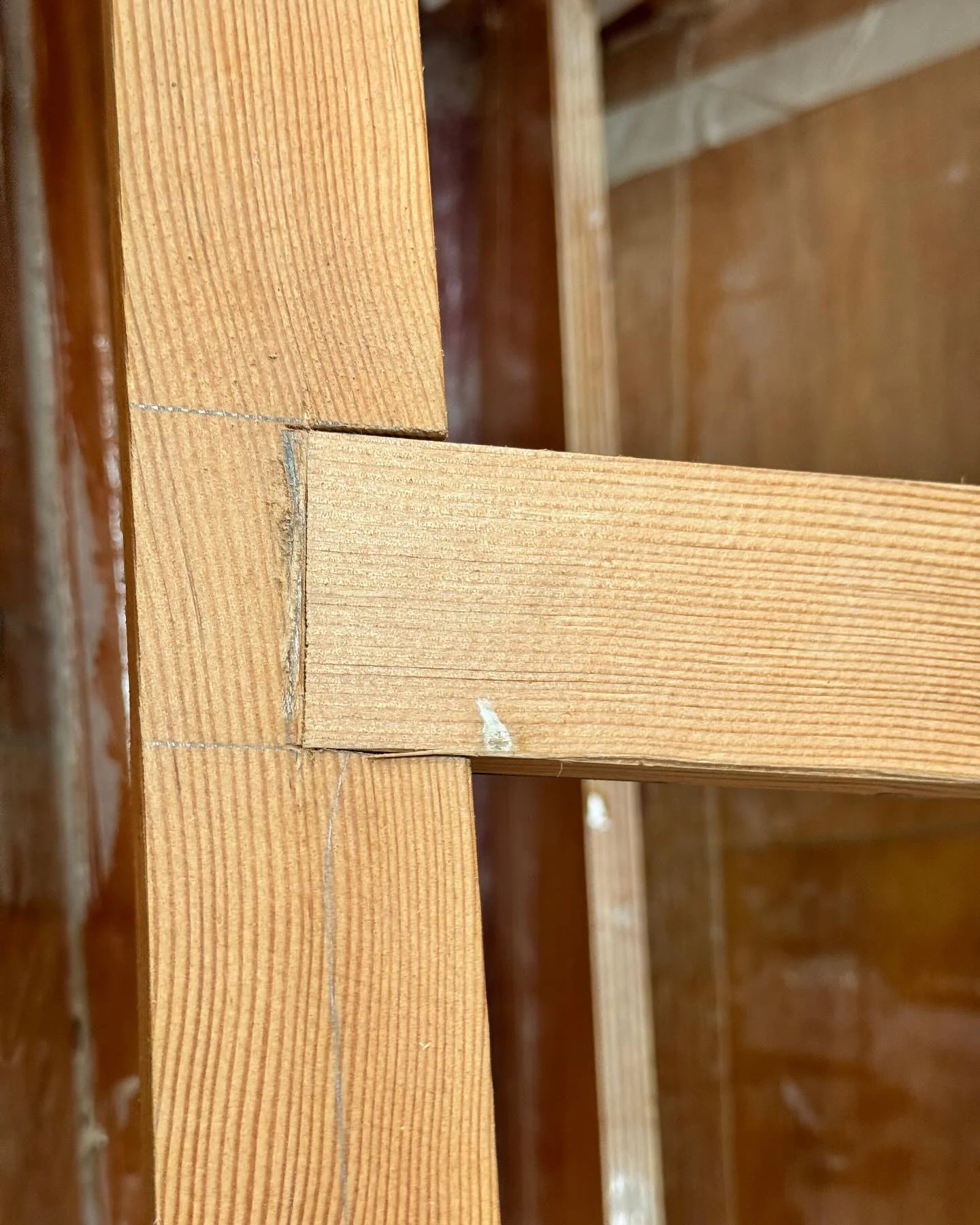
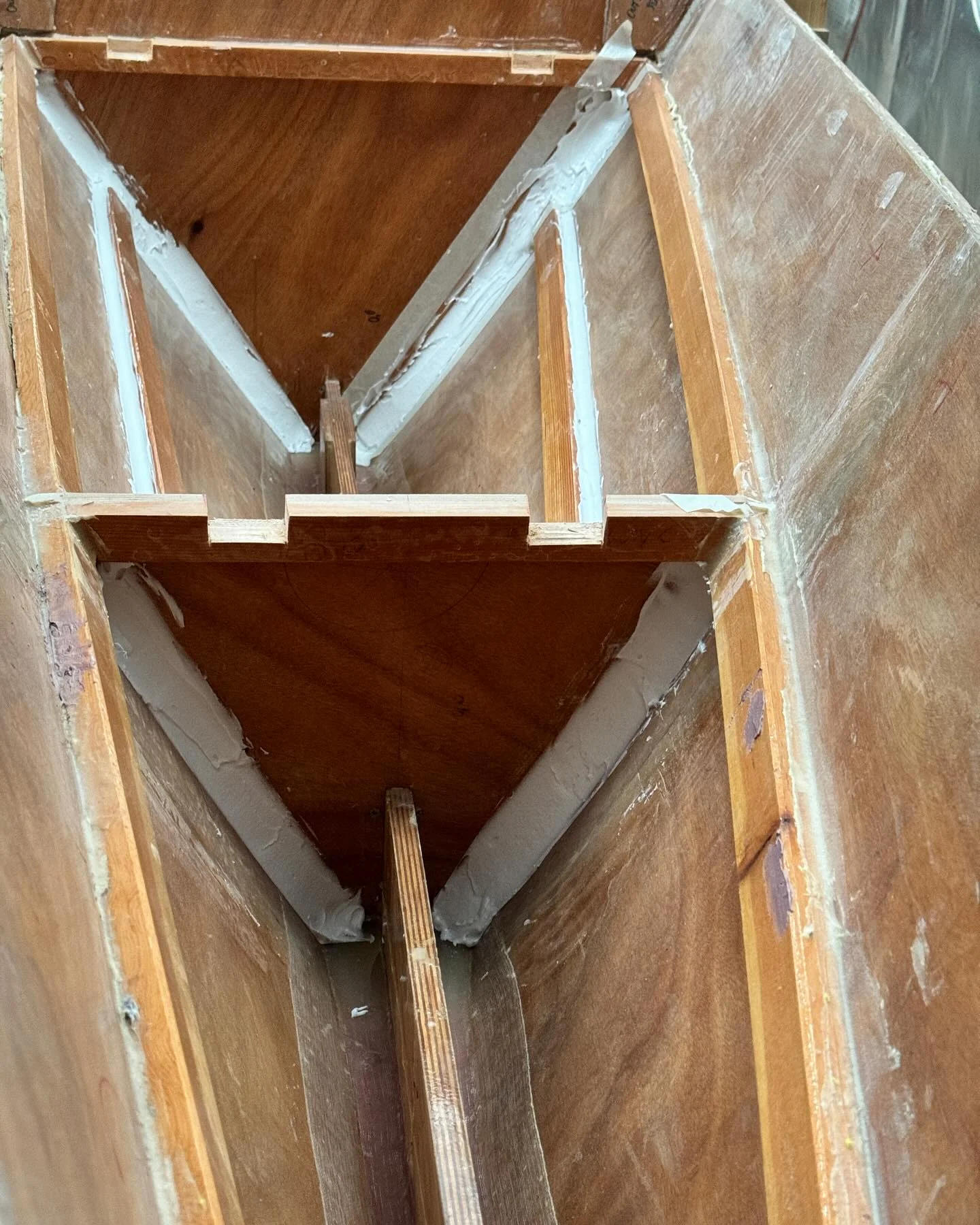
Ikaroa Cutting Stringers Without Ruining Everything I’m fitting the stringers, carefully cutting both ends to the right length and angle while building in a few fail-safes. I’m also finding 2mm copper wire much better than cable ties for holding things together.
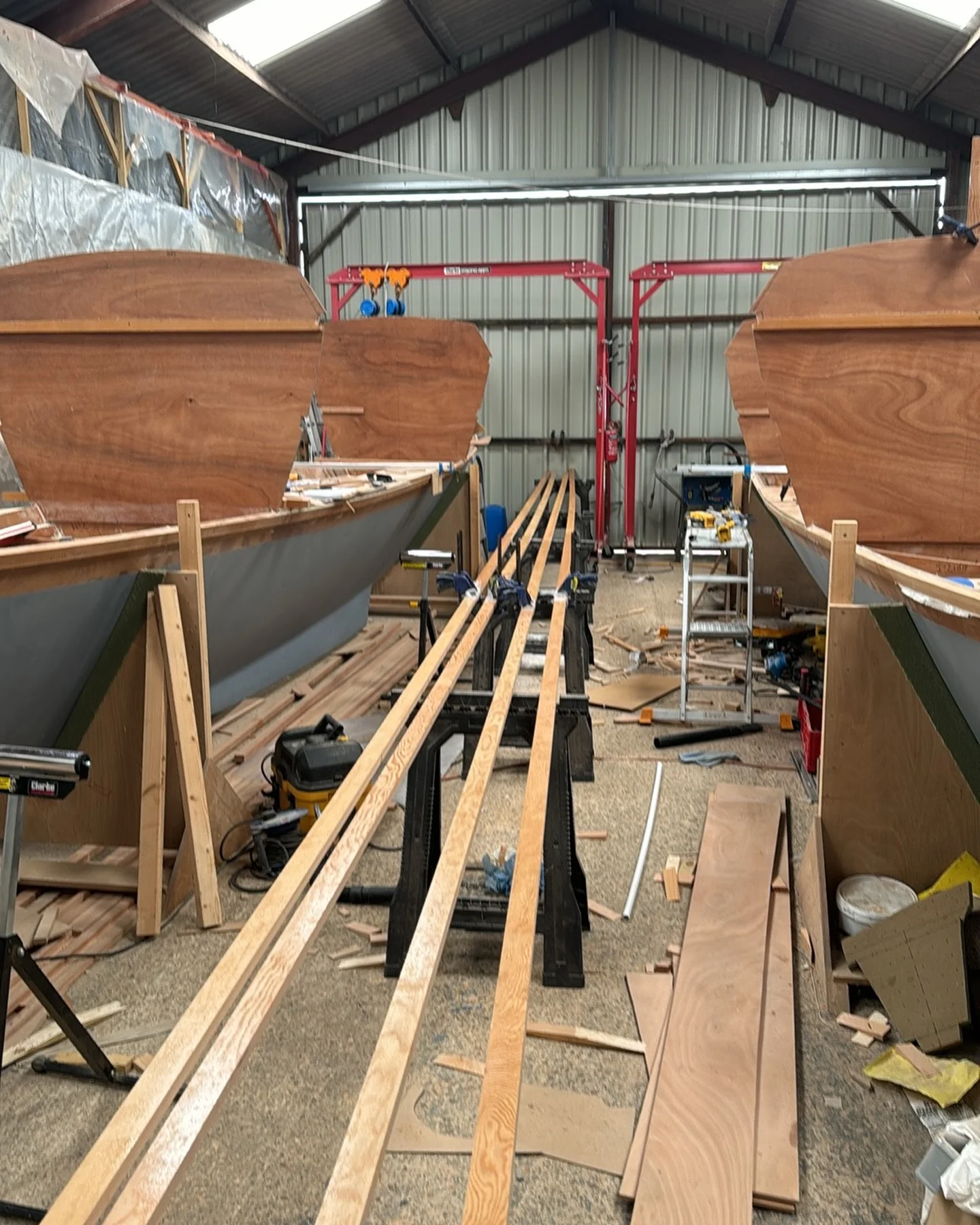
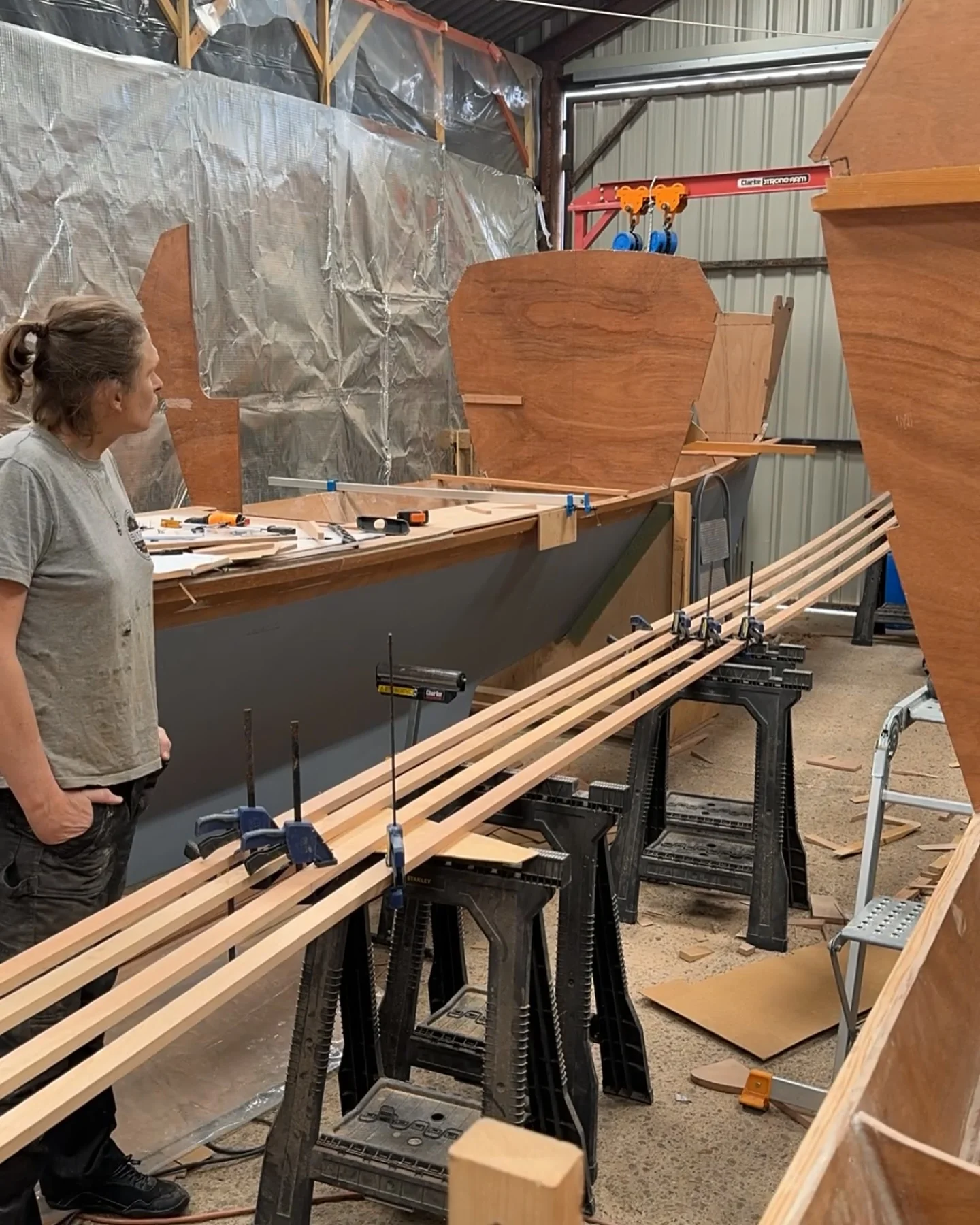
Ikaroa A Twelve-Metre Stringer, Finally in Place I wrestled a spectacularly bendy 12-metre stringer into place on my own. With the deck line finally appearing, there are only seven more to go.
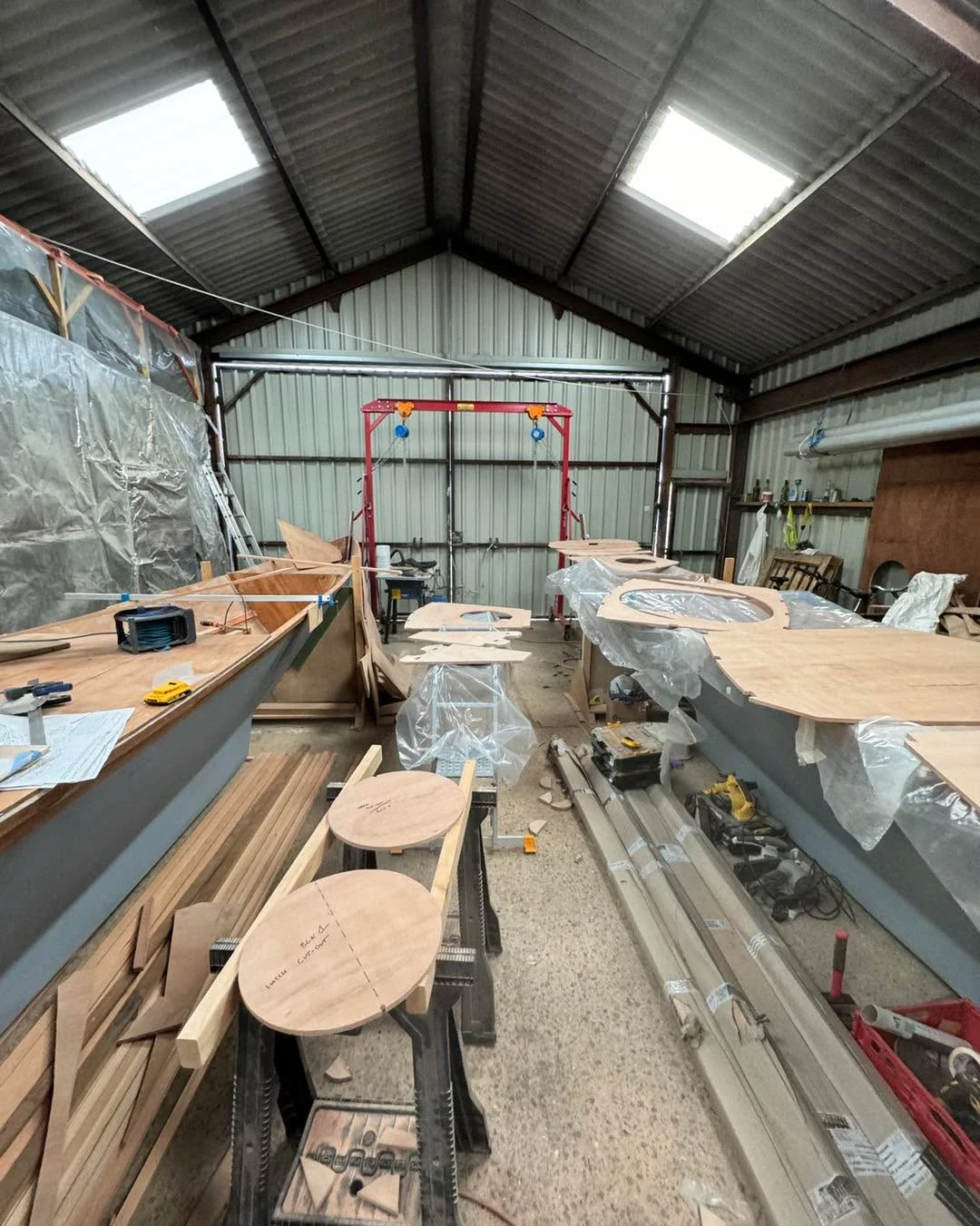
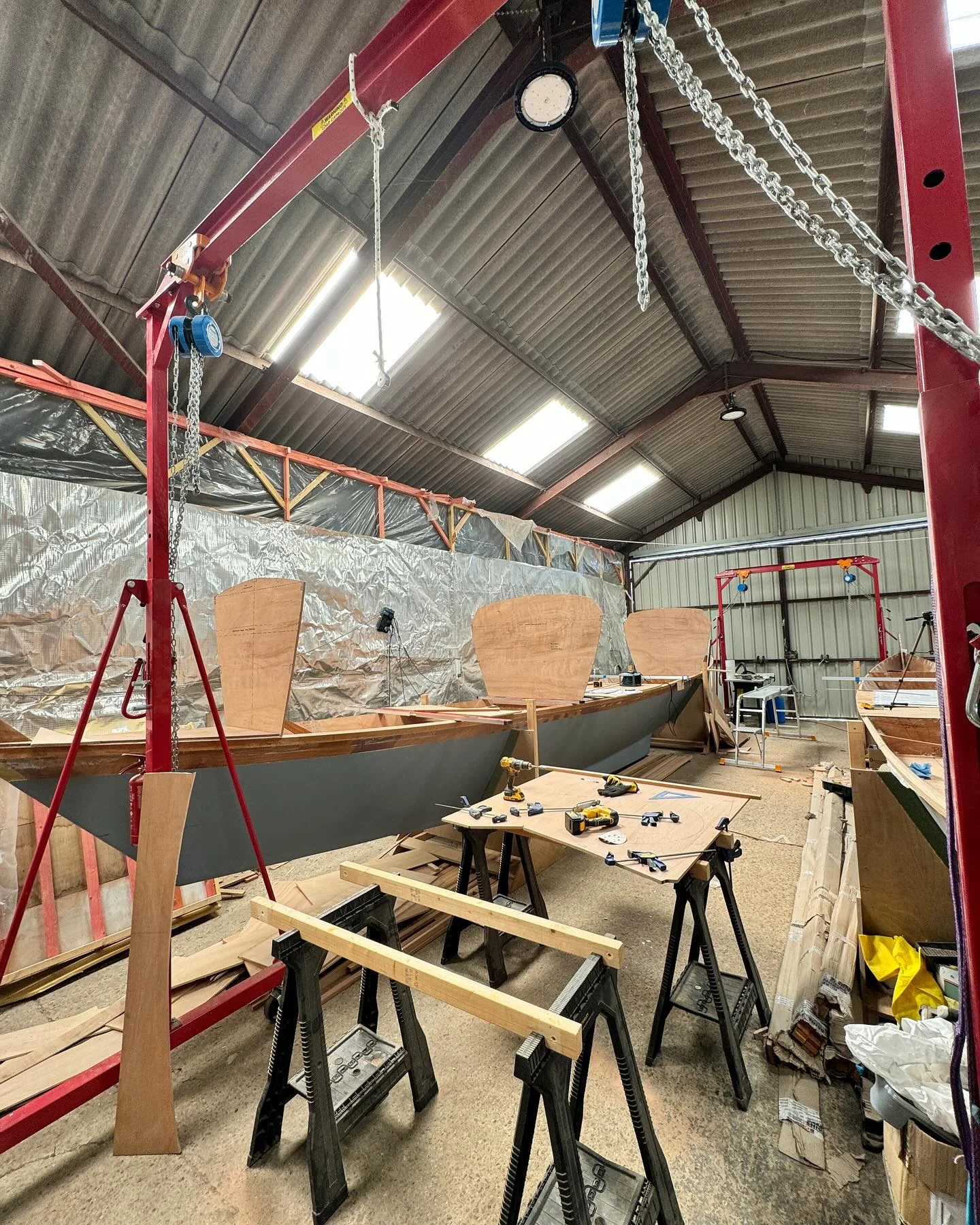
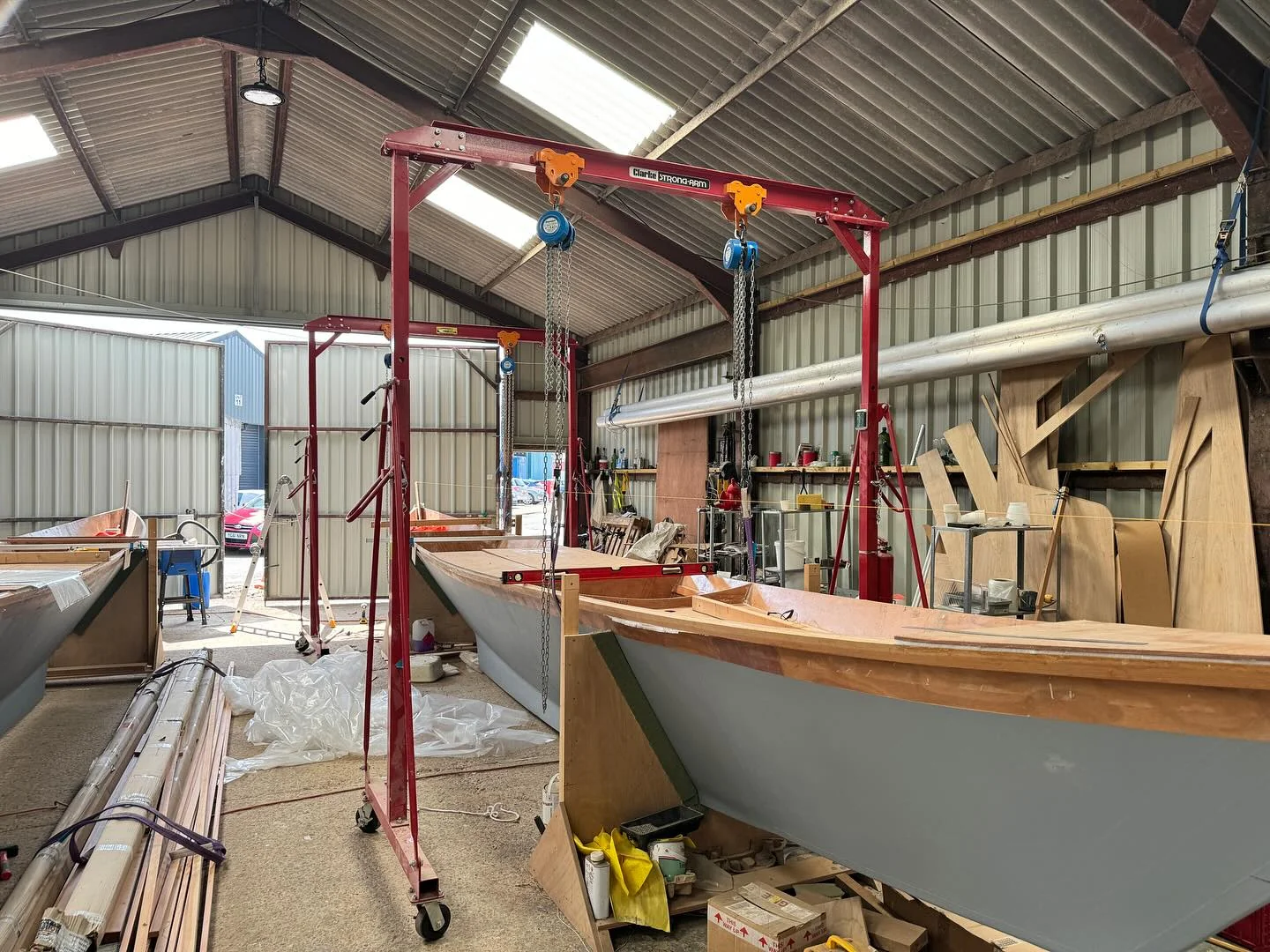
Ikaroa My Workshop Meets the Upper Hull Stringers I’ve reached the upper-hull stringers, and my supposedly large workshop is suddenly too small. With limited sawhorses and space for only four stringers, I’ll be working on one hull at a time.
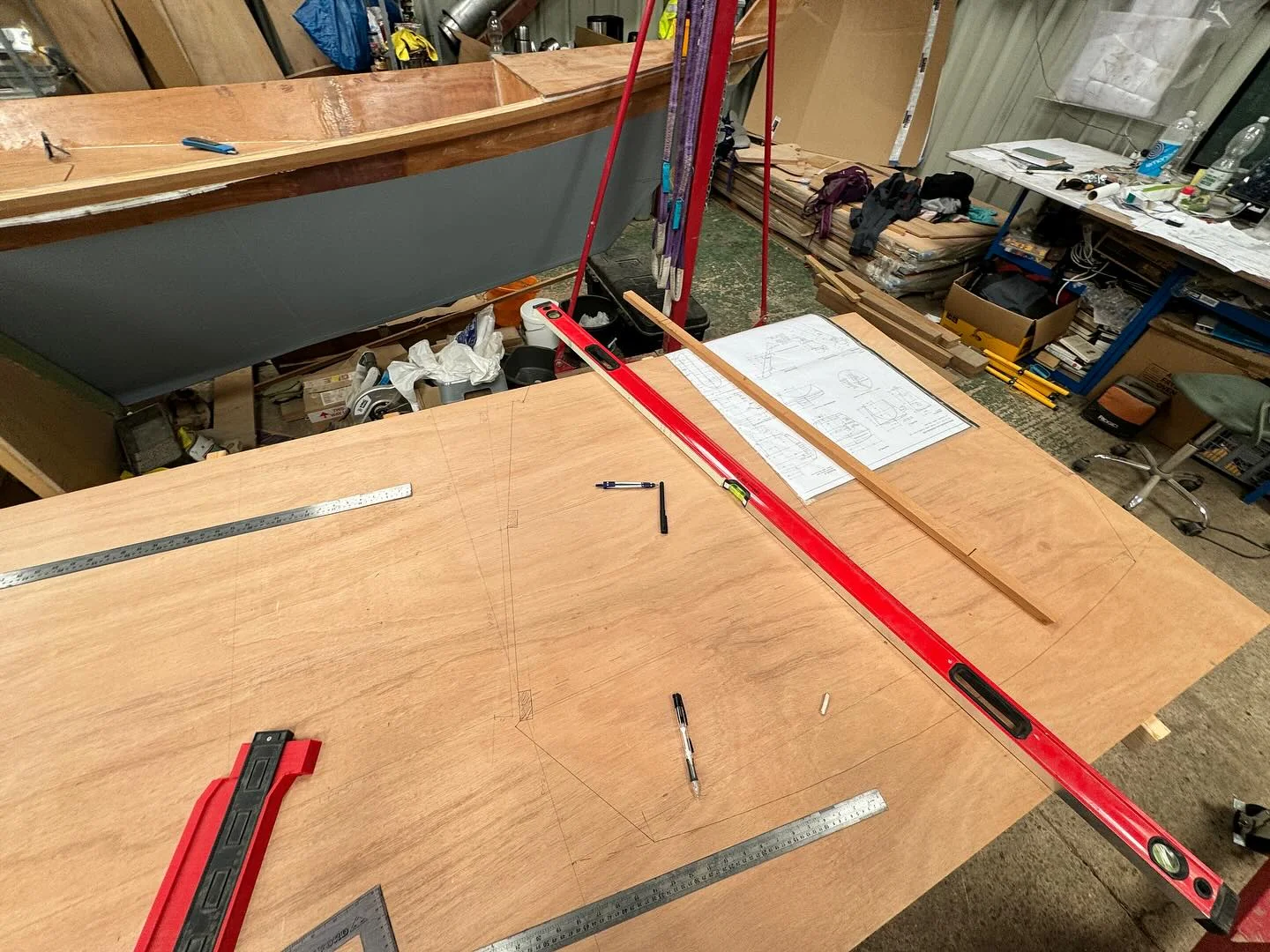
Ikaroa Templating the Scary Plywood Partition I’m back to the scary stuff: templating the main cabin partition before committing my limited 12mm plywood. It needs to be right before I can build the shelves and seats around it.
Ikaroa Finding the Right Cabin Table Height I’m fitting bulkhead 5, shelf bearers and intricate mast beam knees, while testing the table position that will double as my office. After a few tries, I’ve found a comfortable place to sit inside the hull.
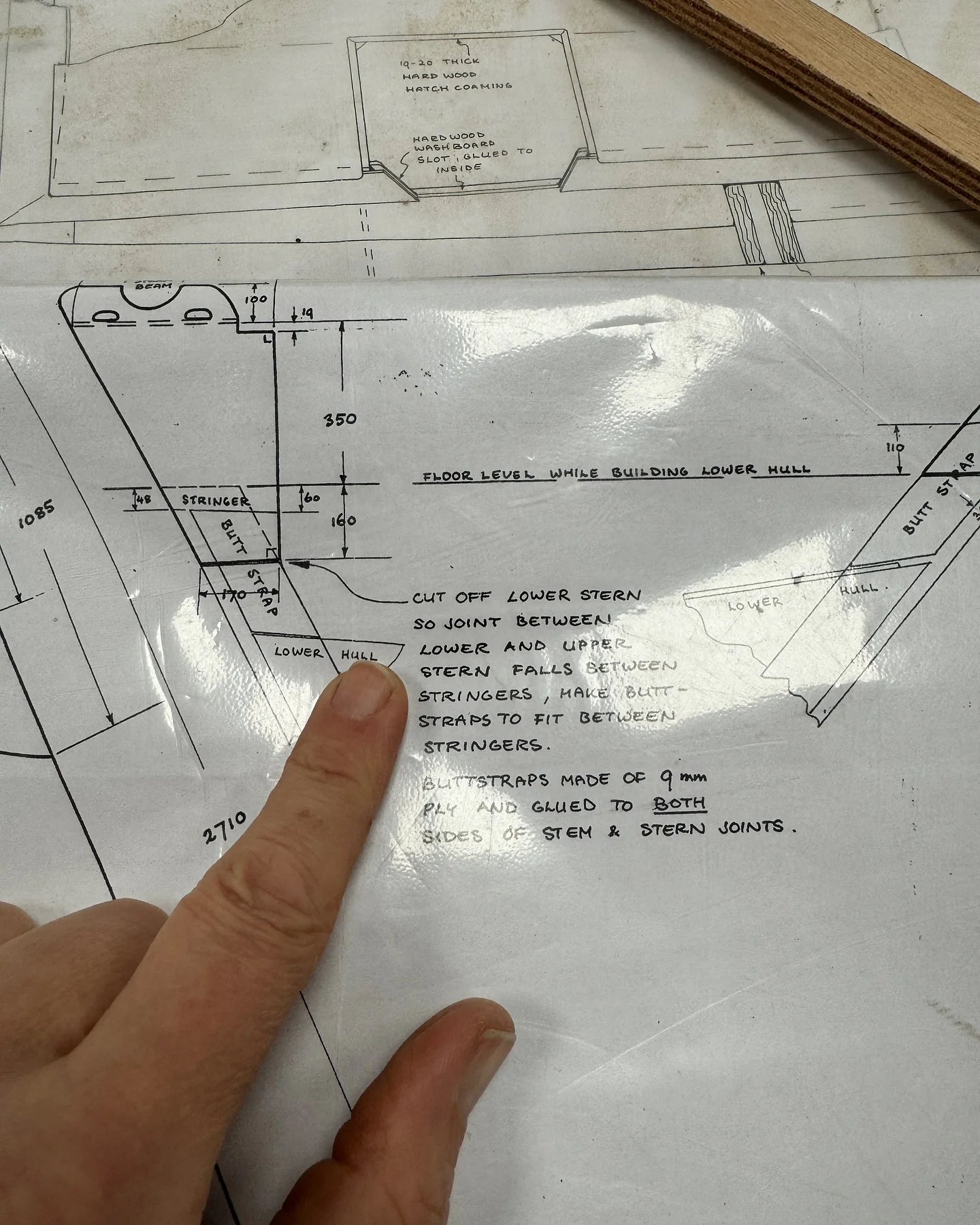
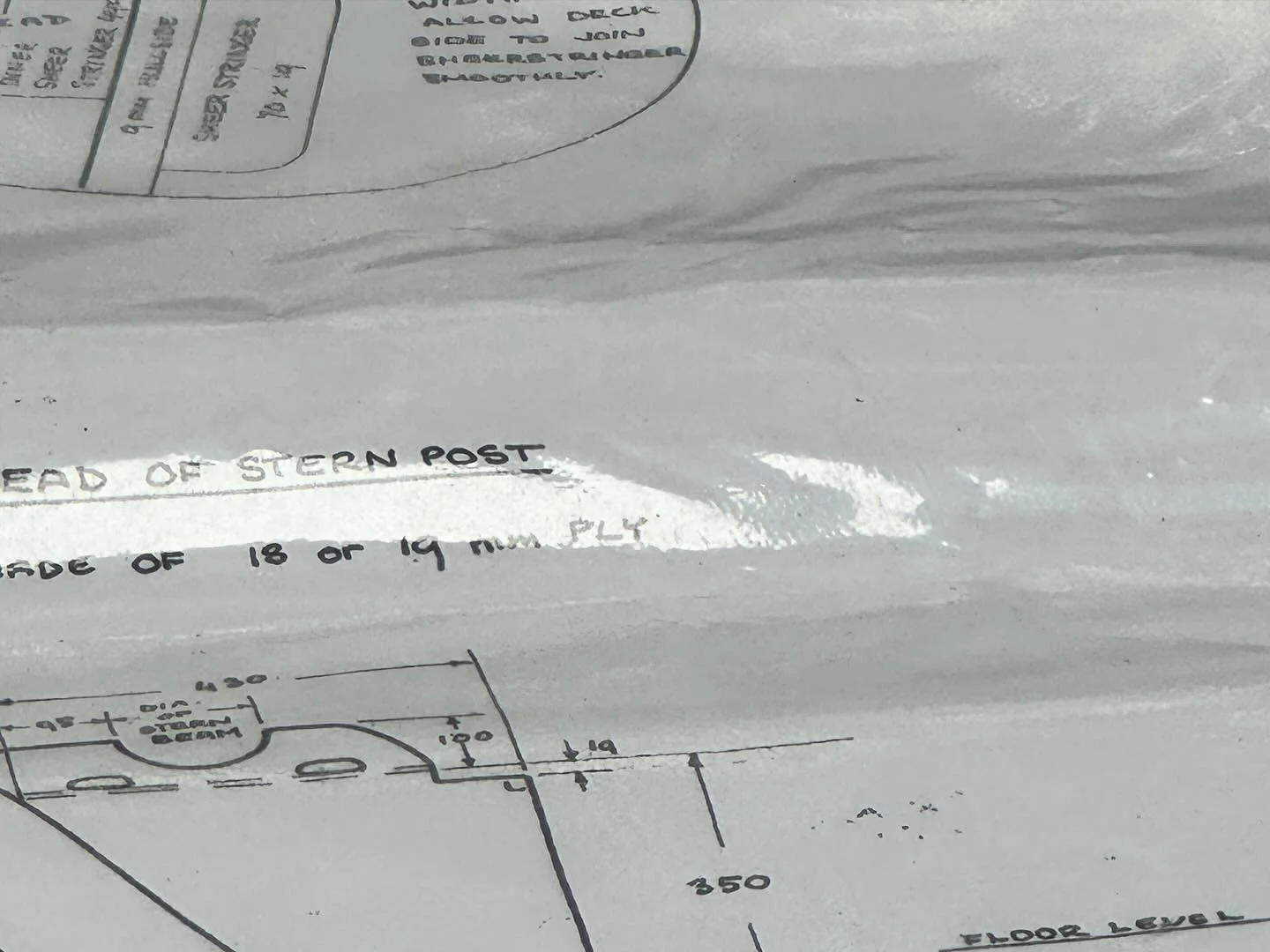
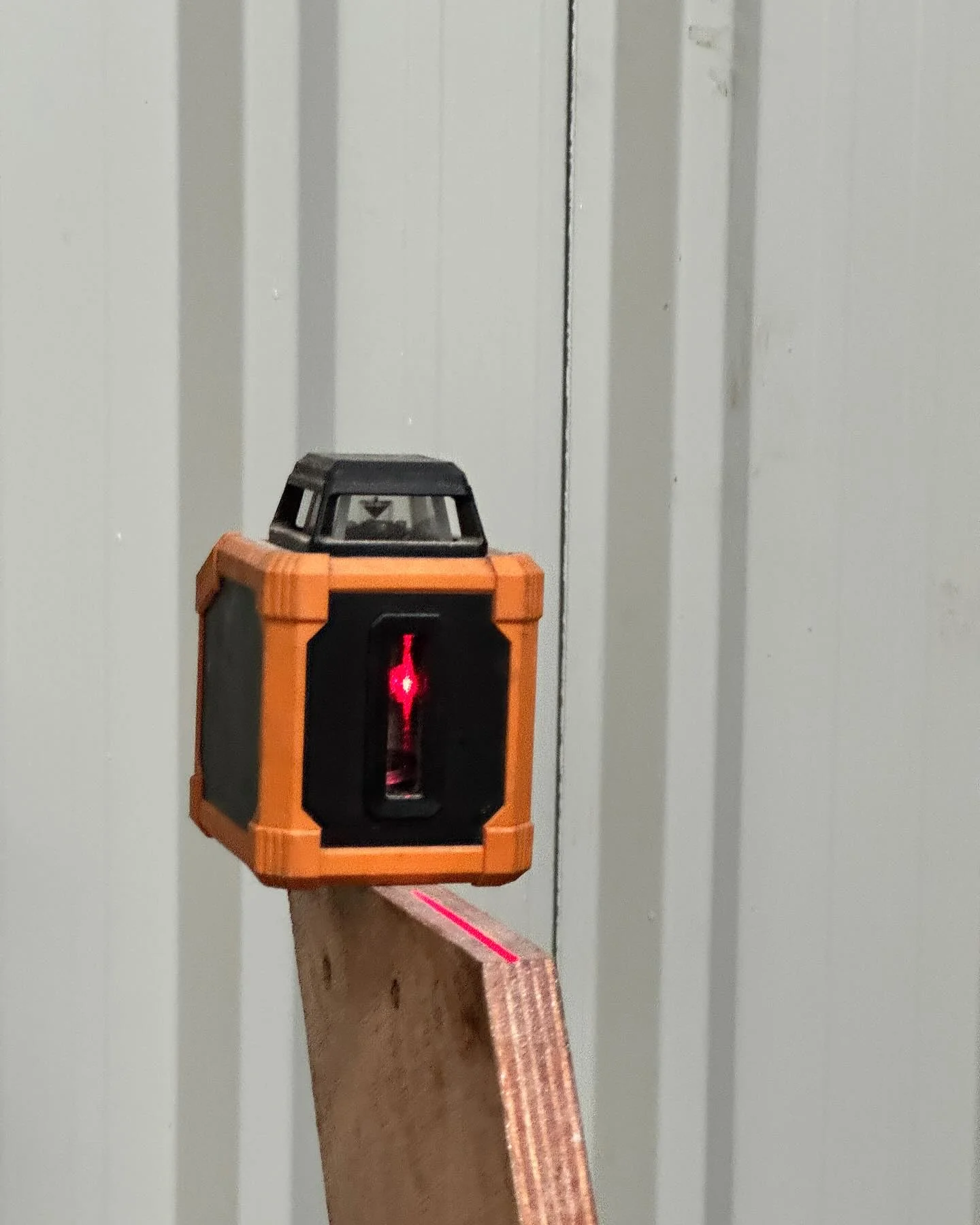
Ikaroa Shortening the Port Stern I cut 160mm from the lower port stern so the stringers would land above the butt strap. The laser level and jigsaw guide made a stressful cut come out straight, while the new stern brackets cure in epoxy.
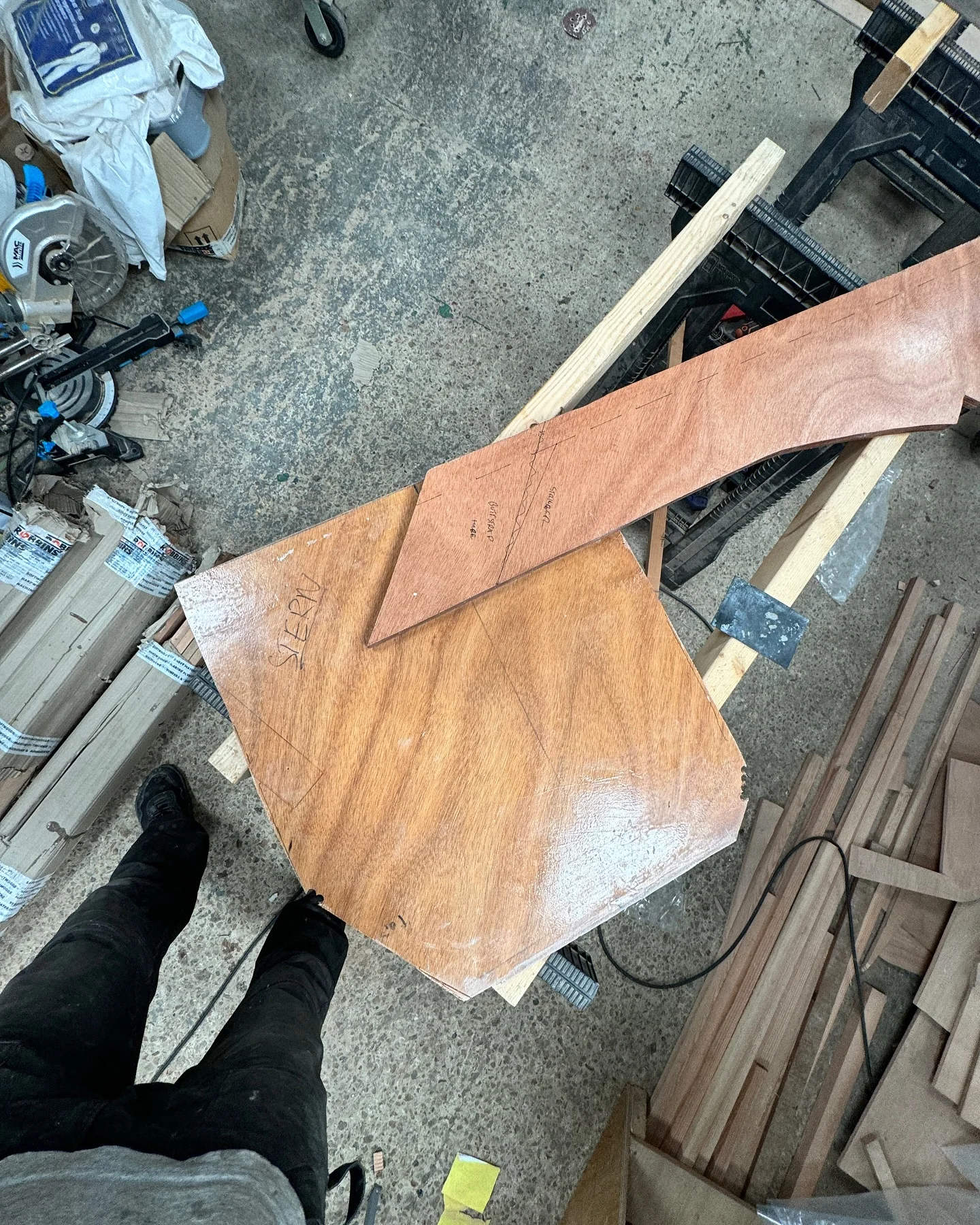
Ikaroa Turning Bulkhead Offcuts Into Butt Straps I’m reusing 9mm plywood cut from the hull bulkheads to make butt straps for the stem, and hunting around the workshop for enough material to do the stern as well.
Ikaroa Two More Bulkheads Standing in Place I’ve got another two bulkheads standing in their own place, with only one big one and a couple of smaller ones left. Bulkhead number 5 is the awkward special case, carrying the mast beam through the middle of the cabin.
Ikaroa Fitting Bulkheads Without Losing the Plot I wrestled with a bulkhead that refused to stay aligned once the screws went in, then found a slower, more controlled way to squeeze the epoxy joint properly. The next bulkheads went much more smoothly with clamps, timber and a little hard-won experience.
Ikaroa Glassing the Bulkheads Before Fitting Them I kept postponing fitting the bulkheads so I could glass their tops and beam-through parts while everything was still horizontal. I’ve also discovered that little kevlar scissors make clean, precise cuts through glass without pulling the strands.
Ikaroa Cleaning Epoxy Before the Bulkheads I’m cleaning every epoxy-covered surface yet again, because amine blush has earned my suspicion. Once the sanding and washing are done, I’ll be ready to fit the bulkheads.
Ikaroa Planing Bearers for the Beam Throughs I’m back to sanding, planing and cutting bearers for the beam throughs. Each one gets a slight slope so water can drain, while spreading the beam loads through the bulkheads.
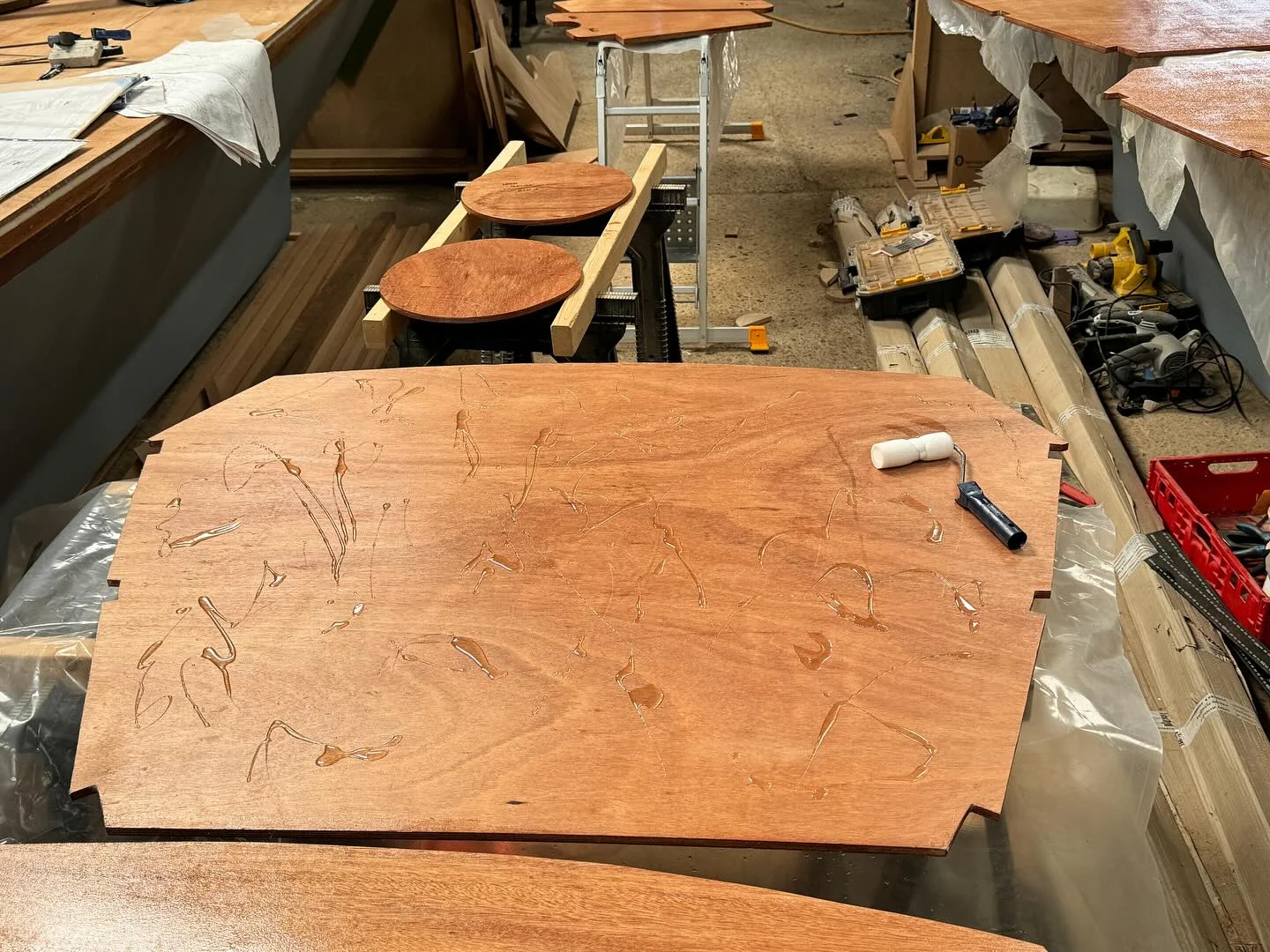
Ikaroa Two Epoxy Coats, Twenty-Five Pumps I cleaned and recoated the bulkheads, using far more epoxy than expected—about 1.5 to 2 litres across two layers. Resin removal cream remains essential, and I’m finally learning that slow hardener has its advantages.
Ikaroa Why the 12mm Plywood Turned Dark I noticed that the 12mm okume plywood turns much darker after epoxying than the older 9mm and 18mm sheets. I also reorganised the workshop and counted my way towards closing the hulls—apparently not very successfully.
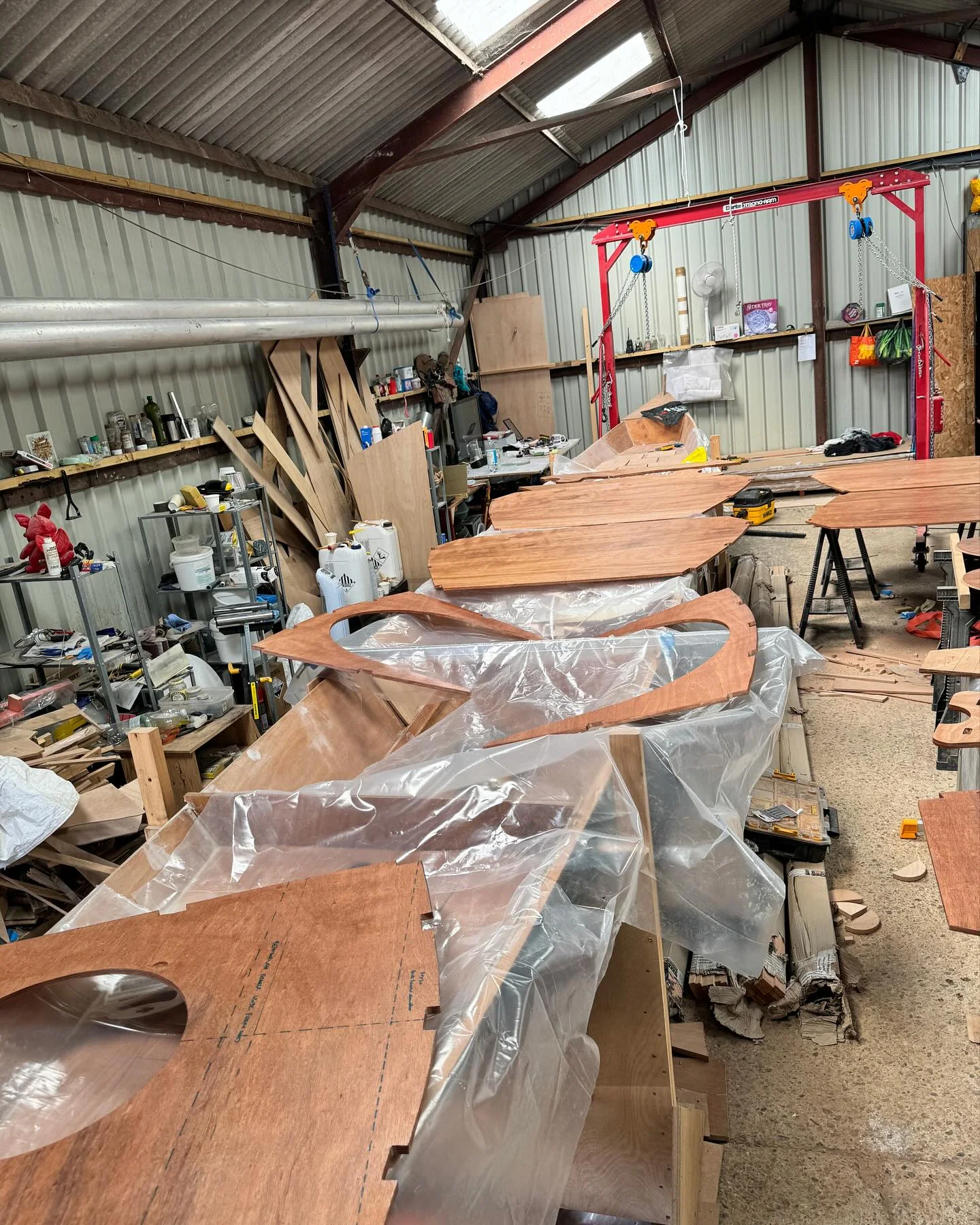
Ikaroa Epoxying Bulkheads Takes All the Space I’ve discovered that even a normally spacious workshop is not large enough to epoxy bulkheads and do anything else. With the major upper-hull bulkheads laid out, I’ll tackle the epoxy first thing Sunday morning.
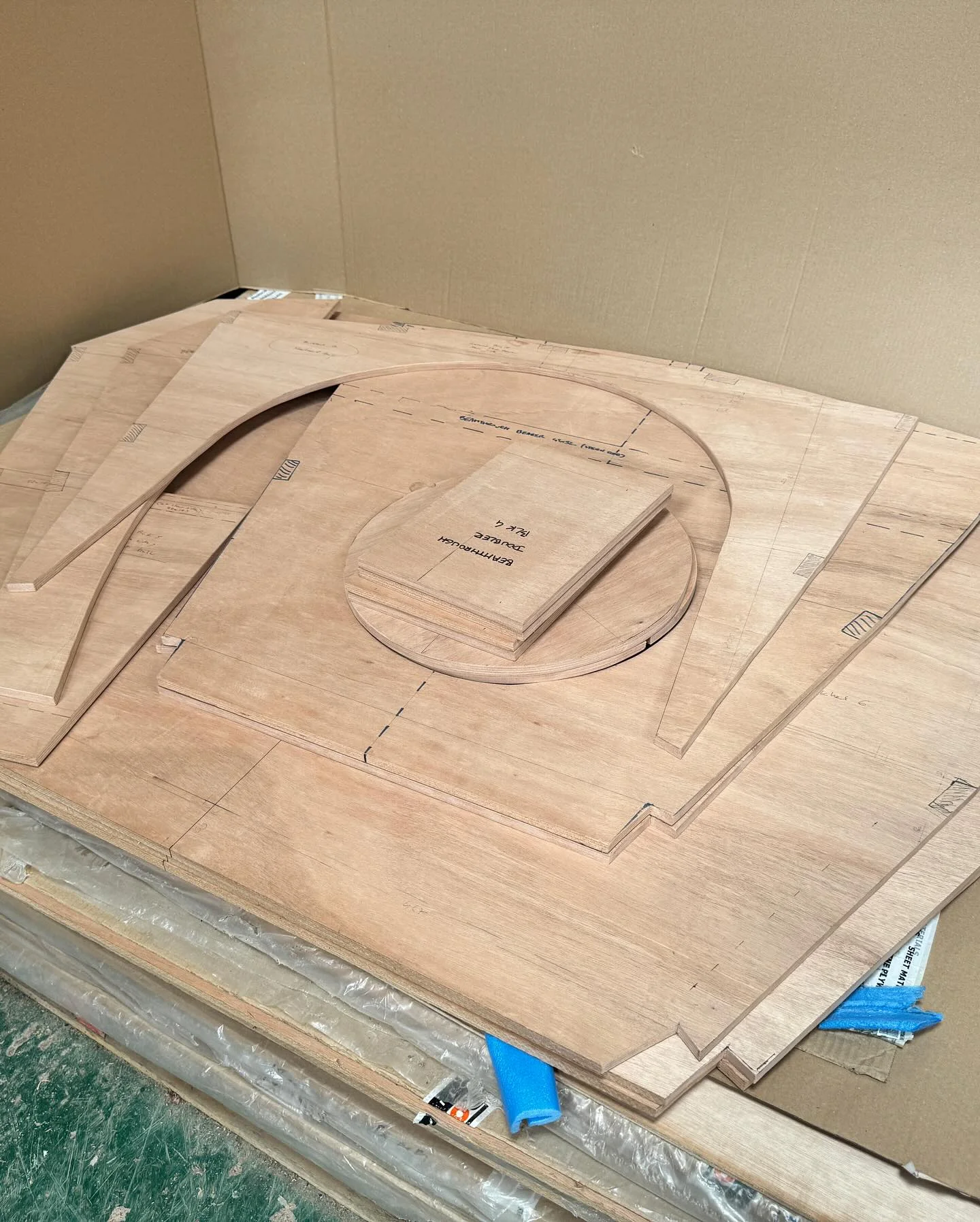
Ikaroa Making Room for Beamthrough Doublers The slightly larger plywood sheets are paying off, letting me cut all the beamthrough doublers I need alongside the bulkheads. Next comes epoxy, shaping the bearers and fitting the major bulkheads into the hulls.
Ikaroa Turning Drawings into Upper Hull Bulkheads I’m turning the drawings into actual pieces of the boat: two sheets of 12mm plywood have become part of the upper-hull bulkheads, with plenty more still to cut for the other hull.
Ikaroa A Bulkhead Takes Two Days I’m spending days drawing and checking each bulkhead so it fits my hull, with only eight sheets of 12 mm plywood available and no room for mistakes.
Ikaroa Stern Pieces, Bulkheads and Hull Shape I’m getting the stern pieces and bulkheads cut so I can prep the stringers, start epoxying, and make the whole hull shape visible by the end of the week.
Ikaroa Re-Leveling Both Hulls Before the Tops I moved and re-levelled both hulls, using several more or less scientific methods to check the workshop floors and hull alignment. It took two extra days, but I need measurements I can trust before starting on the top hulls.
Ikaroa Lockers Painted, Bunks Ready to Fit I’ve painted the lockers, fitted the battens stiffening the bunks and floors, and enjoyed a warm evening aboard. Tomorrow, at least a couple of bunks go in permanently.
Ikaroa Stern Brackets and the Galley Floor I fitted two stern brackets and, with some leftover microfibre mix, quickly installed the rest of the galley floor. Warm weather meant everything could cure nicely while I had breakfast and considered some Flutter lessons.
Ikaroa A Tight Joint Despite the Cold I managed to make another neat, tight wood joint with the multitool and jigsaw. The cold and damp slowed down the resin work, but a few degrees made all the difference later.
Ikaroa Checking the Double Bunk Alignment I’m doing one of my middle-of-the-work checks, using a laser to confirm that the apparently misplaced double bunk is actually landing precisely on its mark.
Ikaroa Finishing the Stern Cabin Fillets I abandoned my carefully prepared painting plan to finish the fillets in the stern cabin lockers of both hulls. The bow cabin in the port hull can wait, while I slowly get back into the groove of boatbuilding—and warmer mornings.